The Best Foot Peel Masks for Baby-Soft Feet at Home


For years my whole foot-care routine was a pumice stone and a lot of optimism, scrubbing away in the shower and hoping the calluses on my heels would magically give up. They never did. Then I tried my first foot peel mask, and within a week the dead skin was sheeting off in flakes (gross, weirdly satisfying) and what was left underneath was genuinely soft. At-home foot exfoliation has quietly replaced the pumice stone and the pricey salon callus shave, and honestly it's one of the best beauty swaps I've made. If you only buy one thing from this guide, make it the Plantifique avocado foot peel — it's my Top Pick for a reason.
This guide covers what a foot peel actually is, how to use one without making a mess of it, who should skip the peel and reach for a urea repair balm instead, and the few safety notes that genuinely matter. Some links below are affiliate links — if you buy through them I may earn a small commission at no cost to you.
How to choose a foot peel mask
Not all booties are created equal. Here's what I actually look at before buying:
- The acid blend. Good peels rely on alpha and beta hydroxy acids — usually glycolic and lactic acid (AHAs) plus a little salicylic acid (a BHA). That combination is what loosens the bonds between dead skin cells so they shed on their own. Fruit-acid extracts (apple, lemon, papaya) are common and fine; what matters is that acids are doing the work, not abrasion.
- Bootie fit. Plastic socks come in a one-size-fits-most shape, but if you have larger feet (men's 11+), look for a brand that says it fits bigger sizes or the gel won't reach your heels. Plantifique and ALIVER both run roomy.
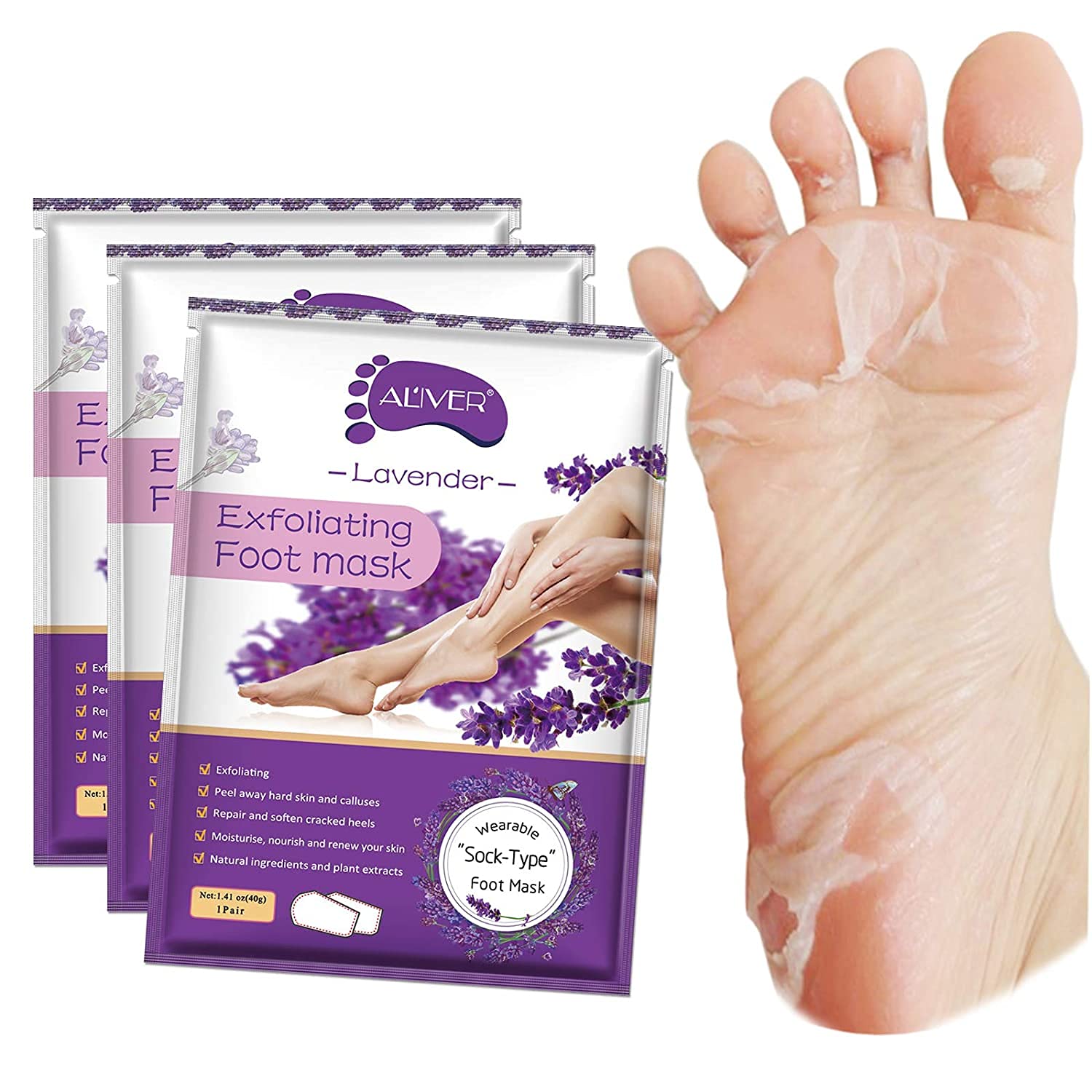
- Single use vs. multipack. One treatment usually clears a normal amount of buildup. If your feet are very calloused, or you want to keep a couple on hand for the whole household, a multipack like the ALIVER 3-pack is the better value.
- Scent and sensitivity. Lavender, peppermint, and avocado versions all smell nicer than plain formulas. If your skin reacts easily, pick a gentler, fragrance-light option and do the patch-test step.
- Peel vs. repair. This is the big one. A peel exfoliates dead skin over one to two weeks. It does not heal painful, bleeding heel cracks — for that you want a urea balm (more on that below).
How foot peel masks actually work
It's chemistry, not scrubbing. A foot peel mask is a pair of plastic booties pre-filled with an acidic gel. You slip them on over clean, dry feet, leave them for about 60 to 90 minutes, then rinse everything off. While they're on, those AHAs and BHAs sink into the outermost layer of skin (the stratum corneum) and dissolve the "glue" holding dead cells together.
The peeling is delayed, and that's normal. You won't peel in the booties. Nothing dramatic happens for the first few days. Then, somewhere between day 5 and day 7, the dead top layer starts to lift and flake, and it keeps shedding for another week or so. The full process runs about 1 to 2 weeks from start to finish.
The golden rule: do not pick. I know how tempting it is. Resist it. Pulling skin that isn't ready to come off can tear healthy skin underneath and leave raw spots. Let it shed on its own. Warm soaks help — softening the skin in a basin of warm water once a day encourages it to release naturally, and a light moisturizer between peeling days keeps things comfortable without stopping the process.
Why bother exfoliating your feet at all? Beyond the satisfying reveal, regular exfoliation clears away calluses and hardened dead skin, smooths the rough patches on heels and the balls of your feet, and makes your feet look and feel better — softer to the touch, more comfortable in sandals, and less prone to that dry, scaly buildup that snags on socks.
Peel vs. urea balm: know the difference
A peel and a cracked-heel balm solve two different problems, and people mix them up constantly. A foot peel is for thick, dry, calloused-but-intact skin you want to shed. A urea repair balm is for deep, painful cracks (fissures) in the heel.
Urea is a humectant that pulls water into hardened skin and, at high concentrations like the 25% in the Dr. Scholl's repair balm, also gently breaks down the keratin that makes heel skin so tough. The result is that it softens and helps fill in cracks rather than peeling skin off. Crucially, you should never put an acid peel on already-broken, cracked, or bleeding skin — that's where a balm steps in instead. If your heels are split and sore, start with the balm, get the skin intact and comfortable, and consider a peel later for maintenance.
Our top picks at a glance
My overall Top Pick is the Plantifique Foot Peel Mask with Avocado — a dermatologically tested two-pair set whose avocado-and-acid blend gave me the cleanest, most even shed of anything I've tried. For the best value, the ALIVER Foot Peel Mask 3-pack in lavender is the easy bootie-style choice, with dead skin starting to lift 5 to 7 days after a single 90-minute treatment. And if your real issue is cracked heels rather than calluses, the Dr. Scholl's Severe Cracked Heel Repair Balm with 25% urea is a repair treatment, not a peel — and it's safe for people with diabetes. Full reviews with current prices are in the cards below.
A foot peel is one piece of a bigger at-home skincare habit, and the same gentle, acid-based thinking shows up everywhere in my routine. If you're newly into chemical exfoliation, protecting that fresh skin matters too — my guide to the best Asian sunscreens covers the lightweight SPF I wear daily. For face care I lean on tools that pair beautifully with cold storage: a gua sha tool works best chilled, which is exactly what a beauty fridge is for. And if you want to round out an at-home glow-up, an LED face mask is the face-care equivalent of treating your feet right.
Frequently asked questions
How often can I use a foot peel mask? Roughly every 4 to 6 weeks, or whenever calluses build back up. Your feet need time to fully shed and the new skin needs time to settle, so resist the urge to peel again the moment the flaking stops. Once every month or two is plenty for most people.
Is all that peeling normal — and is it safe? Yes. Peeling that starts around day 5 to 7 and continues for a week or so is exactly how these work; the amount varies with how much buildup you had. It's safe on healthy, intact skin. What's not safe is helping it along by pulling off skin that isn't ready, which can damage the new layer underneath.
Can I speed up the peeling? A little. Soaking your feet in warm water once a day and applying a light, non-acidic moisturizer between peeling days encourages skin to release faster and more evenly. Do not pick, scrub aggressively, or use a second peel to rush it — patience gets you the smoothest result.
Foot peel vs. pumice stone — which is better? They do different jobs. A pumice stone physically sands down the surface and only goes as deep as you scrub, so results are shallow and short-lived. A peel uses acids to loosen and shed the entire dead top layer over one to two weeks, which is why the reveal is so much more dramatic and longer-lasting. I use a peel for the deep reset and keep light moisturizing for in-between.
Are foot peels safe if I have diabetes or neuropathy? Talk to your doctor first. If you have diabetes, neuropathy, or any condition that affects circulation or sensation in your feet, skip the acid peel unless a healthcare provider clears it — reduced sensation makes it harder to notice irritation. A 25% urea repair balm like the Dr. Scholl's pick is the gentler, diabetic-safe route for softening and maintenance.
What if my skin is broken or my heels are cracked? Don't use a peel on broken, cracked, or bleeding skin. Reach for the urea repair balm instead to soften and heal the cracks first. Once the skin is intact and comfortable, you can consider a peel for upkeep.
Foot care is the easiest "treat yourself" project there is — low effort, weirdly satisfying, and the payoff is sandal-ready feet you'll actually want to show off. If you're starting from scratch, start with my Top Pick, the Plantifique avocado foot peel mask, follow the no-picking rule, and let chemistry do the rest.
At A Glance
3 Picks
Plantifique Foot Peel Mask with Avocado (2 Pairs)
- Type
- Exfoliating peel
- Key
- Avocado
- Result
- 1–2 weeks

Dr. Scholl's Severe Cracked Heel Repair Balm (25% Urea)
- Type
- Repair balm
- Key
- 25% urea
- Target
- Cracked heels
The Reviews
01—03Plantifique Foot Peel Mask with Avocado (2 Pairs)
A dermatologically tested avocado peel that sloughs off dry, dead, calloused skin over 1–2 weeks for genuinely baby-soft feet.
- Type
- Exfoliating peel
- Key
- Avocado
- Result
- 1–2 weeks
- Pairs
- 2
A dermatologically tested avocado peel that sloughs off dry, dead, calloused skin over 1–2 weeks for genuinely baby-soft feet.
ALIVER Foot Peel Mask (3 Pack, Lavender)
An easy bootie-style exfoliating peel; dead skin starts shedding 5–7 days after a single 90-minute treatment.
- Type
- Bootie peel
- Time
- 90 min
- Shed
- 5–7 days
- Pack
- 3
An easy bootie-style exfoliating peel; dead skin starts shedding 5–7 days after a single 90-minute treatment.
Dr. Scholl's Severe Cracked Heel Repair Balm (25% Urea)
Not a peel but a fast fix — a 25% urea balm that fills and heals deep heel cracks, safe for diabetics.
- Type
- Repair balm
- Key
- 25% urea
- Target
- Cracked heels
- Safe
- Diabetics
Not a peel but a fast fix — a 25% urea balm that fills and heals deep heel cracks, safe for diabetics.
About the Author
Kelly Hyde
Kelly Hyde is a certified skincare specialist and beauty trend forecaster, and the founder of Next Gen Beauty Reviews. She spends her time testing the latest K-beauty launches, at-home beauty devices, and skincare tools so you do not have to, and only recommends products she would put in her own routine.