An Anti-Aging Skincare Routine for Your 50s and Beyond

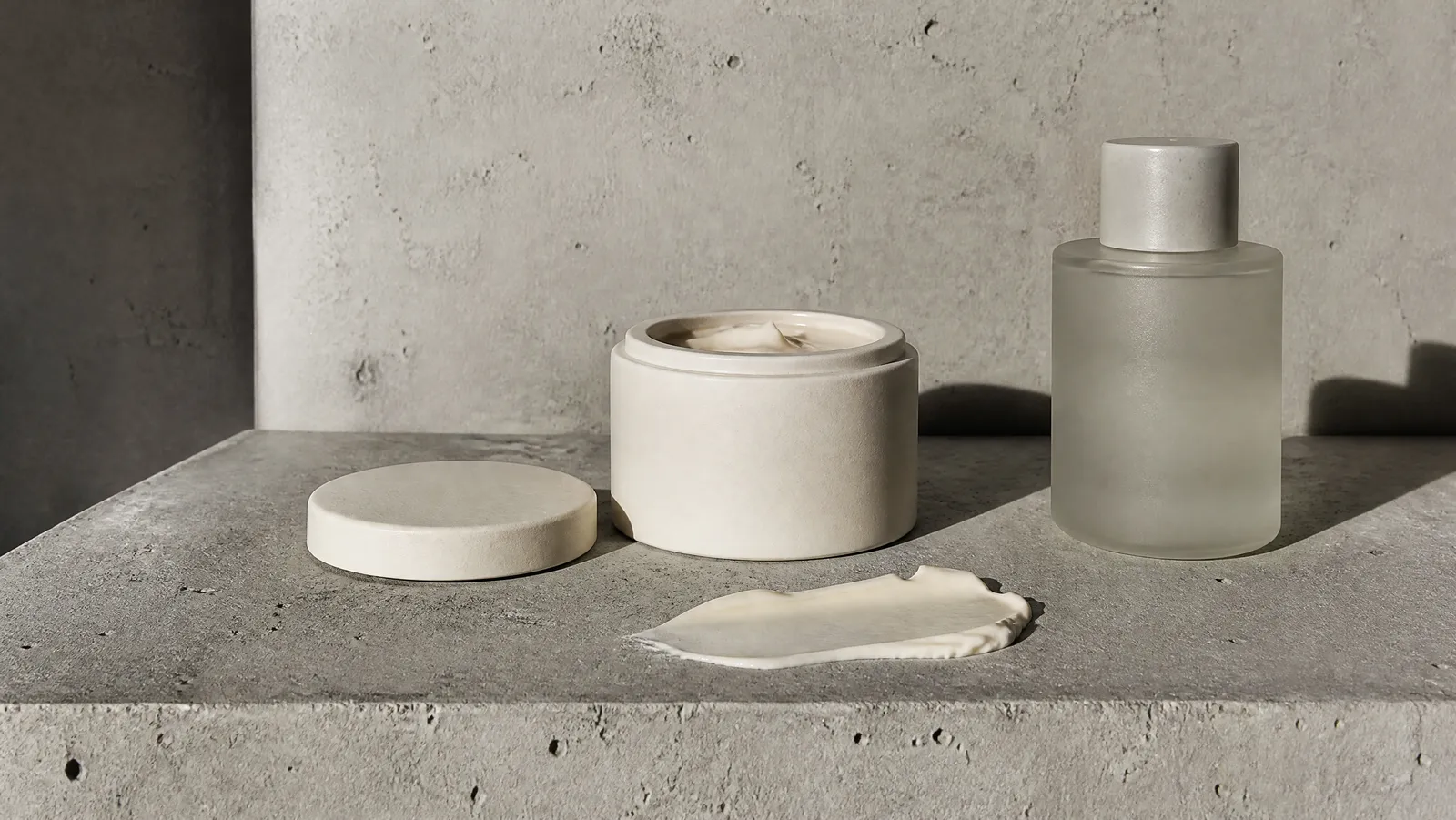
In your 50s the routine does not need new ingredients. It needs new frequencies. A gentle cleanser, a humectant on damp skin, a ceramide-rich moisturizer and broad-spectrum sunscreen every morning, with a retinoid two or three nights a week instead of nightly, is most of the plan. The physiology underneath it changed. The shelf mostly did not.
Some guides I link to contain affiliate links; I may earn a small commission at no cost to you.
I am Kelly Hyde, a certified skincare specialist, and the most common mistake I see in this decade is women abandoning a retinoid because nightly use started to sting, when the fix was three nights a week and a heavier cream over the top. Below is the AM and PM routine, the three adjustments that matter, and a fair account of what a topical can and cannot reach. For the universal version, the complete anti-aging skincare routine covers every age in one place.
What an anti aging skincare routine for 50s has to account for
Three measurable things change around menopause, and each argues for an adjustment rather than a new product.
Collagen falls fast, then slowly. According to the American Academy of Dermatology, studies show that women's skin loses about 30% of its collagen during the first five years of menopause, then about 2% per year for the next 20. A 2022 review of menopause and skin in Clinical and Experimental Dermatology, archived on PubMed Central, reports a similar decline: nearly a third of collagen lost in the first five years, then about 2.1% a year over the following 15. That review also notes that collagen loss tracks postmenopausal age rather than chronological age, and states that elastin degeneration increases with menopause and manifests clinically as slack skin and increased wrinkling.
The barrier lipids change. In a 2022 study in Scientific Reports, hosted on PubMed Central, postmenopausal women had lower stratum corneum ceramide levels and shorter ceramide chains than premenopausal women, while a postmenopausal group on hormone replacement therapy had levels similar to the premenopausal group. Transepidermal water loss correlated negatively with average ceramide chain length, which the authors read as shorter ceramides forming a less effective epidermal barrier. The three groups were 7, 11, and 10 women, so treat it as a mechanism signal, not a settled number.
Barrier repair slows down. This is the finding that should change your behavior most. In a study by Ghadially and colleagues in the Journal of Clinical Investigation, the barrier recovered more slowly in aged than in young human subjects after acetone treatment or tape stripping. Young subjects reached 50% recovery at 24 hours and 80% at 72 hours; aged subjects reached only about 15% at 24 hours, with a further delay over the next six days. The authors concluded that both barrier integrity and barrier repair are markedly abnormal in aged epidermis.
Put those together and the routine writes itself. Irritation now costs you days of recovery rather than a night. So: fewer irritating things, harder barrier support, and the best-evidenced step running without interruption.
The AM routine for mature skin, step by step
- Rinse, or use a non-foaming cleanser. The AAD's menopause guidance is a mild cleanser instead of soap, and no deodorant bars. If your skin feels tight afterward, you have your answer.
- Apply a humectant serum to damp skin. The AAD notes that a moisturizer with hyaluronic acid or glycerin can be especially helpful during menopause, and to apply it while skin is still damp. Damp is not a flourish. It is the water the humectant has to hold.
- Optional: an antioxidant serum. I keep vitamin C in my mornings, but I found no trial testing it in postmenopausal facial skin, so treat it as a reasonable habit, not a proven step. My shortlist: the best vitamin C serums.
- Moisturize properly, not lightly. The AAD's dry skin guidance is to use a fragrance-free ointment or cream rather than a lotion, because ointments and creams add more moisture to skin and are more effective than lotions.
- Broad-spectrum sunscreen, every morning. The AAD's menopause page asks for SPF 30 or higher, daily. My picks are in the best Asian sunscreens, which layer over a heavy cream better than most.
The PM routine: repair first, actives second
Evenings do the repair work, and they are where the retinoid lives. If you are unsure which actives belong in which half of the day, Morning vs. Night: Which Skincare Actives Go Where sorts it out.
- Cleanse once, gently. Sunscreen and makeup come off; your lipids should not. A cream or oil cleanser beats a foaming wash.
- Retinoid, two or three nights a week. On dry skin, buffered with moisturizer. The ramp is in the next section.
- Peptides or a barrier serum on off nights. The AAD lists products with retinol or peptides among the things to consider for sagging skin and wrinkles, noting they may help build collagen.
- A richer night cream, and a balm over dry patches. This is where the occlusive step earns its keep.
The whole routine at a glance
| Step | Morning | Evening | | --- | --- | --- | | 1 | Water rinse or mild non-foaming cleanser | Cream or oil cleanser | | 2 | Humectant serum on damp skin | Retinoid on retinoid nights, peptide or barrier serum otherwise | | 3 | Optional antioxidant serum | Humectant serum or hydrating toner | | 4 | Fragrance-free cream moisturizer | Richer night cream | | 5 | Broad-spectrum SPF 30 or higher | Occlusive balm on dry patches, if needed |
Adjustment 1: lower your retinoid frequency rather than quitting
Nightly is not the frequency that was tested on older skin, and in my experience it is more than many people in their 50s comfortably tolerate. If nightly still suits you, keep it; that is the pacing in An Anti-Aging Skincare Routine for Your 40s, and there is no prize for dropping back early.
The study I point to here is Kafi and colleagues in Archives of Dermatology in 2007, indexed by Johns Hopkins: a randomized, double-blind, vehicle-controlled study of 0.4% retinol lotion on one arm and vehicle on the other, in 36 elderly subjects with a mean age of 87, used up to three times weekly for 24 weeks. Fine wrinkling improved significantly more on the retinol-treated skin, a change of -1.64 versus -0.08. Three times a week, in skin far older than yours, produced a measurable result.
The AAD's retinoid guidance points the same direction: use it every other night to start, slowly building up, and use the lowest formulation you can find. It also notes that there is no standard requirement for the percentage of retinol to be disclosed on over-the-counter labels or packaging, so brand-to-brand numbers may not be comparable.
A ramp that has worked for most people I have coached:
| Weeks | Retinoid nights per week | What to watch | | --- | --- | --- | | 1-4 | One | Stinging that lasts past the next morning | | 5-8 | Two | Flaking around the nose and mouth | | 9-16 | Two or three | Whether the moisturizer still feels like enough | | Ongoing | Hold wherever you sit with no visible irritation | Winter may cost a night |
Two AAD guardrails matter more in this decade. It states that people who have skin allergies or dryness are probably not good candidates for a retinoid, and that irritation can cause dark marks in skin of color, adding that starting slowly and using moisturizer will help mitigate that. It also advises night-only use, because retinoids can increase sun sensitivity. If one does not suit you, An Anti-Aging Routine Without Retinol: Peptides, Bakuchiol, and More is the alternative plan, and how to start retinol has the ramp in full.
Adjustment 2: treat dryness as a managed condition, not a winter problem
In your 30s, dryness is weather. After menopause it is a standing condition you manage daily, and the fix is layering order, not a costlier cream.
The rule is humectant under occlusive, on damp skin. According to the StatPearls chapter on moisturizers on the NCBI Bookshelf, humectants hydrate the skin when humidity is above roughly 70%, but more commonly they draw water from the deeper epidermis and dermis, and without an occlusive over the top some humectants can result in increased transepidermal water loss. The same chapter calls petrolatum the reference occlusive, cutting water loss through the epidermis by nearly 99%.
A hyaluronic acid serum on dry skin in a dry room is not neutral; it can work against you. The same serum on damp skin, sealed with a cream, is the cheapest upgrade in this decade.
The AAD's dry skin page adds the habits around it: moisturize while skin is still damp, choose an ointment or cream over a lotion, keep showers to five to ten minutes in warm water, and pat rather than rub dry, because rubbing can irritate extremely dry skin.
If your skin has tipped from dry into tight, flaky and reactive, a Korean skincare routine for dry, dehydrated skin is a good two-week reset before you reintroduce anything active.
Adjustment 3: sunscreen stays daily, and the reason sharpens after 50
The temptation at this age is to decide the damage is done. The research says otherwise, twice over.
First, the preventive evidence. In a randomized trial by Hughes and colleagues in Annals of Internal Medicine in 2013, indexed on PubMed, 903 adults in Nambour, Australia were assigned to daily or discretionary sunscreen use. After about 4.5 years the daily group showed no detectable increase in skin aging, roughly 24% less than the discretionary group, an odds ratio of 0.76 with a 95% confidence interval of 0.59 to 0.98. The trial enrolled adults younger than 55, so read it as evidence that daily use slows visible aging, not as a result measured in a 70-year-old cohort.
Second, the timing. In a study of 298 Caucasian women aged 30 to 78 in Clinical, Cosmetic and Investigational Dermatology, archived on PubMed Central, researchers compared sun-seeking and sun-phobic women. For wrinkles and texture, the authors report that significant differences between the groups appear after age 50 years, while pigmentation disorders differed at every age. The paper states that UV exposure seems to be responsible for 80% of visible facial aging signs.
So the decade when sun history shows up most clearly in wrinkling is exactly the decade people decide sunscreen no longer matters. On the evidence above, it still looks like the highest-return step in this routine.
Skincare over 60: what changes again
The routine holds into your 60s and 70s. The handling gets more careful.
- Expect slower healing. The AAD's menopause guidance notes that wounds take longer to heal with age, and to see a dermatologist if an infection develops.
- Be cautious with at-home exfoliation. The AAD advises checking with a dermatologist first, because exfoliation or microdermabrasion at home may cause more harm than good.
- Thinner skin bruises more. The AAD recommends daily sunscreen to help prevent further thinning, even in winter, and says that for some people a retinoid cream can help.
- Add skin checks. Because skin cancer risk rises with age, the AAD recommends regular screenings and self-exams, and warns that skin cancer sometimes looks like an age spot or other dark spot. See a dermatologist before treating a new dark spot as cosmetic.
- Go fragrance-free by default. For menopausal rashes and irritation the AAD advises a fragrance-free moisturizer, and a dermatologist visit if a rash persists or eczema or rosacea worsens.
What topicals can and cannot do, honestly
Judge the routine at six months, not six weeks. The strongest evidence here belongs to prescription tretinoin, not to anything on a drugstore shelf. A 2025 systematic review and meta-analysis in Dermatology Practical and Conceptual pooled eight randomized controlled trials covering 1,361 patients, with average follow-up from 16 weeks to two years, and found that topical tretinoin significantly improved fine wrinkles, a mean difference of 0.412, and coarse wrinkles, a mean difference of 0.245, versus vehicle.
And over-the-counter retinol is substantially less potent than that. A review of retinoids in skin aging in Clinical Interventions in Aging, archived on PubMed Central, states that retinol is 20 times less potent than tretinoin and requires further conversion to retinoic acid. The same review summarizes a 12-month tretinoin study by Green and colleagues in which most of the improvement had occurred by six months and then stabilized. If prescription strength takes that long, a weaker form used three nights a week is unlikely to be faster. For the bottles themselves, the best retinol serums is where my shortlist lives.
What no cream reaches is the structure. In that same study of sun-seeking and sun-phobic women, the authors report that no statistical differences for the signs of sagging were observed between the two groups, and attribute sagging mainly to chronological aging and gravity. The reason is anatomical. A review of facial aging in Aesthetic Surgery Journal, archived on PubMed Central, describes the primary determinant of midface aging as deflation of the deep fat pads, along with bony recession of the orbital rim that widens the orbital aperture. The authors note that these bony changes are generally small, on the order of millimeters, yet the effects are often dramatic.
Texture, tone, pigmentation and fine lines are in reach of a good routine. Volume loss and laxity are not. If those are what bother you, the next step is a board-certified dermatologist, not a more expensive jar.
Frequently asked questions
Is it too late to start a retinoid at 65 or 70? The evidence says no. The Kafi study above ran in subjects with a mean age of 87, used retinol up to three times weekly for 24 weeks, and still improved fine wrinkling significantly versus vehicle. Start lower and slower than you would have at 40, and talk to a dermatologist first if your skin is already dry or reactive.
Should I stop using exfoliating acids? Not necessarily, but reduce them and stop stacking. Aged skin reached only about 15% barrier recovery at 24 hours in the Ghadially study against 50% in young skin, so an acid on Monday and a retinoid on Tuesday is a worse idea at 55 than at 35. One active per night, with recovery nights between.
Does hormone therapy change skin? The research suggests it does. The 2022 Clinical and Experimental Dermatology review states that estrogen HRT has been shown to increase dermal collagen levels to premenopausal states, and cites work showing increased collagen content and dermal thickness as early as three months after starting treatment. The ceramide study found that postmenopausal women on HRT had ceramide levels similar to the premenopausal group. None of that makes hormone therapy a skincare product; it is a prescribing decision made with a physician.
My skin stings with products that used to be fine. What now? Strip back to cleanser, moisturizer and sunscreen for two weeks and let the barrier catch up, which takes longer than it used to. Reintroduce one product at a time, a week apart. If the retinoid is what stings, the AAD notes that people with skin allergies or dryness are probably not good candidates for one.
The short version
Keep the four pillars you have always had and change two dials. Lower the retinoid frequency to two or three nights a week instead of quitting, and treat dryness as a condition you manage daily, with humectant under occlusive on damp skin. Keep sunscreen every morning, because the decade in which sun history shows up most clearly in wrinkling is this one.
Then give it six months, and be clear-eyed about the division of labor: texture, tone and fine lines belong to your routine, while volume and laxity belong to a board-certified dermatologist. The anti aging skincare routine guide has the full order of operations if you want to build the whole thing from the ground up.
About the Author
Kelly Hyde
Kelly Hyde is a certified skincare specialist and beauty trend forecaster, and the founder of Next Gen Beauty Reviews. She spends her time testing the latest K-beauty launches, at-home beauty devices, and skincare tools so you do not have to, and only recommends products she would put in her own routine.