A Hair Care Routine for Fine, Flat Hair

A hair care routine for fine hair is mostly a subtraction exercise. The problem is almost never dryness, it is load. Wash as often as your scalp needs, lather on the scalp itself, keep conditioner below the ears, choose light formats over creams and oils, rinse longer than feels necessary, and build the volume at the roots while your hair dries rather than out of a bottle.
Some guides I link to contain affiliate links, and if you buy through them I may earn a small commission at no cost to you. Below: the whole routine, plus the two things nobody tells you, which are why buildup is fine hair's characteristic failure mode and how to tell flat hair apart from real thinning. For the wider framework, building a hair care routine is the pillar this sits under.
Fine is not the same as thin
Fine is the width of a single strand. Thin, or low density, is how many strands you have. Dermatology treats them separately: a review of hair evaluation methods in the National Library of Medicine's PMC archive lists hair density, counted as hairs per square centimeter, and hair thickness, measured in micrometers, as two independent variables. Two numbers, two problems.
You can be fine and dense, which is the head of hair that feels enormous in a ponytail and still goes flat by noon. You can also be coarse and sparse, or both.
How to tell, without a microscope:
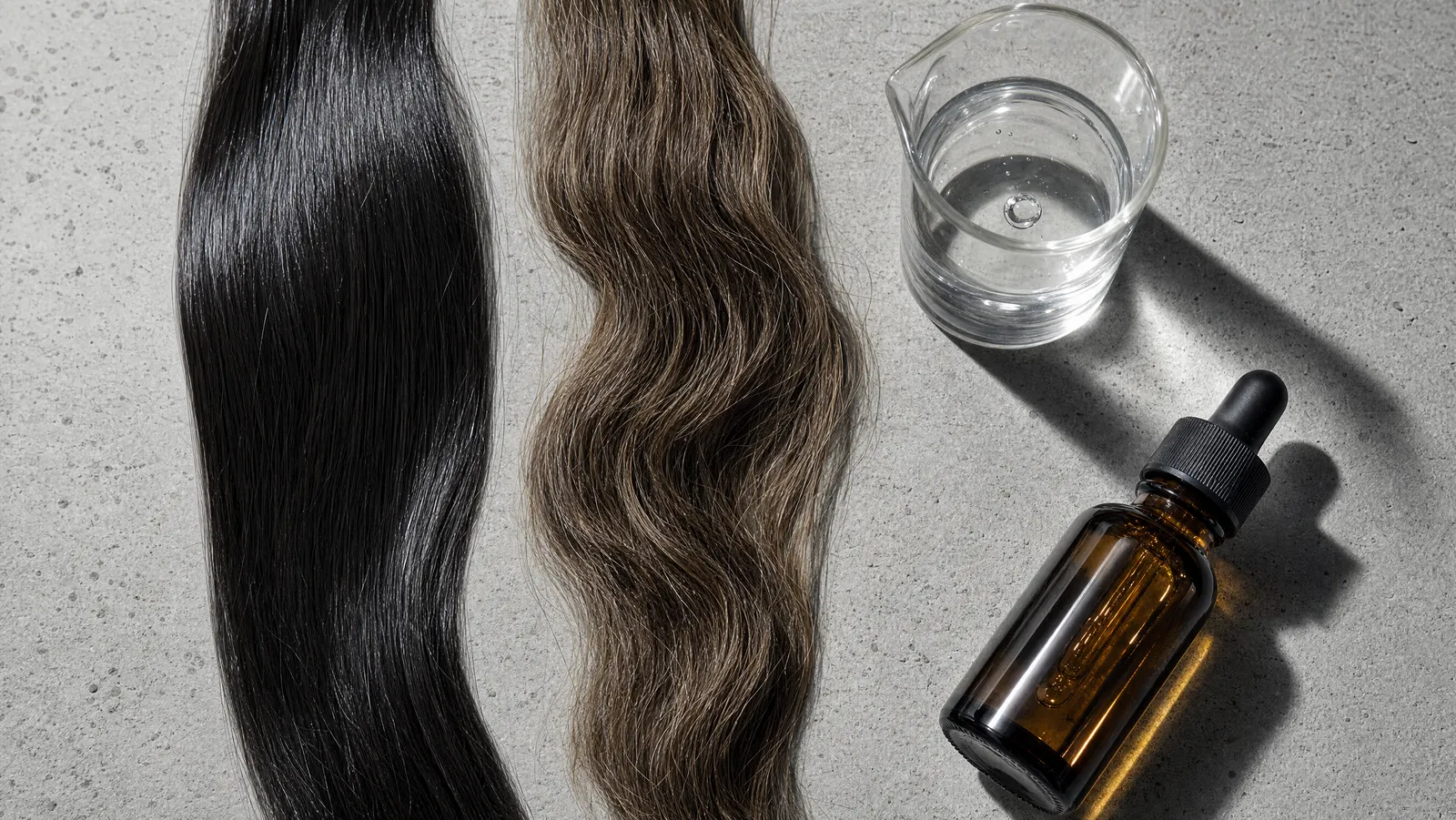
- Roll one strand between your thumb and finger. If you can barely feel it, it is fine. Coarse hair feels like sewing thread.
- Circle your ponytail with your fingers. Circumference is a density signal, and change over time matters more than the number.
- Look at your part in bright light. Visible scalp points to density, not strand width.
Density that is changing is a different question with medical causes, handled at the end of this piece.
Why fine hair goes flat
Three mechanical reasons, none of them about moisture.
A narrow shaft carries less weight before it collapses. Every gram of product, oil, or water is load the fiber holds up against gravity, and a thin fiber runs out of stiffness fast. The conditioner that makes coarse hair behave will flatten fine hair to the skull.
Oil travels the shaft efficiently. Sebum is made at the follicle and wicks down the hair, and on straight, fine hair there is little bend to slow the trip. The roots go greasy while a routine aimed at dryness keeps adding to the ends. The American Academy of Dermatology's guidance reflects this: if you have straight hair and an oily scalp, you may want to shampoo every day, and if your hair is fine or straight, apply conditioner to the ends rather than root to tip.
Residue accumulates faster relative to hair mass. A polymer film that is negligible on thick hair is a meaningful share of a fine strand's weight. Two weeks of leave-ins, dry shampoo, and hard water minerals is enough to change how your hair behaves, and that is the most common reason a fine-hair routine quietly stops working.
The wash day routine
1. Wash as often as your scalp requires, without guilt. The AAD frames frequency around how quickly hair gets oily and names daily shampooing as reasonable for straight hair with an oily scalp. Fine hair is not damaged by frequent washing the way the internet insists; it is damaged by heat and rough handling. A separate guide on how often you should wash your hair is coming, because the answer is personal.
2. Lather on the scalp, with fingertips. The AAD advises applying shampoo to your scalp rather than the entire length of your hair, clearing built-up product, dead skin, and excess oil without over-drying the lengths. The suds running down on the way out are all the cleansing your ends need.
3. On a greasy scalp, two short lathers beat one long one. The first lifts oil so the second reaches skin, and it stops you scrubbing harder instead.
4. Condition from the ears down. Full stop. The highest-leverage change on this page. Conditioner on the roots is the most common cause of hair that looks washed and behaves greasy by lunchtime.
5. Rinse longer than feels necessary. Count to thirty past the point you think you are done. Residue causes more dullness in fine hair than any lack of moisture.
6. Clarify periodically. Every two to four weeks, swap in a clarifying shampoo to strip silicones, polymers, dry shampoo, and mineral deposits. If your hair has slowly gone limp over a month, suspect buildup, not damage.
7. Use less leave-in, lower down. Mid-lengths and ends only, under the label amount.
Volume comes from the dry, not the bottle
What your hair does while it dries matters more than what you put on it, and the reason is chemistry. As McGill University's Office for Science and Society explains, hydrogen bonds are easily broken just by exposure to water, which is why wet hair can be readily shaped, and heat causes the water to evaporate and allows the hydrogen bonds to reform, keeping the hair in its new shape until moisture intervenes.
Translation: hair sets in whatever direction it is pointing as it dries. Dry it flat against your scalp and that is the shape you locked in for the day.
- Direct the roots away from the scalp. Flip your head, or lift sections and aim the dryer at the base, pushing roots opposite to how they naturally fall. Do this while hair is damp, before you touch a brush.
- Save the round brush for the final ten percent. Tension gives polish; applied early it gives flatness. Rough-dry to about ninety percent first.
- Let it set before you touch it. The shape locks in as the last of the water evaporates, so clip the roots up or leave it alone a few minutes — the cool shot on a dryer is aimed at the same moment.
- Skip daily heat where you can. The AAD suggests letting hair partially air dry before you style or comb it, and notes that brushing a hundred strokes a day can cause split ends.
Products, in the order they help: mousse into damp roots, root-lift spray along the part before drying, texture spray on dry hair at the end. Volumizing formulas are not magic and not nothing: film-forming polymers coat the shaft so strands sit apart and resist collapse, and powders absorb root oil. Optical and structural, not biological.
What to skip: heavy creams anywhere, oils at the roots, conditioner above the ears.
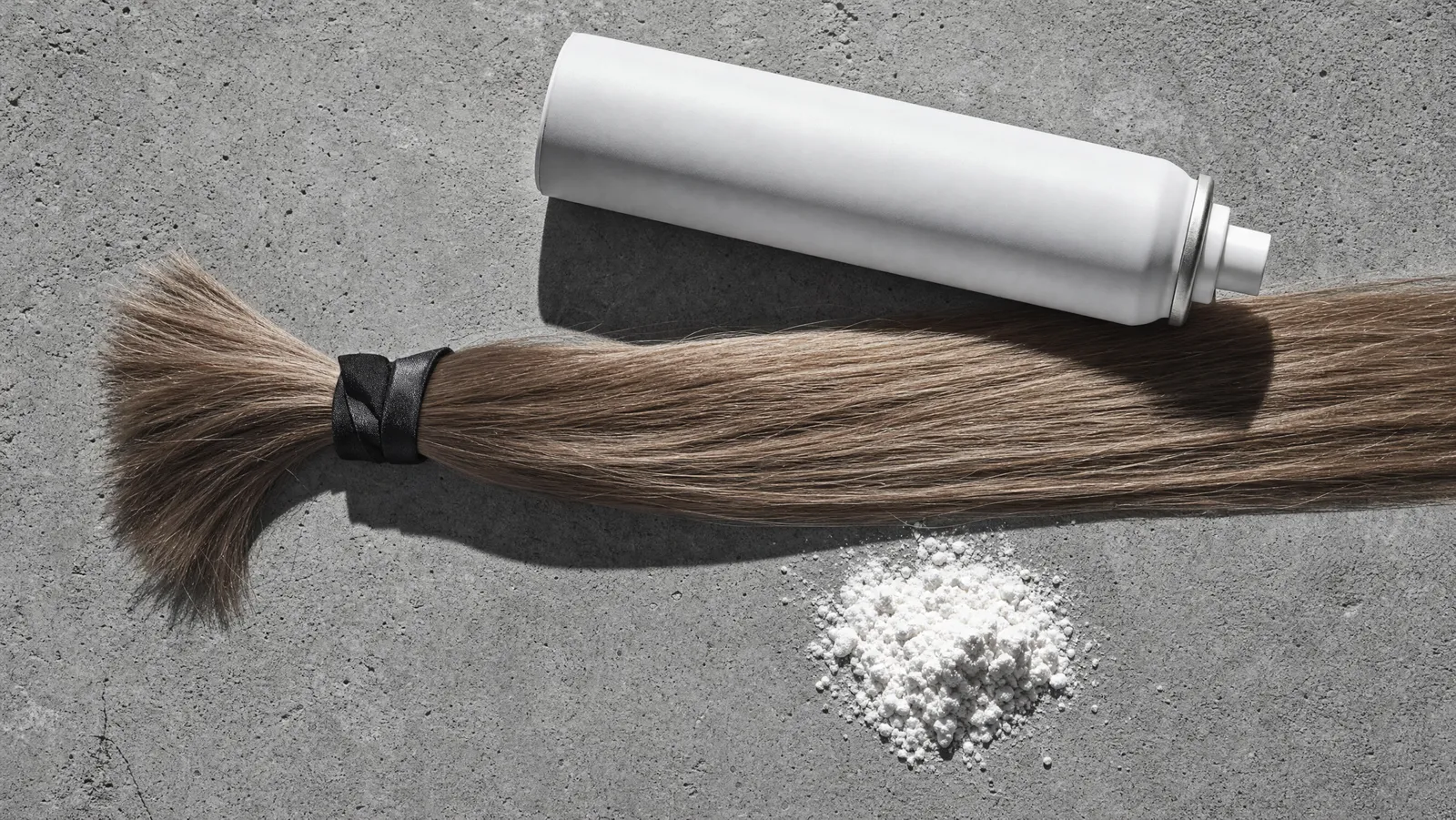
Dry shampoo, used properly
Dry shampoo buys you a day. It does not replace a wash.
According to the American Academy of Dermatology, dry shampoo contains little particles that absorb oil but does not clean hair, and it should not replace regular shampooing, because you need shampoo and water to cleanse. The AAD also warns that dry shampoo left sitting on hair or scalp can contribute to breakage and shedding, and that skipping washes in favor of it can set up seborrheic dermatitis.
Use it like this: a small amount, only where hair is greasy, sprayed several inches from the roots so it lands as dust rather than a wet patch. Wait a minute, then massage or brush it in so it disappears instead of sitting as a gray film. Overdo it, the AAD notes, and hair goes dry, stiff, and gritty, with an irritated scalp. Then wash it out on schedule.
Product formats ranked for fine hair
Lightest to heaviest. Fine hair lives at the top.
- Mousse. The best format for fine hair. Air-heavy, sits where you put it.
- Sprays (root lift, texture, light leave-in). Precise and easy to under-apply.
- Gel. Fine at a fraction of the label amount, scrunched out once dry.
- Lotion or milk. Borderline. Ends only.
- Cream. Usually too much. A pea-sized amount on the last two inches, at most.
- Butter. Too heavy.
- Oil. The heaviest thing you can apply.
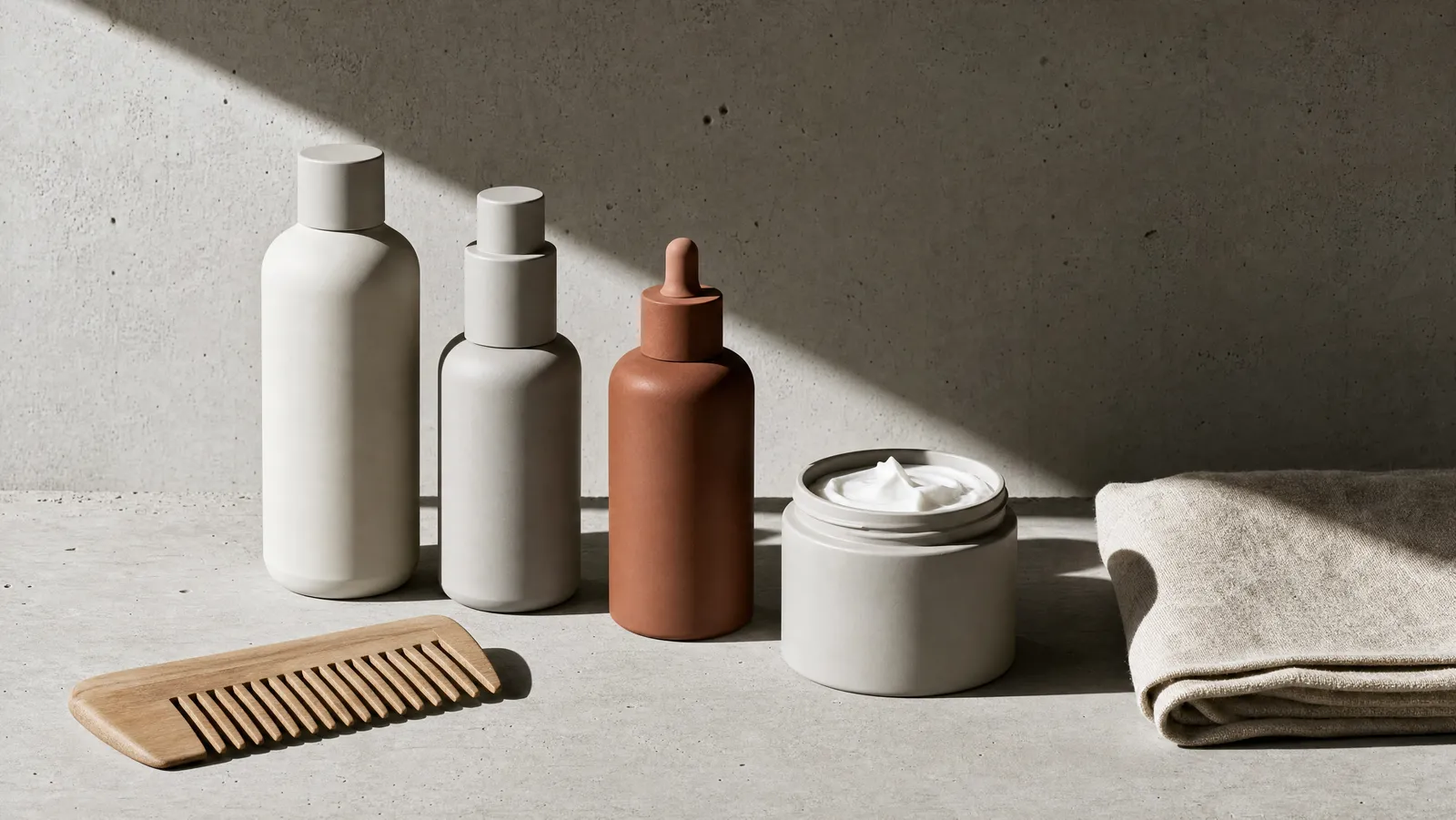
Oils are not banned, just badly placed. A drop on the very ends works, as does a pre-wash treatment shampooed out an hour later, because it never stays on.
The scalp underneath fine hair
Fine hair shows the skin it grows from. Flaking, redness, and oil that would vanish under dense hair are on display along your part, and that part line is exposed skin taking direct sun with nothing over it.
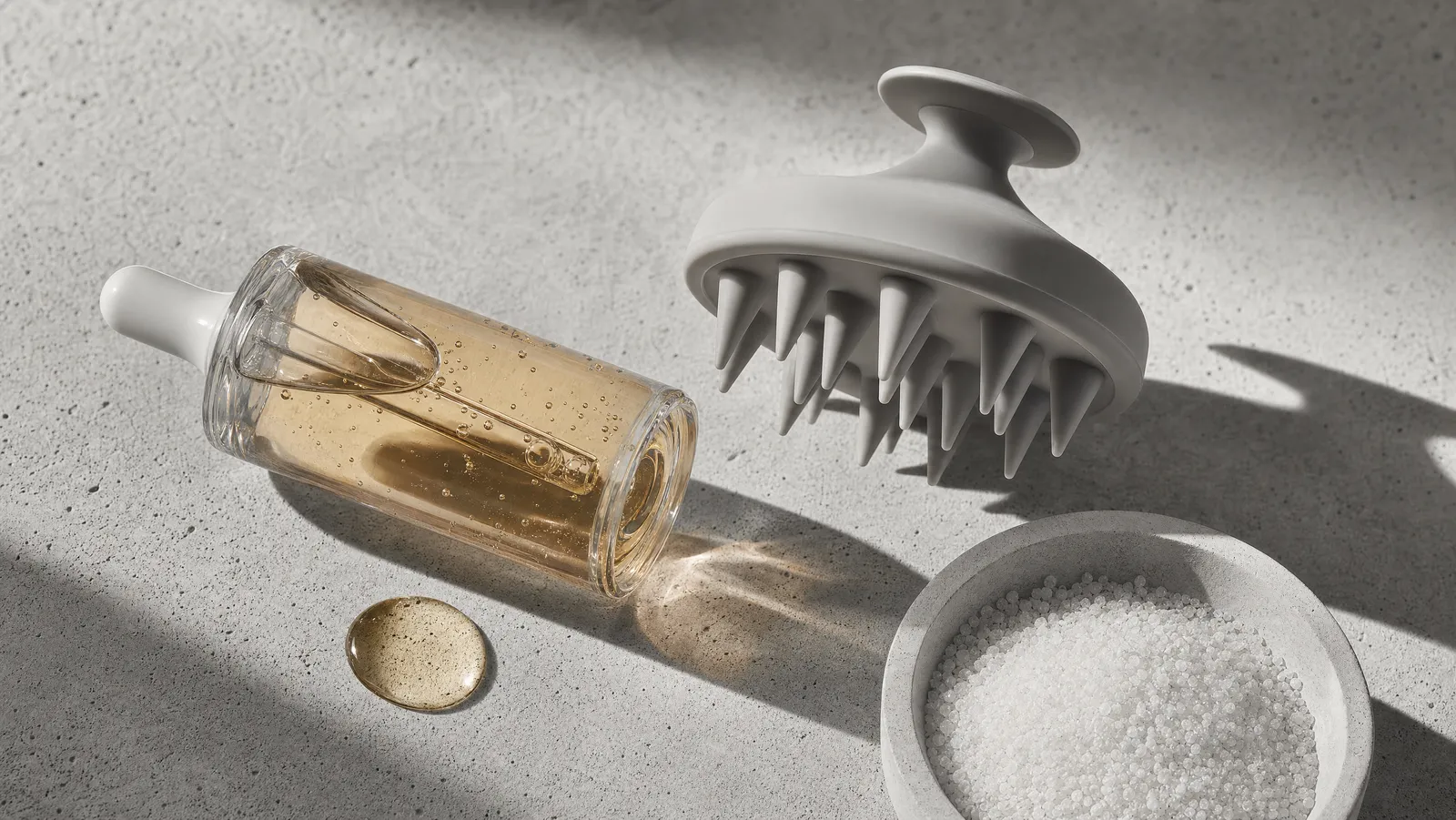
So the scalp is half the routine. Treat it like your face: cleanse properly, do not scrub it raw, cover or screen it in the sun, and listen when it complains. The long version is a scalp care routine.
Buildup, porosity, and why your routine stops working
Fine hair often sits at the low end of the porosity scale: the cuticle lies flat and tight, so products sit on the fiber rather than soaking in. The failure mode is not dryness, it is residue, and hair goes limp, dull, and faintly coated rather than brittle.
Which is why the fix is subtraction: lighter formulas, smaller amounts, a clarifying wash on a schedule. To work out where your hair sits, and why the float test does not tell you, my guide to hair porosity covers reading it from behavior instead.
Deep conditioning without going flat
Fine hair still gets damaged and still benefits from a mask. It needs different placement and cadence.
Ends only, and mean it. Start at the bottom, work up no further than your ears. Rinse thoroughly. Go lighter on cadence, every other week rather than weekly. Limp for two days afterward means you used too much or went too high. The best hair masks for damaged hair has the roundup.
Night protection is the other half. Fine strands break easily, and breakage at the mid-length reads as thinning even when density has not changed. The AAD is direct that tightly pulled ponytails, buns, and braids constantly pull at and damage your hair, and that over time the pulling can cause a form of hair loss called traction alopecia; its rule of thumb is that if your hairstyle feels painful, the style is too tight. So sleep on a smooth pillowcase, keep ties loose, wide, and low, and use fabric-covered ties like silk and satin scrunchies, which grip without the sawing action of a bare elastic.
When flat hair is actually hair loss
The most important section here: volume is optical, density is medical, and no shampoo crosses that line.
See a board-certified dermatologist if you notice a widening part, a ponytail that has visibly shrunk in circumference, shedding heavier than your normal that persists past a few months, patchy or sudden loss, or a sore, scaling, itchy scalp alongside it. The AAD names those first two when describing female pattern hair loss: is your part widening, and have you noticed that your ponytail is thinner these days.
Shedding after a shock to the body is common and usually temporary. The Cleveland Clinic describes telogen effluvium as temporary hair loss caused by a stressor or change to your body, with triggers including high fever, childbirth, severe infections, major surgery, thyroid disorders, and psychological stress. It notes that shedding tends to start two to three months after the trigger, usually lasts three to six months, and that hair does grow back afterward. That delay is worth knowing, because most people hunt for a cause in the week shedding started rather than the season before it.
Gradual density loss is a different pattern. Androgenetic alopecia, known as female or male pattern hair loss, is the most common cause of progressive thinning. According to a dermatology review in the National Library of Medicine's PMC archive, it is a nonscarring alopecia that evolves from progressive miniaturization of the hair follicles, which then produce shorter, finer hair shafts. The AAD's position is that treatment delivers the best results when started at the first sign of hair loss, and that other causes can look like pattern loss, so ruling them out is part of the job.
I will not name a treatment, a supplement, or a dose, because that is a clinician's call after someone has looked at your scalp. What I will say is that the window rewards showing up early, and months spent working through volumizing shampoos are months not spent asking the right question.
A realistic week
- Wash days: two to four a week, or daily if your scalp is oily. Shampoo at the roots, conditioner from the ears down, long rinse.
- Between washes: dry shampoo on greasy roots only, brushed in, one day at a time.
- Every two to four weeks: a clarifying wash.
- Every other week: a mask on the ends, rinsed well.
- Every night: smooth pillowcase, hair down or in a loose fabric tie.
- Every month: a photo of your part in the same light. The cheapest way to catch a real change early.
Frequently asked questions
Does washing every day damage fine hair? Not by itself. The AAD names daily shampooing as appropriate for straight hair with an oily scalp. What damages fine hair is heat, tension, and rough handling, so if you wash daily, dry gently and go easy on the flat iron.
Do volumizing shampoos actually work? Something modest and temporary: film-forming polymers coat the shaft so strands sit apart and resist collapse. A real optical effect, but not more hair, and no shampoo changes density.
Is it bad to skip conditioner entirely? For most fine hair, no, though it is rarely necessary. Conditioning the last few inches keeps ends from tangling and breaking, and breakage is what makes fine hair look thinner. Try placement before omission.
Will cutting my hair make it thicker? No. Cutting acts on the ends, not the follicle, and the follicle determines strand width. The Cleveland Clinic makes the same point about shaving, which does not change the rate of growth, the color, or the thickness of hair. A blunt cut looks denser because the ends are uniform and shorter hair resists bending. A good reason to get one, not a biological one.
Fine hair rewards restraint more than any other type: fewer products, lighter formats, placed lower, and real attention to the ten minutes while it dries. Give that six to eight weeks before you judge it, and if what is changing is density rather than volume, take it to a dermatologist instead of a shelf. When you are ready to build the rest out, the complete hair care routine guide picks it up.
About the Author
Kelly Hyde
Kelly Hyde is a certified skincare specialist and beauty trend forecaster, and the founder of Next Gen Beauty Reviews. She spends her time testing the latest K-beauty launches, at-home beauty devices, and skincare tools so you do not have to, and only recommends products she would put in her own routine.