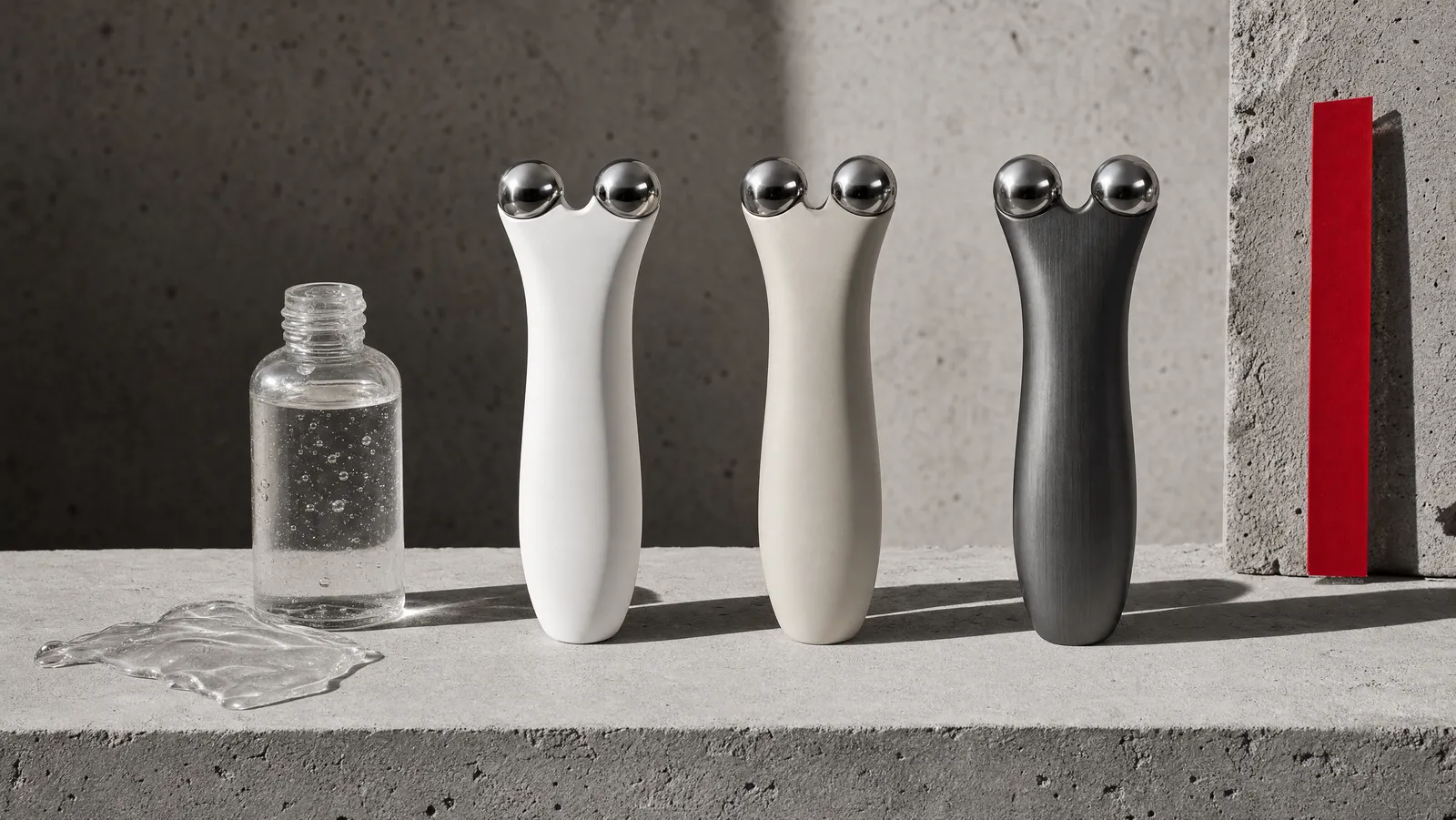
The Best At-Home RF Skin Tightening Devices

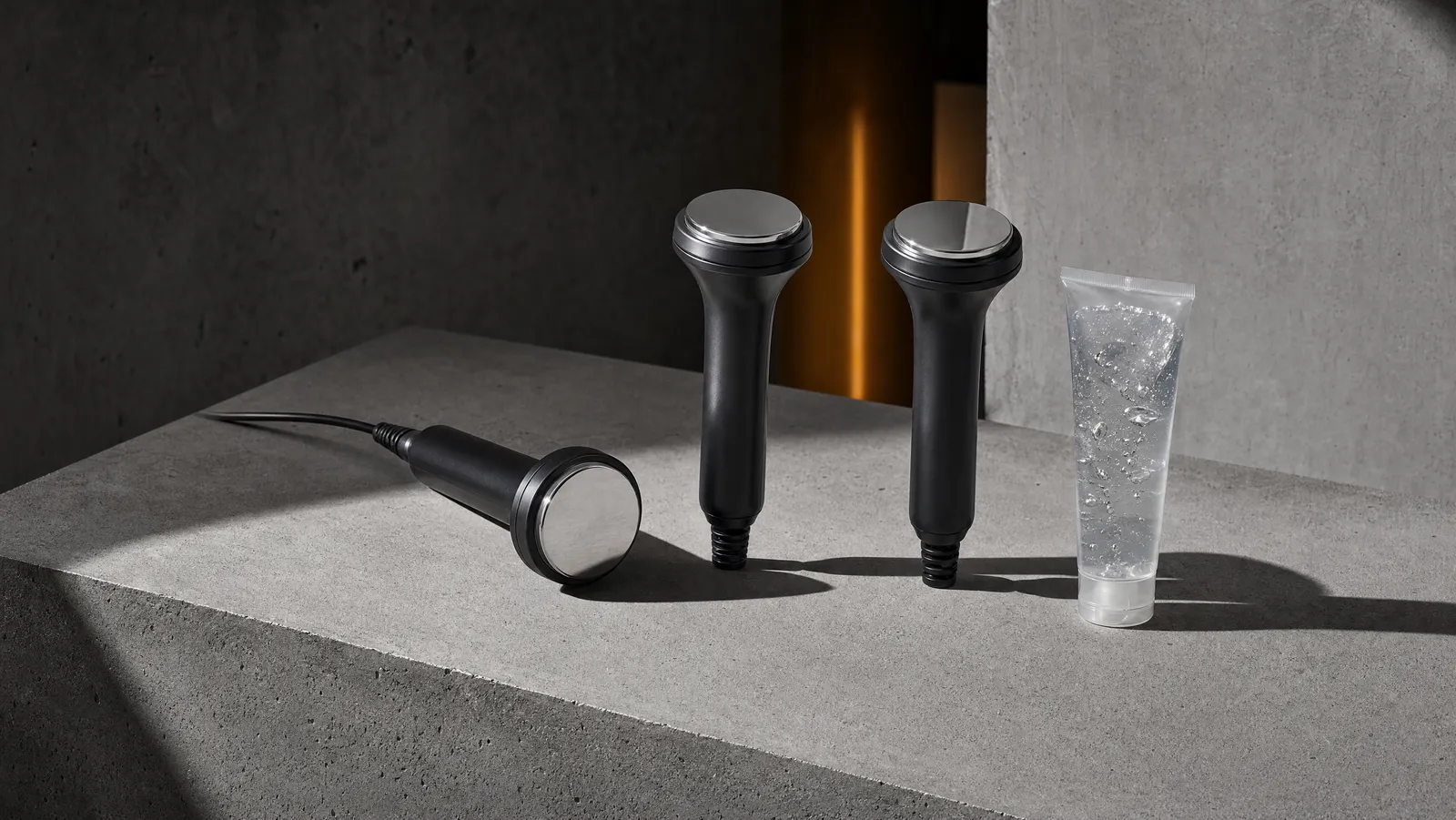
Radiofrequency is a heat treatment, so three numbers decide whether a handset deserves your money: its frequency, the temperature it holds your skin at, and the cutoff that shuts it off. My pick for most people is the NEWA RF Wrinkle Reduction Device at $299 as of October 2026, because it is the only one here that ships with the gel it requires and a protocol its maker will put in writing. Some links below are affiliate links — if you buy through them I may earn a small commission at no cost to you.
This is the radiofrequency chapter of my wider guide to the at-home device categories worth the money, and like the rest of that series it was written off the spec sheets, not the before-and-after photos. Choosing the best at home RF skin tightening device is an exercise in elimination: only one of these five listings publishes a frequency in megahertz, only one publishes a temperature at which the energy stops, and one of the five is not a device at all. Prices run from $89.99 to $739 as of October 2026, and the cards below carry the current price for each.
How to choose an at-home RF device
- Make the listing give you a frequency in megahertz. According to a review of radiofrequency technology for skin rejuvenation published in Health Science Reports, aesthetic RF spans 3 kHz to 300 MHz, and the electrode arrangement decides how deep it reaches: monopolar RF can penetrate up to 20 mm, while in a bipolar setup the theoretical maximum depth is roughly half the distance between the electrodes, typically 1 to 4 mm. Without those two facts you cannot tell which layer of skin a handset is aimed at. Whimicro is the only brand here that prints them, stating a 1.0 MHz bi-polar sine wave.
- Treat the thermal cutoff as the headline safety spec. Whimicro describes two independent internal thermistors that deactivate RF delivery if the contact area reaches 40 degrees Celsius (104 Fahrenheit). Nobody else on this page publishes a shutoff temperature. That absence is not academic: a 2024 review of home beauty devices in Clinical, Cosmetic and Investigational Dermatology notes that a first-generation home RF device, the Stop Eye, was recalled over the risk of high probe temperatures causing low-temperature burns.
- A motion sensor is physics, not a feature list. The Health Science Reports review explains that collagen remodeling trades temperature against dwell time, and that a lower temperature held longer, such as 43 degrees Celsius for three to five minutes, is recommended precisely to limit burn risk. If dwell time is half the equation, a sensor that cuts the energy the moment you stop gliding is doing real work. Whimicro says its probe only transmits while in constant motion; the others do not mention one.
- Price the gel before you price the handset. RF handsets generally need a conductive couplant, and the two brands here that document one require their own. NEWA includes a month of its own. TriPollar sells its separately, and a 2 x 50 ml pack is $105.99 as of October 2026, more than the entire budget device on this page costs.
- Decide whether you want a cord. The NEWA listing is explicitly the plug-in version: no fading output, no charge anxiety, and you treat your face wherever the outlet is.
- Check the skin-type range before you buy. Whimicro states its device is designed and optimized for Fitzpatrick skin types I to IV. A 2023 systematic review in Dermatologic Surgery covering 35 articles on RF and RF microneedling in Fitzpatrick types III to VI found seven studies reporting transient postinflammatory hyperpigmentation, one with mild prolonged hyperpigmentation and one with permanent scarring. It concluded that the risk of scarring or hyperpigmentation in skin of color appears low, while cautioning that a large proportion of those studies lack strong quality evidence.
How radiofrequency actually works on skin
RF does nothing optical to your skin. It pushes an alternating current through tissue, the tissue resists it, and the resistance makes heat. According to the Health Science Reports review, the energy delivered works out to current squared multiplied by tissue impedance multiplied by time, and because impedance differs by tissue the heat does not land evenly: the review ranks tissue impedance in increasing order, from water at the bottom up to fat, which heats most readily of all.
The temperature band is where the marketing and the biology separate. That review puts collagen denaturation and coagulation at two distinct thresholds: the dermis starts to denature collagen at 40 to 48 degrees Celsius and coagulates it at 55 to 70. Read those numbers next to Whimicro's 40-degree cutoff and you can see exactly what an at-home device is. Forty degrees is the very bottom edge of the band where anything happens to collagen at all, and it is a deliberately conservative ceiling for a handset used with no clinic-grade cooling system and no operator. A home handset works at the gentle end of a gradient on purpose.
Bipolar is the reason these are sold for unsupervised use. The review notes that monopolar RF prevents burns by using surface cooling, a trade-off against penetration depth, while bipolar RF's more manageable energy distribution is what enables safer home-use applications. The 2024 home-device review is blunter still: because home devices operate without professional supervision, their energy output levels are lower than those of medical devices. Anyone selling a handset as the clinic treatment in miniature is selling the word "technology" and skipping the word "dose." If you are still weighing modalities rather than models, how RF compares with microcurrent and ultrasound is a separate question from which RF unit to buy, and worth settling first.
The published evidence is real, small and short. The best-designed study I can point you to is a randomized split-face trial in Dermatology and Therapy, which tested a 1 MHz bipolar home RF device with a 630-nanometer red LED and a conductive gel against a commercial anti-aging cosmetic on the opposite side of 33 women's faces over 12 weeks. Wrinkles, radiance, color and skin thickness all improved significantly more on the device side, with no adverse reactions reported. The authors note that participants knew which side was which, which may lead to information bias, and the journal's publication fee was supported by the company that supplied the devices. That is the high-water mark here, not an outlier: the 2024 review counted 18 clinical studies of home facial-rejuvenation devices, found most use non-randomized methods with small samples and short follow-up, and reported the longest follow-up among them was 12 weeks.
So nobody has run a large, long, independently funded trial of at-home RF. A 224-participant randomized trial with a blinded assessor and a coupling-gel-only control group is registered on ClinicalTrials.gov, with wrinkle reduction at 12 weeks as its primary outcome; the registry records it as completed in September 2023, sponsored by a device manufacturer, and no results have been posted there. Until it publishes, buy for the specs and the ergonomics rather than the promise, the same way I weigh whether microcurrent works.
Our top picks at a glance
My Top Pick is the NEWA RF Wrinkle Reduction Device at $299 as of October 2026: a gel supply in the box and a maker-published schedule you can hold it to. If published specs matter most to you, buy the Whimicro 1MHz Bi-Polar RF Device instead at $239.97 as of October 2026, $59.03 less and the only unit here stating a frequency, a shutoff temperature and a motion sensor. The splurge is the TriPollar Stop Vx 2 at $739 and the budget experiment is the TUMAKOU at $89.99, both as of October 2026. Full reviews and current prices for all five sit in the cards below.
The picks, and what their spec sheets say
NEWA RF Wrinkle Reduction Device, $299 as of October 2026 (Top Pick). NEWA describes this as FDA cleared, and says the device and gel were clinically tested on skin types aged 37 to 65, used three times a week for the first four weeks and then twice a week for the remaining eight. NEWA reports that 100 percent of participants showed improvement in overall facial wrinkle appearance, 84 percent in skin firmness and 75.6 percent an increase in skin collagen content. Those are the maker's figures, and the listing states neither the number enrolled nor whether there was a control group, so there is no judging them from outside. What you can check: the 2024 Clinical, Cosmetic and Investigational Dermatology review catalogued three non-randomized facial studies of the NEWA device, and the results are more mixed than the marketing. In a 45-participant study followed for 12 weeks, skin tightness and radiance improved significantly while jawline, elasticity and wrinkle changes did not reach significance. In a 62-participant four-week study, wrinkle improvement was significant but scores had declined again by the three-month follow-up. It is still my top pick: corded, protocol published, gel in the box.
TriPollar Stop Vx 2, $739 as of October 2026 (Best Premium). TriPollar describes Triple-Wave Multi-RF technology delivering interchanging RF waves through the dermis layers, plus what it calls 2nd Generation Thermal Mapping that targets a treatment temperature and 3rd Generation features that adjust in real time. TriPollar also calls it the fastest, most efficient TriPollar device in the market. My objection is specific: the most sophisticated temperature-control story here never names a temperature. No figure for the target the thermal mapping aims at, no frequency, no stated cutoff. On a spec-sheet basis the $739 device gives you less to verify than the $239.97 one. Buy it for the brand with a long history in professional multi-RF, knowing the gel is sold separately.
Whimicro 1MHz Bi-Polar RF Device, $239.97 as of October 2026 (Best Published Safety Specs). This listing does what I spend most of these roundups asking for. Whimicro states a professional-grade 1.0 MHz radiofrequency sine wave, dual-redundant thermal safety with two independent internal thermistors that automatically deactivate RF delivery if the contact area reaches 40 degrees Celsius, an integrated motion sensor that only transmits while the probe is moving to prevent localized heat buildup, and a design optimized for Fitzpatrick skin types I to IV. Whimicro also describes it as clinically validated as a safe and effective over-the-counter aesthetic electrosurgical device for mild to moderate facial wrinkles; the listing does not identify that study, so weigh it as a claim, not a citation. A 1 MHz bipolar setup is the same class of hardware as the Dermatology and Therapy trial device, which is not the same as this one having been in it. If you want the unit you can argue with on paper, it is this one.
TUMAKOU RF + LED Red Light Facial Device, $89.99 as of October 2026 (Budget Pick). TUMAKOU says it combines RF energy and LED light, recommends consistent use two to three times a week alongside existing skincare, and notes that results take time. That is the whole specification. This listing publishes no frequency, no thermal cutoff, no irradiance and no LED wavelength, and I will not fill those gaps with plausible-sounding numbers. On a site that judges devices by what they print, a blank sheet is the finding. It may be a pleasant warm massage tool, and the red light wavelengths these combo devices add are what most buyers are curious about, but with no nanometer figure there is nothing to evaluate. If you want light therapy you can assess properly, buy a dedicated unit from my roundup of the best LED face masks.
TriPollar Activator Gel, 2 x 50 ml for $105.99 as of October 2026 (The Running Cost). TriPollar describes a non-sticky, water-like gel that spreads evenly and removes easily, and says it preps and shields skin during RF treatment while supporting heat transfer into the dermis. The listing names compatibility across the STOP series and describes the product as FDA cleared. It is here because it changes the shape of the decision.
The gel nobody prices into the decision
Do the arithmetic these listings avoid. One hundred milliliters of TriPollar Activator Gel costs $105.99 as of October 2026: about $53 per 50 ml bottle, or roughly $1.06 per milliliter. That single two-pack costs $16 more than the TUMAKOU device, and runs to about 14 percent of the Stop Vx 2's price. Buy the TriPollar flagship plus one two-pack of its gel and you are at $844.99 before your first session, as of October 2026.
Now the part nobody can calculate, including me: neither listing states how much gel a treatment consumes, so there is no honest way to say how many sessions 50 ml covers. Anyone who gives you a number is guessing. What I can give you is the shape of the commitment. NEWA's published protocol is three sessions a week for four weeks then two a week for eight more, which is 28 sessions across a 12-week course, and the box includes one month of gel. The included supply covers the first of those three months. Keep going at twice a week after that and you are buying couplant for roughly a hundred sessions a year, indefinitely.
That is not a scandal, it is a cost these roundups leave out. My advice is the one I give for microcurrent devices, which have an identical consumable problem: price the handset plus a year of gel, then compare. Do it that way and the $239.97 device with published specs and the $739 device with a separate gel bill stop looking like the same kind of purchase.
Who should skip RF entirely
Start with the hard contraindication. According to the safety information Solta Medical publishes for Thermage, its professional RF system is contraindicated for use in patients with an implantable pacemaker, an automatic implantable cardioverter defibrillator, or any other implantable electrical device, because those devices may be adversely affected by the radiofrequency field or current. That is a clinic platform rather than a handset, but the mechanism of concern does not shrink because the device got cheaper. If you have an implanted electrical device, this category is a conversation to have with your cardiologist first.
Beyond that, be honest about the evidence gaps instead of reassured by silence. RF device labeling in this category commonly lists pregnancy and metal implants in or near the treatment area as reasons not to treat, and as far as I can find nobody has studied at-home RF in pregnancy at all. The absence of a warning in a cheap listing is not a safety finding, it is a missing document. Broken, inflamed or actively infected skin is not a treatment site, and if you have had filler or a neuromodulator recently, ask the person who injected you about timing. Read your device's manual and treat its warnings as the floor, not the ceiling. None of this is medical advice and I am not your clinician.
There is a softer version of skipping it, too. If your concern is pigment, texture or fine lines rather than the look of slackness, RF is the wrong tool and an expensive way to find that out. The boring stack still has the strongest evidence behind it: a retinoid, daily sunscreen and a consistent anti-aging skincare routine are far better studied over the long term than any handset. I have that stack mapped by decade for your forties and your fifties.
Frequently asked questions
Do at-home RF devices actually tighten skin? They may help improve the appearance of firmness and fine lines while you keep using them, and the published trials show modest change on clinical scales rather than transformation. The split-face trial in Dermatology and Therapy found significantly greater improvement in wrinkles, radiance, color and skin thickness on the RF side than the cosmetic side over 12 weeks in the 32 women who completed it: a real result from a small, unblinded study using maker-supplied devices.
Is "FDA cleared" the same as "FDA approved"? No, and two of these listings use the cleared language, so it is worth getting right. Under the FDA's 510(k) program, a premarket notification demonstrates that a device is substantially equivalent to a legally marketed predicate device. The FDA's own CDRH Learn training material states that the agency clears 510(k) submissions on the basis of that substantial-equivalence determination, and that only products approved through the premarket approval process are considered FDA approved. Clearance is permission to sell based on a comparison, not a government finding that your jawline will change.
How long until I see something, and do results last? The follow-up windows in this literature are too short to say properly. The 2024 review found the longest follow-up among 18 studies was 12 weeks, and in the 62-participant NEWA study it catalogued, wrinkle scores had declined again by the three-month mark. Treat at-home RF as a maintenance habit, and judge a device on whether you are still reaching for it in two months.
Do I really need the conductive gel? Yes, and not as an upsell. RF heating depends on impedance at the electrode-to-skin contact, which is why the makers here that document one specify a couplant: TriPollar says its gel supports heat transfer into the dermis, and NEWA ships a month of its own in the box. Use the medium your manual names rather than improvising with whatever serum is open.
If you want one recommendation, it is still the NEWA RF Wrinkle Reduction Device: corded, gel included, and a protocol published in enough detail that you can hold the brand to it. If you would rather buy the handset that shows its work, the Whimicro is $59.03 cheaper and the only one on this page that prints a frequency and a shutoff temperature, which on a spec-sheet site counts for a lot. Either way, add a year of Activator Gel or its equivalent to the price before you decide, compare the current prices in the cards below, then head back to the Next Gen Beauty device guide to see where radiofrequency sits against LED, microcurrent and the rest of the drawer.
The Shortlist
Top 3
NEWA RF Wrinkle Reduction Device (Plug-In)
- Modality
- Radiofrequency
- Power
- Plug-in (corded)
- Protocol
- 3x/week for 4 weeks, then 2x/week

TriPollar Stop Vx 2
- Modality
- Multi-RF + DMA
- Temperature control
- Thermal mapping (2nd gen)
- Gel required
- Yes (sold separately)

Whimicro 1MHz Bi-Polar RF Device
- Frequency
- 1.0 MHz bi-polar
- Thermal cutoff
- 40C / 104F (dual thermistor)
- Motion sensor
- Yes
The Reviews
01—05NEWA RF Wrinkle Reduction Device (Plug-In)
The only pick here that arrives with the gel it needs and a written protocol its maker will commit to.
- Modality
- Radiofrequency
- Power
- Plug-in (corded)
- Protocol
- 3x/week for 4 weeks, then 2x/week
- Gel required
- Yes (1 month included)
The only pick here that arrives with the gel it needs and a written protocol its maker will commit to. Corded, which means it never fades mid-session.
TriPollar Stop Vx 2
TriPollar's flagship, with the most elaborate temperature-control story in the category and the steepest true cost once you add the gel it needs.
- Modality
- Multi-RF + DMA
- Temperature control
- Thermal mapping (2nd gen)
- Gel required
- Yes (sold separately)
TriPollar's flagship, with the most elaborate temperature-control story in the category and the steepest true cost once you add the gel it needs.
Whimicro 1MHz Bi-Polar RF Device
The only listing here that publishes a frequency, a thermal shutoff and a motion sensor.
- Frequency
- 1.0 MHz bi-polar
- Thermal cutoff
- 40C / 104F (dual thermistor)
- Motion sensor
- Yes
- Skin types
- Fitzpatrick I-IV
The only listing here that publishes a frequency, a thermal shutoff and a motion sensor. If spec transparency is your deciding criterion, this is the one.

TUMAKOU RF + LED Red Light Facial Device
The cheapest way in and the least documented: no published frequency, wavelength or thermal cutoff.
- Modality
- RF + LED
- Suggested use
- 2-3x per week
- Published frequency
- Not stated by maker
- Published thermal cutoff
- Not stated by maker
The cheapest way in and the least documented: no published frequency, wavelength or thermal cutoff. A low-stakes experiment rather than a considered buy.

TriPollar Activator Gel 50ml (2-Pack)
Not a device, and on this page on purpose.
- Volume
- 2 x 50 ml
- Compatibility
- TriPollar STOP series
Not a device, and on this page on purpose. RF needs a couplant, and 100 ml of TriPollar's own costs more than the budget handset in this roundup.
About the Author
Kelly Hyde
Kelly Hyde is a certified skincare specialist and beauty trend forecaster, and the founder of Next Gen Beauty Reviews. She spends her time testing the latest K-beauty launches, at-home beauty devices, and skincare tools so you do not have to, and only recommends products she would put in her own routine.