The Best Vitamin C Serums for Brightness and Antioxidant Protection

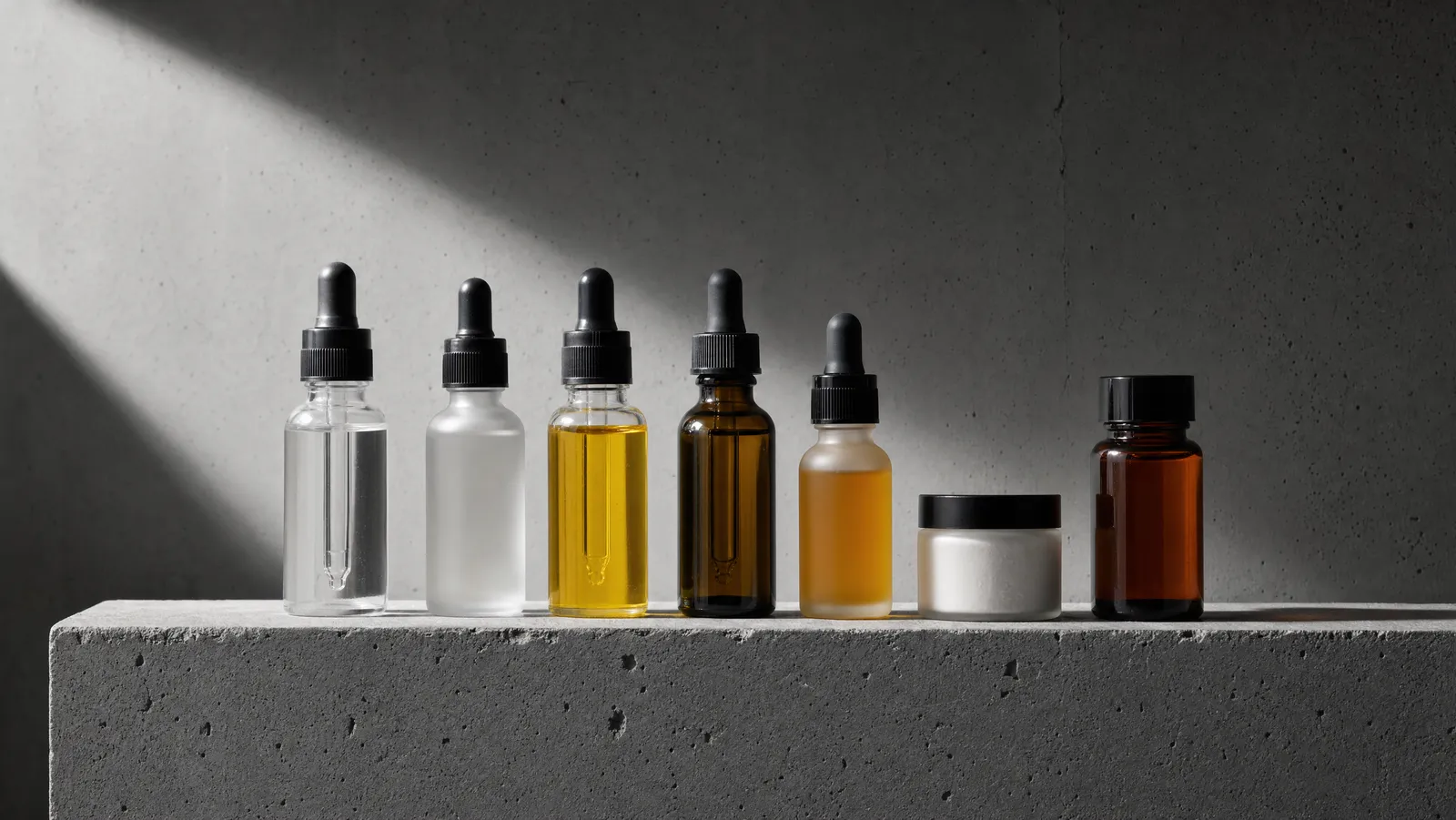
The best vitamin C serum is the one you will finish while it is still fresh. Form and packaging matter more than the number on the label, and plenty of people shopping for a brightening serum are already using one that went off weeks ago. Vitamin C is the daytime antioxidant slot in an anti-aging skincare routine, and the one ingredient on your shelf that expires in plain sight.
My pick is the Maelove Glow Maker. Some links below are affiliate links — if you buy through them I may earn a small commission at no cost to you.
How to choose a vitamin C serum
- Decide on the acid form or a derivative first. L-ascorbic acid is the reference form. A 2017 review in the Journal of Clinical and Aesthetic Dermatology by Al-Niaimi and Chiang calls it the most biologically active and best studied form of vitamin C. Derivatives such as ascorbyl glucoside and sodium ascorbyl phosphate are gentler and more stable, but they have to convert on your skin before they count. Pick a lane before you compare prices.
- Aim for a sensible percentage, not a trophy number. That same review notes a product needs a vitamin C concentration above eight percent to be of biological significance, and that going above 20 percent does not add biological significance. Ten to 15 percent is the band where almost every well-formulated serum lives.
- Low pH is not a flaw, it is the mechanism. The review states that reducing the acidity of L-ascorbic acid to a pH below 3.5 is an effective way to improve both its stability and its permeability. A pH-neutral L-ascorbic acid serum is a contradiction, which is part of why acid-form serums can sting.
- Look for vitamin E and ferulic acid on the label. They are not filler. The JCAD review notes ferulic acid helps stabilize the molecule and helps the formula reach that sub-3.5 pH.
- Buy the packaging as seriously as the formula. Cleveland Clinic tells readers to look for ascorbic acid or L-ascorbic acid at a 10 to 20 percent concentration, in dark or tinted glass. A 2025 review in the Journal of Skin and Stem Cell lists low pH, opaque packaging, minimizing water and omitting oxygen during formulation among the strategies that keep L-ascorbic acid intact. Clear bottles and wide-mouth droppers are working against you.
- Match the bottle size to how fast you use it. One fluid ounce of an acid-form serum used every morning is roughly a season. Two ounces is a bargain only if the active is stable enough to survive month four, which is a real argument for a derivative. If you want the arithmetic rather than the rule of thumb, our cost-per-use calculator turns a size and a price into a per-use figure and flags the bottles you will not finish before their open-jar window runs out.
How vitamin C actually works on skin
L-ascorbic acid is the form everything else is measured against. It is the molecule your skin uses directly, with no conversion step, which is why the formulation rules around it are so fussy. Al-Niaimi and Chiang describe topical vitamin C as having antioxidative, photoprotective, antiaging and antipigmentary effects, and L-ascorbic acid as the most biologically active and well studied version of it.
The low pH is doing a job. According to that review, dropping L-ascorbic acid below pH 3.5 improves both its stability in the bottle and its ability to get through skin. A 2025 review in the Journal of Skin and Stem Cell backs that with the underlying data, noting in vivo studies on pig skin where cutaneous L-ascorbic acid concentration rose at a pH of 3.5 or lower. So a slight tingle on application is the formula being the thing you bought.
Derivatives trade potency for stability, and that trade is real. Ascorbyl glucoside, sodium ascorbyl phosphate and the oil-soluble esters like tetrahexyldecyl ascorbate are all more stable than the acid form, and they sit at skin-friendlier pH levels. The catch is that they have to be enzymatically converted on skin before they do anything, and the 2025 review is blunt that this stability comes with lower bioavailability. The JCAD review goes further and cites a study in which daily application of magnesium ascorbyl phosphate, ascorbyl-6-palmitate and other derivatives did not raise L-ascorbic acid levels in skin at all. Derivatives are a good answer for reactive skin. They are not a straight swap.
Vitamin E and ferulic acid are there for chemistry, not marketing. The combination most serums are chasing comes from a 2005 paper by Lin and colleagues in the Journal of Investigative Dermatology: adding ferulic acid to a solution of 15 percent L-ascorbic acid and one percent alpha-tocopherol improved the chemical stability of both vitamins and doubled the photoprotection of skin against solar-simulated light, from roughly fourfold to eightfold. That paper is why the 15 percent plus E plus ferulic trio shows up on so many labels.
Oxidized vitamin C is spent vitamin C. Ascorbic acid donates electrons readily, including to oxygen. That same 2025 review puts the problem plainly: the potent antioxidant effect is the thing that makes the molecule unstable. A fresh acid-form serum is nearly colorless or faintly straw-toned, and it drifts yellow, then orange, then brown. In my experience that color is the cheapest shelf-life test you will ever get. A faint amber ring at the dropper neck is normal. A whole bottle the color of iced tea is not worth applying.
On tone and dark spots, be precise. The JCAD review explains that vitamin C inhibits the enzyme tyrosinase, which decreases melanin formation, and Cleveland Clinic points to one study in which 73 percent of participants saw an improvement in hyperpigmentation, while noting that the effects appear to be temporary. The honest framing is that a good serum may help the look of uneven tone over months. It is not a treatment for melasma, and persistent or changing dark patches are a dermatologist conversation.
Vitamin C and sunscreen
This is the pairing worth your attention, and the one that gets stated backwards most often. An antioxidant serum complements sunscreen. It never replaces it.
Sunscreen reduces how much UV reaches your skin, but Al-Niaimi and Chiang note that sunscreens are only partially effective at blocking the free radicals UV exposure produces. An antioxidant works on that second problem, mopping up damage from the radiation that got through. You need both halves. The American Academy of Dermatology's sequencing is simple: apply vitamin C after washing your face in the morning, before you put on sunscreen.
So the order is cleanse, vitamin C, moisturizer if you use one, then broad-spectrum SPF 30 or higher as the last step. The AAD also notes that science shows vitamin C can reduce skin aging and dark spots, which is a usefully modest claim and the one I would hold a serum to. If the reason you skip SPF is texture, that is a solvable problem. The textures I reach for are in my roundup of the best Asian sunscreens, and a sunscreen you will reapply beats a better one you resent.
Where vitamin C fits in your routine
The cleanest schedule I know is a division of labor: antioxidant in the morning, retinoid at night. Vitamin C wants to be under your sunscreen, when UV is actually hitting you. A retinoid wants darkness and no competition. Running them twelve hours apart means you never have to referee a pH argument between two actives. If you have not picked the evening half yet, start with the best retinol serums, and if you are deciding between forms, the difference between retinol, retinal, and tretinoin is the piece to read first. Prescription retinoids are a clinician's call, not a label-reading exercise, and retinoids in general are avoided during pregnancy and breastfeeding, so take that one to your doctor or dermatologist rather than a comments section.
When should you add an antioxidant at all? After sunscreen is a habit and a retinoid is either going well or deliberately parked. Vitamin C is the third step, not the first, which is roughly where it lands in an anti-aging skincare routine for your 30s. Which actives go in your morning and night routine is a question worth settling on paper before you buy anything, because most overloaded shelves are a sequencing problem rather than a product problem.
Layering is the other stumble. A serum goes after cleansing and any watery step, before creams, the same thinnest-to-thickest logic behind the Korean skincare routine. If you are unsure whether your vitamin C counts as an essence, a serum or an ampoule, essence versus serum versus ampoule sorts that out. And if your barrier is already irritated, calm it first. A cica-based soothing routine for a week or two costs nothing and saves you a bad first impression.
Our top picks at a glance
My overall winner is the Maelove Glow Maker, because it runs the 15 percent L-ascorbic acid, vitamin E and ferulic acid combination the literature keeps validating, in a light base that does not fight sunscreen. If your skin is reactive or you want barrier support in the same bottle, the CeraVe Skin Brightening Vitamin C Serum runs 10 percent pure L-ascorbic acid alongside ceramides in opaque packaging, for about half the price. Full reviews, specs and current prices for all six are in the cards below.
The six serums, and who each one is for
Maelove Glow Maker Vitamin C Serum, Top Pick
$39.90 as of October 2026. The Maelove Glow Maker Vitamin C Serum builds this around 15 percent L-ascorbic acid with vitamin E and ferulic acid, formulated, in the brand's words, at the correct pH. That is the trio from the 2005 Lin paper, and it is the reason this formula gets copied so often. Maelove describes the texture as light as water and fast enough to absorb that you can apply SPF or makeup immediately, which matched my experience, and says the serum is made in small batches and held in certified cold storage to slow oxidation. One fluid ounce. This is the bottle to buy if you want the full-strength standard and you will use it every morning. It is also the priciest here, and for a reason I respect: nothing in this formula is hedged.
CeraVe Skin Brightening Vitamin C Serum, Best for Sensitive, Barrier-First Skin
$16.79 as of October 2026, down from $28.99. The CeraVe Skin Brightening Vitamin C Serum runs 10 percent pure L-ascorbic acid, which CeraVe calls the purest form of vitamin C, paired with hyaluronic acid and ceramides 1, 3 and 6-II. CeraVe states that ceramides make up 50 percent of the lipids in the skin barrier, which is the brand's framing for why they are in here. It is fragrance-free, paraben-free, non-comedogenic and allergy tested, and the packaging is opaque and air-restricting, which CeraVe says helps prevent oxidation. One fluid ounce. If you want a genuine acid-form serum but your skin has pushed back on actives before, start here rather than at 15 percent.
The Ordinary Ascorbyl Glucoside Solution 12%, Gentlest Derivative
$14.80 as of October 2026. The Ordinary Ascorbyl Glucoside Solution 12% is exactly what the name says: a water-soluble derivative that the brand describes as converting into the active form once it is on skin, which helps minimize irritation potential. The brand is refreshingly direct that this is a less potent but more stable alternative to direct vitamin C, and I am going to be equally direct: the potency of derivatives is less well established than that of L-ascorbic acid, and you should not treat this as an equivalent swap. Directions are a few drops morning and evening. One fluid ounce. This is the right first bottle if acid-form serums have stung you, and the right answer if your alternative is owning nothing.
Naturium Vitamin C Complex Serum, Best Everyday Blend
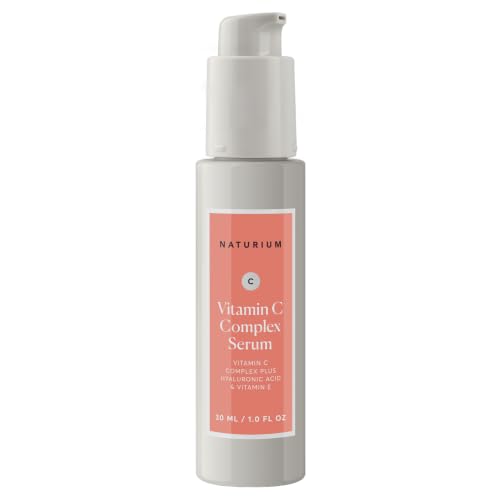
$16.79 as of October 2026, down from $20.99. Naturium's Vitamin C Complex Serum is built on a stabilized L-ascorbic acid complex supported by sodium ascorbyl phosphate and a bioactive fruit blend, plus sodium hyaluronate and tocopheryl acetate for hydration and antioxidant backup. The listing does not publish a percentage for the complex, so I am not going to guess at one. The brand says it is formulated to be pH appropriate, is vegan, cruelty-free and paraben-free, and directs morning and night use on clean skin followed by moisturizer and daily sun protection, with sensitive, dry and combination skin in mind. One fluid ounce. This is the middle path: real vitamin C chemistry, a pleasant everyday texture, and no argument about numbers.
TruSkin Brightening Vitamin C Serum, Best Stable Derivative for Daily Use
$34.99 as of October 2026, down from $38.99. The active in the TruSkin Brightening Vitamin C Serum is sodium ascorbyl phosphate rather than the acid form, layered with hyaluronic acid, vitamin E, aloe vera and jojoba oil. TruSkin calls it a superior form of vitamin C that maintains potency over time while minimizing irritation compared with harsher serums, and describes the product as dermatologist and clinically tested; those are the maker's words, not my verdict. No percentage is disclosed. It is free from parabens, dyes and harsh additives, and cruelty-free. Two fluid ounces, which is unusual in this category and only sensible because a phosphate derivative is genuinely more stable than L-ascorbic acid. Buy it if you want an unscented daily serum with a lot of hydrating support and no stinging.
The Ordinary 100% L-Ascorbic Acid Powder, Budget Pick and Maximum Freshness
$6.60 as of October 2026. The Ordinary 100% L-Ascorbic Acid Powder is a 0.7 ounce jar of pure L-ascorbic acid powder you mix into another serum or moisturizer at the moment of use, which sidesteps oxidation entirely because the active never sits in water waiting for you. That is the clever part. The honest part is that a mix-your-own has no controlled pH and no controlled concentration, so you are running an approximation rather than a formula, and The Ordinary itself warns that depending on your mixture you may get a high concentration of direct vitamin C and a tingling sensation with it. I am not going to give you measurements, because that would be a formulation protocol I cannot stand behind. The brand's directions are a small amount mixed with other products, once daily in the evening, sun protection during the day, and nothing near the eye area. Worth it for the curious and the thrifty, not for anyone who wants a predictable dose.
Frequently asked questions
Morning or night? Morning, under sunscreen. The American Academy of Dermatology's guidance is to apply vitamin C after washing your face in the morning, before sunscreen, and Cleveland Clinic recommends the same morning pairing after a daily cleanser. The reasoning is above: sunscreens only partially block UV-generated free radicals, so your antioxidant is most useful on the same shift as your SPF. The Ordinary's ascorbyl glucoside and Naturium's complex both carry morning and evening directions, so twice daily is fine for those, but if you only do it once, do it in the morning.
Can I use vitamin C with retinol? Yes, just not in the same application. Vitamin C in the morning and your retinoid at night keeps both doing their jobs and removes the pH question entirely, since acid-form vitamin C wants to sit below 3.5 and your retinoid does not. If you want both in the evening, alternate nights instead of stacking them, and introduce one new active at a time so you know what your skin is reacting to.
Why did my serum turn orange? Because it oxidized. The 2025 Journal of Skin and Stem Cell review notes that the strength of L-ascorbic acid as an antioxidant is precisely what makes it unstable, and that low pH, opaque packaging, minimal water and excluding oxygen during formulation are what slow the process down. Heat, light and air exposure speed it up. A faint amber tint near the dropper is normal; a bottle that has gone deep orange or brown has largely spent its active, and the kind thing to do is replace it. Keep the cap tight, keep it out of a sunny window, and buy a size you will finish.
What percentage do I need? Less than you think. Al-Niaimi and Chiang report that a product needs more than eight percent vitamin C to be biologically significant, and that above 20 percent you gain no additional biological significance, with higher levels potentially adding irritation. Cleveland Clinic's practical advice is to look for 10 to 20 percent. That makes CeraVe's 10 percent and Maelove's 15 percent both squarely in range, and it means a 30 percent serum is a marketing number rather than an upgrade.
Can I use vitamin C with niacinamide? In practice, yes. The old internet warning is generally traced to decades-old laboratory conditions involving heat rather than to finished cosmetic formulas, and plenty of serums contain both. If you are still nervous, split them: vitamin C in the morning, niacinamide at night. What matters far more is whether you apply either one consistently.
Vitamin C is the best-evidenced optional step in a daytime routine, and the least forgiving of neglect. Pick a form that suits your skin, respect the low pH and the opaque bottle, use it under sunscreen every morning, and replace it when it turns. If you want the simplest version of all that, the Maelove Glow Maker is the bottle I keep buying, and slotting it into the Next Gen Beauty anti-aging skincare guide will tell you what belongs around it.
The Shortlist
Top 3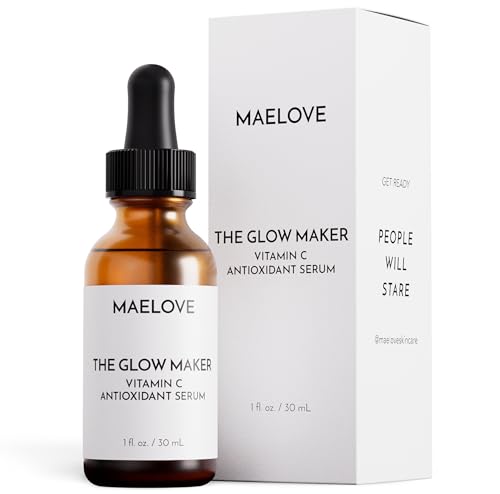
Maelove Glow Maker Vitamin C Serum
- Active
- 15% L-ascorbic acid
- Support antioxidants
- Vitamin E + ferulic acid
- Size
- 1 fl oz

CeraVe Skin Brightening Vitamin C Serum
- Active
- 10% L-ascorbic acid
- Also contains
- 3 ceramides + hyaluronic acid
- Size
- 1 fl oz

The Ordinary Ascorbyl Glucoside Solution 12%
- Active
- 12% ascorbyl glucoside
- Form
- Derivative (water-soluble)
- Size
- 1 fl oz
The Reviews
01—06Maelove Glow Maker Vitamin C Serum
The 15% L-ascorbic acid, vitamin E and ferulic acid trio at the pH that formula actually needs, in a light, fast-absorbing base.
- Active
- 15% L-ascorbic acid
- Support antioxidants
- Vitamin E + ferulic acid
- Size
- 1 fl oz
- Best for
- The full-strength standard
The 15% L-ascorbic acid, vitamin E and ferulic acid trio at the pH that formula actually needs, in a light, fast-absorbing base. The reference formula without the reference price.
CeraVe Skin Brightening Vitamin C Serum
10% pure L-ascorbic acid paired with three ceramides and hyaluronic acid, in opaque air-restricting packaging.
- Active
- 10% L-ascorbic acid
- Also contains
- 3 ceramides + hyaluronic acid
- Size
- 1 fl oz
- Fragrance
- Fragrance-free
10% pure L-ascorbic acid paired with three ceramides and hyaluronic acid, in opaque air-restricting packaging. Fragrance-free, and the gentlest way to run a real acid-form vitamin C.
The Ordinary Ascorbyl Glucoside Solution 12%
A water-soluble vitamin C derivative that converts to the active form on skin.
- Active
- 12% ascorbyl glucoside
- Form
- Derivative (water-soluble)
- Size
- 1 fl oz
- Best for
- Reactive skin, beginners
A water-soluble vitamin C derivative that converts to the active form on skin. Less potent than pure L-ascorbic acid, far more stable, and the sensible starting point if acid forms sting.
Naturium Vitamin C Complex Serum
A stabilized L-ascorbic acid complex backed by sodium ascorbyl phosphate, vitamin E and sodium hyaluronate.
- Active
- Stabilized L-ascorbic acid complex
- Also contains
- Sodium ascorbyl phosphate, vitamin E
- Size
- 1 fl oz
- Best for
- Sensitive, dry, combination
A stabilized L-ascorbic acid complex backed by sodium ascorbyl phosphate, vitamin E and sodium hyaluronate. A middle path for skin that wants antioxidants daily without a potency argument.

TruSkin Brightening Vitamin C Serum
Built on sodium ascorbyl phosphate rather than the acid form, with vitamin E, aloe and jojoba.
- Active
- Sodium ascorbyl phosphate
- Also contains
- Vitamin E, aloe, jojoba, hyaluronic acid
- Size
- 2 fl oz
- Fragrance
- Unscented
Built on sodium ascorbyl phosphate rather than the acid form, with vitamin E, aloe and jojoba. Two full ounces, which matters for a category you are supposed to finish quickly.

The Ordinary 100% L-Ascorbic Acid Powder
Pure L-ascorbic acid powder you mix fresh into a serum or moisturizer each time, which sidesteps the oxidation problem entirely.
- Active
- 100% L-ascorbic acid powder
- Form
- Mix-it-yourself powder
- Size
- 0.7 oz
- Best for
- Oxidation-proofing on a budget
Pure L-ascorbic acid powder you mix fresh into a serum or moisturizer each time, which sidesteps the oxidation problem entirely. Fiddly, potent, and under seven dollars.
About the Author
Kelly Hyde
Kelly Hyde is a certified skincare specialist and beauty trend forecaster, and the founder of Next Gen Beauty Reviews. She spends her time testing the latest K-beauty launches, at-home beauty devices, and skincare tools so you do not have to, and only recommends products she would put in her own routine.