Centella Asiatica (Cica) in Korean Skincare: What It Does for Your Skin

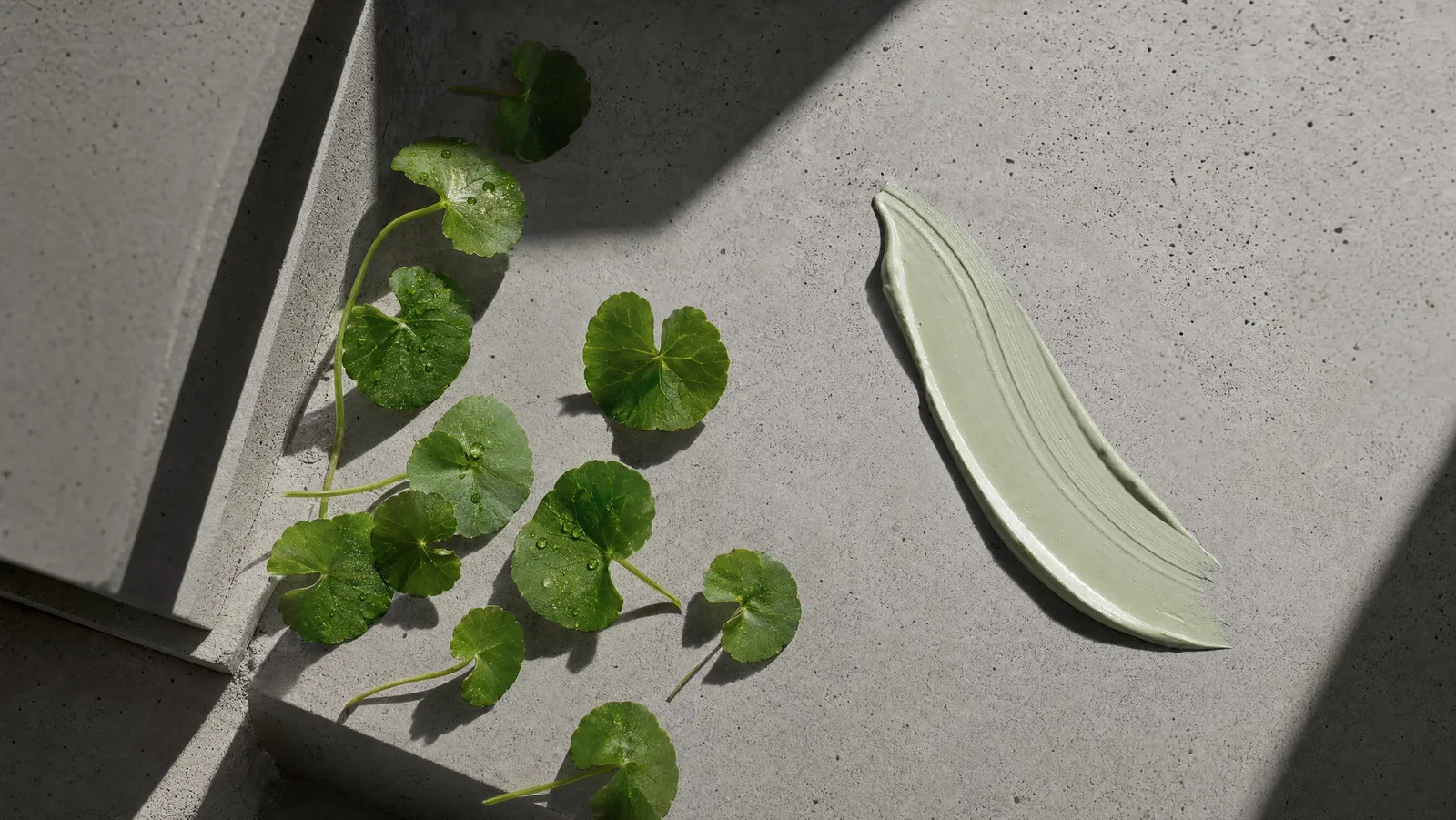
Nearly every calming product in my bathroom has the same plant on the label, and almost none of them explain it. Centella asiatica is a low-growing marsh herb, and cica is the marketing nickname for its extract. What the research best supports is calming: it may soften the look of redness and irritation while supporting the barrier that let the irritation through in the first place.
Some guides I link to contain affiliate links, and if you buy through them I may earn a small commission at no cost to you. I am a certified skincare specialist, and the centella asiatica skincare aisle is where I see the widest gap between what a jar promises and what the research supports. Below I sort the claims by evidence strength and say where the science runs out. If you are still assembling your layers, start with my guide to building your Korean skincare routine and treat this as the deep dive on one ingredient inside it.
What centella asiatica actually is
Centella asiatica is a plant, not a compound. According to Cleveland Clinic, it is "a member of the parsley family," and it answers to a pile of names used on packaging: "Cica. Tiger grass. Indian pennywort. Gotu kola. Brahmi." Same plant, different aisle. The tiger grass name comes from folklore about tigers rolling in the plant to heal wounds, which I have never seen traced to anything but brand copy.
The Korean connection is older than the trend. According to Korea.net, the official news service of the Republic of Korea, the centella-based wound ointment Madecassol was first released in Korea in 1970. Dongkook Pharmaceutical originally imported it from the French firm Laroche Navarron, then began extracting the raw material itself. Korean shoppers had centella at the pharmacy counter for decades before cica became a beauty word, so formulators were building on familiarity, not inventing a trend.
What "cica" on a jar signals is only this: the brand wants you to read the product as soothing. It is not a regulated term, and it tells you nothing about the extraction method, the concentration, or whether the extract was standardized. Read the ingredient list instead, looking for Centella Asiatica Extract, Centella Asiatica Leaf Extract, Madecassoside, or Asiaticoside, and for how high up they sit.
The four compounds that do the work
Cleveland Clinic names the four active compounds in centella: asiaticoside, asiatic acid, madecassic acid, and madecassoside, collectively pentacyclic triterpenes. Asiaticoside and madecassoside are the sugar-bearing versions; asiatic acid and madecassic acid are their aglycones, the same molecules with the sugar removed. Almost everything below was measured in cells or animals.
- Madecassoside, the one tied to calming. A review of the pharmacological effects of Centella asiatica on skin diseases in PMC reports that purified madecassoside "significantly inhibited the production of proinflammatory cytokine IL-1β, TLR2 expression, and nuclear translocation of NF-κB" in cultured human monocytic cells. Inflammatory signaling pathways, measured in a dish.
- Asiaticoside, the one tied to repair. The same review reports that "oral administration of both asiaticoside and madecassoside enhanced collagen type III synthesis by activating skin fibroblasts via the TGF-β/Smad pathway and facilitated burn wound healing in male ICR mice." Collagen III is what skin lays down early in healing — but read that sentence again: oral dosing, in mice, not a cream on a human face.
- Asiatic acid and madecassic acid, the aglycones. More lipophilic than their glycoside parents, generally an advantage for penetrating skin, and they carry much of the same signaling in cell studies.
These are not interchangeable claims, and brands rely on you conflating them. TECA stands for titrated extract of Centella asiatica. A study on human dermal fibroblasts defines it as "a reconstituted mixture comprising of asiatic acid, madecassic acid, asiaticoside and madecassoside," a standardized fraction with a controlled ratio. A generic Centella Asiatica Extract is not TECA; it is whatever came out of the plant under that supplier's conditions, and triterpene content varies enormously. A front-of-jar "5% centella extract" tells you how much extract went in, not how much active triterpene, and "madecassoside" on a label tells you one purified compound is present, not at what level.
The evidence, ranked by how good it is
This is where most cica articles quietly inflate things. The centella literature is deep in cell culture and animal models and thin in human trials. The PMC review says it flatly: "In contrast to the abundant in vivo evidence of the wound-healing effect of C. asiatica, clinical studies are sparse." It concludes that "additional rigorously controlled long-term clinical trials will be necessary."
Reasonably supported: calming and barrier support. Cleveland Clinic says centella "helps your skin barrier retain moisture and reduces redness and inflammation." A double-blind trial of Indonesian batik workers randomized 30 workers with dry skin to a cream containing C. asiatica or one containing ceramide, applied twice daily for four weeks, measuring transepidermal water loss, hydration, and pH. The authors concluded "C. asiatica and ceramide can improve skin barrier hydration in order to prevent the risk of contact dermatitis in batik workers." Thirty people, four weeks, hands rather than faces. A real signal, not a settled fact.
Promising but thin: photoaging and fine lines. The most cited human trial is a 2008 randomized double-blind study in Experimental Dermatology in which 20 female volunteers applied a treatment containing 5% vitamin C and 0.1% madecassoside to photoaged skin. After six months, researchers reported improvement in wrinkles, suppleness, firmness, roughness, and hydration, with about two-thirds of subjects improving. Read the formula again, though: it also contained 5% vitamin C, an established anti-aging active on its own. That design cannot separate the two contributions.
Promising but thin: wound healing and scars. The mechanistic story is good and the burn-healing and collagen findings above are real. They are also mostly animal and laboratory results, against a review that calls clinical studies sparse. Centella is a plausible support ingredient for recovering skin, not a scar treatment.
Thin, and often overstated: acne and post-acne marks. The PMC review reports that purified madecassoside damped inflammatory signaling in cultured human monocytic cells that had been stimulated with the acne-associated bacterium Propionibacterium acnes, now usually called Cutibacterium acnes. The same passage notes the "low antimicrobial activity of C. asiatica extract against P. acnes" — so this is a laboratory observation about inflammation, not evidence that centella kills acne bacteria, and a long way from clearing breakouts. Where cica may earn a spot for congested skin is comfort, easing the redness and tightness that come from using real acne actives. That is a supporting role in a bigger plan, and I lay that plan out in a Korean skincare routine for oily, acne-prone skin.
Thin: photoprotection. The fibroblast study that defines TECA found a UVB-protective effect in cultured human cells. Cells in a dish, and no substitute for sunscreen.
The honest summary is unglamorous and I think it is correct: centella is a well-tolerated soothing ingredient with a real mechanistic rationale and a thin clinical trial base. A good ingredient, not a miracle one.
Cica vs. the other calming ingredients
Cica is not the only way to calm skin, and it is not the best-evidenced one.
- Niacinamide. The better-studied option overall, and it multitasks in ways centella does not. Some people sting at higher percentages, which is exactly where cica has the edge.
- Panthenol. Provitamin B5. Boring, cheap, well tolerated, and often sitting right next to centella in the same ingredient list.
- Allantoin, ceramides, and colloidal oatmeal. The unshowy soothers, with long histories in sensitive-skin products. None of them get a cute nickname, which is roughly why cica outsells them.
- Snail mucin. A different job. Snail secretion filtrate leads with hydration and slowing water loss, and it is animal-derived, which rules it out for some readers. I broke down what snail mucin does for your skin separately. Choosing between them: snail for dehydration, cica for reactivity.
Cica's advantage is not being the strongest calming ingredient but one of the best tolerated, which matters enormously when the skin is already annoyed.
How to use cica in a routine
Leave-on formats do the work. Cleveland Clinic suggests it is best to use products "that stay on your face for longer periods of time, like creams, serums and lotions." A cica cleanser is on your face for forty seconds and then down the drain.
Layer thin to thick. Centella turns up in every texture, so slot it wherever its viscosity puts it: watery first, richer last. If you are unsure which product is which, my breakdown of essences, serums, and ampoules sorts the categories by texture and concentration so you are not guessing at the order.
First layers are where centella lives most often. Toner pads and calming first-step toners are the most common home for the ingredient in Korean lines, because a thin watery layer is easy to spread over a whole irritated face. If you want to start somewhere sensible, the best Korean toners is where I compare the calming ones side by side.
Sandwich it around your actives. On retinoid or exfoliant nights, a calming layer goes on first as a buffer, or the night after, as recovery. What I do not expect is for cica to cancel out an active that is simply too strong. It softens the ride; it does not raise your tolerance.
Be realistic about timelines. Comfort, when it comes, tends to arrive within days. The barrier trial ran four weeks and the photoaging trial ran six months, so judge soothing in a week or two and give anything structural a full season. And know the limits: centella does not exfoliate, replace sunscreen, treat acne, or remove scars.
Who should be careful
Patch test, genuinely. Cleveland Clinic recommends spot-testing any product containing Centella asiatica on your inner arm and waiting at least 24 hours to see whether your skin reacts. Two days is better.
"Soothing" is not the same as "hypoallergenic." A single-patient case report indexed on PubMed documents allergic contact dermatitis due to Centella asiatica, describing it as "a weak sensitizer." A weak sensitizer is still a sensitizer. A 2024 report in Contact Dermatitis by Özkaya and colleagues describes two patients who developed allergic contact dermatitis from a Centella asiatica extract, with patch testing showing reactions to C. asiatica alongside co-sensitization to fragrance allergens. Rare, but real.
Watch the fragrance. Plenty of products sold on soothing are perfumed. If your skin is reactive, a fragrance-free cica product removes a variable.
Some people should ask first. Cleveland Clinic advises consulting a healthcare provider before use if you are pregnant, breastfeeding, under 18, or have a history of liver disease or skin cancer.
When a dermatologist beats another cream. Rosacea and eczema are medical conditions, not skincare problems, and they need a clinician's diagnosis and plan. Centella may sit alongside that plan as a supportive moisturizer, but it is not a substitute for one. If your skin is actively flaring or painful, an appointment beats another jar.
Frequently asked questions
Is cica the same thing as centella asiatica? Effectively, yes. Centella asiatica is the botanical name; cica is the shorthand the beauty industry adopted. Gotu kola, tiger grass, Indian pennywort, and brahmi are all common names for the same plant, per Cleveland Clinic. The term that is not a synonym is TECA, a standardized fraction rather than any centella extract.
Does cica help acne? Not directly, on current evidence. The anti-inflammatory finding involving acne bacteria comes from laboratory work in cultured cells, not clinical trials, and centella does not clear or cure acne. It may make your skin more comfortable while proven acne treatments do the actual work.
Can I use cica every day? For most people, yes, and twice daily is common. Cleveland Clinic describes the side effect profile as "pretty minimal." Patch test first, introduce it on its own for a couple of weeks, and stop if you see a reaction.
Cica or niacinamide, if I can only pick one? Niacinamide has the broader evidence base and does more jobs at once. Cica is gentler and the one I would reach for first if your skin stings at everything. They layer together fine, so the choice is rarely permanent.
Does cica work on redness and rosacea? Cleveland Clinic says centella reduces redness and inflammation and helps the barrier retain moisture, so it may make everyday reactive flushing look calmer. Rosacea is a different matter: a diagnosed medical condition that needs a dermatologist, and no cosmetic product should be treated as its treatment.
Centella earned its shelf space the way durable ingredients do. It is gentle, it feels good on annoyed skin, it has a coherent mechanistic story, and it rarely causes trouble. What it has not earned is the miracle framing, and the research is honest about that even when the packaging is not. Use it as the calming layer in a routine that already gets the fundamentals right. For the full framework, my Korean skincare routine guide walks through every step in order.
About the Author
Kelly Hyde
Kelly Hyde is a certified skincare specialist and beauty trend forecaster, and the founder of Next Gen Beauty Reviews. She spends her time testing the latest K-beauty launches, at-home beauty devices, and skincare tools so you do not have to, and only recommends products she would put in her own routine.