Korean Skincare for Beginners: A Simple Starter Routine

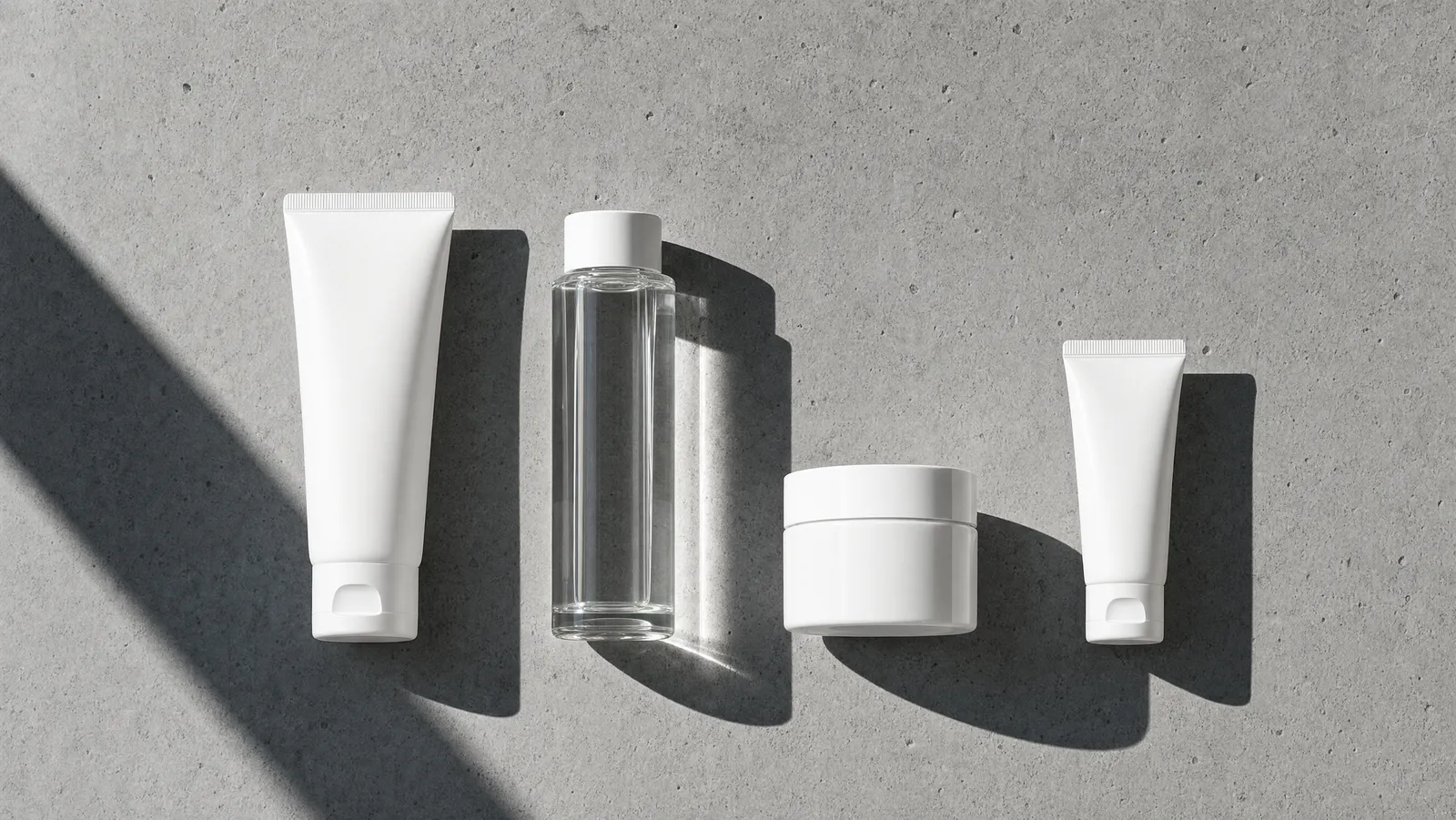
Ten steps, numbered on a chart, each with its own bottle. That chart is the first thing most people meet, and it is why most people close the tab. Korean skincare for beginners is really four steps: cleanse, add water, hold the water in, and protect it. Do those four, morning and night, for a few weeks before you change a single thing.
Some guides I link to contain affiliate links, and if you buy through them I may earn a small commission at no cost to you. I am a certified skincare specialist, and my own start was a shelf of eleven half-used bottles bought over one weekend, none of which I could have named the job of. Here is what I wish someone had said out loud: the ten-step routine is a menu, not a requirement. Plenty of people in Seoul do not do all ten nightly. This is the getting-started deep dive under our best Korean skincare routine guide.
The four steps that are the whole routine
Cleanser. A gentle, low-pH wash that removes sweat, oil, and sunscreen without leaving skin tight and squeaky. The American Academy of Dermatology's guidance for acne-prone skin is to wash twice a day plus after sweating, using fingertips, since "scrubbing can irritate your skin, causing acne to flare." Skip it and a day of sunscreen and sebum sits on your face overnight.
A hydrating toner or essence. A watery layer patted onto damp skin to put water back and give the next layer something to grab. Not the astringent alcohol toner of the 1990s. Skip it and your moisturizer has less water to seal in, so skin that reads as dry stays dry.
Moisturizer. The layer that stops hydration evaporating and smooths the surface. Cleveland Clinic describes emollients as filling in "the cracks in dry skin," while occlusives are "like a sealant, keeping moisture and hydration where they belong." Skip it and much of the water you just added evaporates instead of staying put.
Broad-spectrum sunscreen, mornings only. The step with the most evidence behind it. According to the AAD, broad spectrum means protection against both UVA and UVB, the SPF number describes how much UVB is filtered, and SPF 30 or higher is the recommendation. Skip it and you undo the rest of the routine, since sun exposure drives the texture and tone changes beginners are trying to fix.
Four products. If you never add a fifth, your skin is still better off.
Why K-beauty layers thin to thick
The thin-to-thick order is not aesthetics. It follows what each type of ingredient physically does.
Humectants pull water in. Cleveland Clinic describes humectants as ingredients that "attract and bind water to your skin," listing glycerin, hyaluronic acid, propylene glycol, and urea as examples, and a 2016 Indian Journal of Dermatology review adds that these hygroscopic compounds draw water "from the dermis into the epidermis and in humid conditions from the environment." These are your watery toners and essences, and they go first because they need water to work with.
Emollients smooth. They fill the gaps between surface cells so skin feels soft rather than rough. Middle of the stack.
Occlusives seal. A 2016 review in the Indian Journal of Dermatology, "Moisturizers: The Slippery Road," notes that occlusives create a hydrophobic barrier and "have the most pronounced effect when applied to the slightly dampened skin." Cleveland Clinic says the same of emollients, which "absorb better when skin is damp." That is the whole case for patting your first layer on while your face is still wet.
The part the ten-step charts lose: layering is a technique, not a product count. One hydrating toner pressed into damp skin and sealed with a moisturizer is layering. Seven bottles on a dry face is seven bottles.
Your first month, week by week
This is the part I would tape to your mirror.
Weeks 1 and 2: the four steps, nothing else. Morning, cleanse (or just rinse if your skin runs dry), hydrating toner on damp skin, moisturizer, sunscreen. Night, cleanse, toner, moisturizer. No masks, no acids, no serum. Two weeks on a stable routine gives you the baseline everything else gets measured against. If you are choosing that first watery layer now, our roundup of the best Korean toners covers hydrating formulas versus exfoliating ones.
Week 3: add one hydrating layer, only if you need it. If your skin still feels tight an hour after moisturizer, add an essence between toner and moisturizer. If it feels comfortable, add nothing. "It is fine" is a legitimate result.
Week 4: assess honestly, then consider one active. Photograph your face in the same light you used in week one. Is anything actually bothering you? If yes, one active goes in, at low frequency, for one named concern.
The rule that matters most: one new product at a time, given weeks rather than days. For acne products, the AAD says to use a product for 6 to 8 weeks because "it takes that long to see some improvement," and adds plainly, "During this time, don't add another product." The AAD also lists trying a new treatment every week or so as a habit that worsens acne, because the switching itself irritates skin. The rest is arithmetic: change three things on Sunday, and when your cheeks sting on Wednesday you cannot tell which one did it.
What to skip for now
Permission to ignore, with reasons.
- The full ten-step routine. A menu assembled over decades of marketing, not a protocol.
- Sheet masks as a daily necessity. Functionally a very wet essence with fabric holding it against your face. A nice Friday, not a step.
- Strong acids and retinoids. The products most likely to make a beginner quit, because the first weeks can genuinely look worse. Worth using eventually, one at a time.
- Vitamin C in week one. A fine ingredient with a real evidence base and a talent for stinging skin that has no baseline yet.
- An essence and a serum and an ampoule at once. You do not need three, and no regulator defines the words. The U.S. Food and Drug Administration states that cosmetics other than color additives do not require FDA approval before going on the market, and nothing sets a concentration that makes a bottle an ampoule. When you want to tell them apart, I unpicked the difference between essences, serums, and ampoules in its own guide.
- Anything sold on a "glow overnight" promise. Overnight glow is water and light reflection. It rinses off.
How to patch test (and actually read your skin)
The AAD's instructions for testing skin care products are to pick "a quarter-sized spot on your skin where the product won't be rubbed or washed away, such as the underside of your arm or the bend of your elbow," then apply it there "twice daily for seven to 10 days." No red, itchy, or swollen skin at the end of that window and the AAD says go ahead. A reaction means wash it off and stop.
This is a screen, not a diagnosis. A true diagnostic patch test is a clinical procedure using standardized allergens read over several days, and the AAD's advice is that if you cannot identify what caused a reaction, a dermatologist can arrange one. A clear forearm does not guarantee a clear face either.
Now the claim to be skeptical of: purging. Cleveland Clinic describes breaking out after a facial or a new product as purging, caused by rapid cell turnover bringing what was lingering beneath the skin up to the surface, and says it "should subside a week or two" afterward. Worth knowing before you lean on the word: purging is a popular label rather than a formal medical diagnosis, so the confident charts and timelines online are running well ahead of the evidence. Look at what that mechanism requires: something that genuinely speeds turnover up, meaning retinoids and certain exfoliating acids. According to Mayo Clinic's drug information for topical tretinoin, acne may seem to get worse before it gets better in the first weeks, and full improvement can take longer than 12 weeks. A 2011 review by Del Rosso and Levin in the Journal of Clinical and Aesthetic Dermatology puts the trip from the basal layer to shedding at approximately four weeks.
Nothing in the four-step beginner routine accelerates cell turnover. A cleanser, toner, moisturizer, and sunscreen have no mechanism for purging, so if you break out in week two the honest candidates are a comedogenic formula, an irritant, or an allergy. Even with a retinoid, purging is generally described as appearing where you already break out, resolving faster than your usual spots, and not burning, while irritation and allergy tend to itch, sting, scale, flush, or turn up somewhere you never break out. Those are rules of thumb, not a test, and they cannot tell you for certain which one you are looking at. The bright line: if it is worsening, spreading, painful, or still going after a few weeks, treat it as irritation and stop the product.
Building toward the goals you came for
The dewy, light-bouncing finish people mean by glass skin is this four-step routine done consistently, plus patience and gentle exfoliation used sparingly. It is a hydration and texture result, so weeks to months, not a weekend. For the long version, I wrote up how to get glass skin step by step.
The other upgrade arrives on its own schedule. Once you wear broad-spectrum sunscreen every morning, one water-based wash at night may not remove it fully, and that is the usual reason a first oil or balm cleanse exists. That is the moment to read up on the Korean double cleansing method, not day one.
A realistic budget
Spend where the money changes the outcome.
- Sunscreen deserves the most. Not because expensive filters work better, but because quantity and reapplication decide whether it works at all, and you will only use enough of a texture you like. SPF is measured in a lab at a density most of us never reach: the AAD notes many people apply only 20 to 50 percent of the amount needed to hit the label SPF, recommends at least a teaspoon for the face, and says to reapply every two hours outdoors.
- A cleanser that does not strip. Cheap and excellent are easy to find together here.
- A moisturizer whose feel you like. Texture preference is not vanity. It predicts whether you keep using it.
- Toners and essences are the cheapest place to experiment. Mostly water and humectants, sold in the largest bottles.
The classic beginner mistake is buying the most expensive version of a step you cannot yet explain. Learn what a step does on a modest bottle. If you still want the nice one after that, you will know why.
Mistakes I see most
- Changing everything at once, then having no way to identify the culprit.
- Judging a product in three days. Hydration shows up fast. Nothing else does.
- Over-exfoliating. The AAD is direct that scrubbing irritates skin and can make acne flare. Twice a week is plenty, and zero is fine.
- Skipping sunscreen because it is cloudy or winter. Per the AAD, up to 80 percent of the sun's UV rays penetrate clouds, and UVA passes through window glass while UVB is blocked by it. The American Cancer Society agrees: typical car, home, and office windows block most UVB but fewer UVA rays.
- Using an active meant for a problem you do not have. A strong acne treatment on dry skin is irritation with extra steps.
- Quitting on day four, the worst possible moment to evaluate anything.
When to see a dermatologist
A beginner routine is skin care, not a treatment plan. It diagnoses nothing and does not replace medical care. See a board-certified dermatologist for any of these:
- Acne that is persistent, painful, or cystic. The AAD lists "deep, painful acne like the acne cysts and nodules" among the signs it is time to see a dermatologist, along with acne that keeps coming back after it clears.
- An itchy, scaling, or spreading rash. The AAD's rash guidance flags a rash over most of your body, one that blisters or opens, one with fever, one spreading rapidly, one that is painful, and any rash involving the eyes, lips, mouth, or genital skin.
- Eczema or rosacea you already suspect. Both are medical conditions with real treatments, and the AAD notes a dermatologist diagnoses rosacea by examining your skin and eyes, then creates a treatment plan tailored to your individual needs.
- A sudden reaction that swells or spreads after any new product.
- Any mole or spot that changes. The AAD advises that if a mole or spot looks different from the others, itches, bleeds, or is changing in any way, a dermatologist should examine it.
Frequently asked questions
Do I need all ten steps? No. Four is a complete routine: cleanser, hydrating toner or essence, moisturizer, morning sunscreen. Every step past those four is optional and should earn its place.
What order do I apply things in? Thinnest to thickest, water before oil, sunscreen last in the morning: cleanse, hydrating toner, essence, serum, moisturizer, sunscreen.
Do I need sunscreen indoors or in winter? Winter, yes, for the reasons above. Indoors it depends on your windows: if you sit beside a bright one all day, UVA is reaching you and applying it is reasonable.
How long before I see results? Hydration and comfort can change within days. Texture and tone run much slower, given that four-week journey to the surface and the AAD's 6-to-8-week benchmark. Plan on two to three months.
Can I use a toner and an essence? Yes. Toner first, essence second, both on damp skin. To start, one layer is enough.
Is the routine different for men? The steps are identical. What changes is the timing around shaving, which works like a controlled exfoliation and can make the same actives sting more. I mapped that out in a simple Korean skincare routine for men, with the shaving factored in.
Four products and two weeks of not touching anything. That is the whole assignment. Once your skin has a baseline and you have stopped flinching at your own bathroom shelf, add one thing, wait, and see what it actually did. When you are ready to expand on purpose, the full Korean skincare routine walkthrough lays out every optional step and where it belongs.
About the Author
Kelly Hyde
Kelly Hyde is a certified skincare specialist and beauty trend forecaster, and the founder of Next Gen Beauty Reviews. She spends her time testing the latest K-beauty launches, at-home beauty devices, and skincare tools so you do not have to, and only recommends products she would put in her own routine.