The Best Anti-Aging Skincare Routine: Actives, Order, and a Plan That Works

An anti aging skincare routine is a short, repeatable set of steps: broad-spectrum sunscreen every morning, a retinoid most nights, and a moisturizer good enough that your skin tolerates both. Everything else, the vitamin C and the peptides and the acids and the devices, is support. Sunscreen and a retinoid carry almost all of the evidence.
I'm Kelly Hyde, and I've tested this category long enough to watch a lot of expensive products arrive and disappear while those two steps stayed exactly where they were. This guide is the hub for the whole system: what actually ages skin, how to start a retinoid without peeling for a month, what shifts in your 30s, 40s, and 50s, where each active belongs in your day, and who should skip retinoids entirely. I'll link out to deeper guides as I publish them. Some guides I link to contain affiliate links; I may earn a small commission at no cost to you.
One honest framing note before the steps. Nothing you apply at home erases a wrinkle. Good actives can soften fine lines, even out tone, and slow what comes next, and that is genuinely worth doing. It is just a different promise from the one on most packaging, and knowing the difference will save you a lot of money.
What actually causes skin aging
Two processes run at the same time, and only one of them is yours to control.
Intrinsic aging is the clock: genetics, hormones, and time. Collagen production slows, cell turnover takes longer, fat pads shift, and skin gets thinner and drier. You can support it, but you cannot opt out of it.
Extrinsic aging is everything your environment adds on top, and ultraviolet light is the dominant input. According to the American Academy of Dermatology, when sunlight hits your skin it damages healthy cells, and without sun protection that damage builds up until you see freckles, age spots, and wrinkles, with some people developing precancerous growths or skin cancer. The AAD also makes a point I repeat constantly: you cannot undo years of sun damage, though treatment can even out skin tone and smooth wrinkles.
The gap between what people worry about and what they actually do is enormous. In a 2025 American Academy of Dermatology survey of more than 1,000 U.S. adults, half said they worry about premature skin aging, but only half use sunscreen regularly and just 20 percent use it on cloudy days. Nearly 1 in 4 did not know that sunscreen helps prevent early signs of aging. Four in ten reported wrinkles or dark spots they believe came from sun exposure, and of those, 68 percent said the changes bother them.
Read that sequence again, because it is the entire argument for this article. Most people are buying treatments for damage they are still actively creating every morning on the walk to the car. The routine below fixes the order of operations: protect first, repair second, and treat the rest as optional.
Sunscreen: the step that does the most work
If you only ever adopt one habit from this guide, make it daily sunscreen. It is the step that does the most to prevent photoaging rather than treat it after the fact, and it is the mandatory partner to every retinoid in this article.
The American Academy of Dermatology recommends a sunscreen that is broad spectrum, SPF 30 or higher, and water resistant. The AAD says most adults need about 1 ounce, roughly a shot glass, to cover all skin not covered by clothing, and at least 1 teaspoon for the face, about the amount that covers the length of your index and middle fingers. Reapply approximately every two hours, or after swimming or sweating. Those amounts are not arbitrary padding: apply meaningfully less and the protection falls away much faster than the number on the bottle implies, which you can see for yourself in the SPF you really get at a given thickness.
Here is the genuinely new reason to re-examine what is on your shelf. In June 2026 the FDA issued final administrative order OTC000039, amending the over-the-counter sunscreen monograph to add bemotrizinol at concentrations up to 6 percent, after determining it to be generally recognized as safe and effective. Legal and industry analyses of the order, including one from the law firm Venable, described it as the first new over-the-counter sunscreen active ingredient cleared in the United States in more than 20 years. Bemotrizinol is highly photostable and gives broad-spectrum coverage, and it has been used in sunscreens in Europe, Australia, and Asia for years.
That matters for a practical reason: the American sunscreen aisle has been working with an older filter list than the rest of the world, which is exactly why so many of us import. If you have never found a formula you actually enjoy wearing, the next two years should be the best shopping window in two decades. In the meantime, the lightweight, cosmetically elegant textures in my guide to the best Asian sunscreens are the ones I reach for on days I know I will need to reapply.
The best sunscreen is still the one you will put on every morning in the correct amount. Elegance is not vanity here, it is compliance.
Starting retinol without wrecking your barrier
More people quit retinoids because of the first three weeks than because the products do not work. Knowing how to start retinol is mostly a lesson in going slower than feels productive.
Cleveland Clinic's guidance is a good template. Patch test on a small area first. For the first couple of weeks, apply retinol only every other day, then gradually ramp up to once or twice per day as your skin adjusts. Use it at bedtime. Expect that your skin may look worse before it looks better, and that it will take several weeks before you see an improvement in the look and feel of your skin.
The side effects are well documented and usually temporary: dry, irritated skin, itching or burning, redness, and peeling or flaking. Cleveland Clinic notes these should gradually fade as your skin gets used to treatment. It also flags the part people skip: retinol makes your skin more sensitive to sunlight, so SPF 30 and sun-protective clothing and hats are part of the deal, not an upsell.
A few things that make the adjustment period survivable, from my own routine:
- Use less product than you think. A pea-sized amount covers my whole face. More does not work faster, it just irritates faster.
- Apply to dry skin. Going on damp skin increases penetration and, in my experience, irritation along with it.
- Buffer with moisturizer. Moisturizer before the retinoid, after it, or both. Slower results beat quitting.
- Drop everything else during the ramp-up. No acids, no scrubs, no new actives. One variable at a time.
- Skip a night when you need to. A stinging, flaking barrier is not progress, it is a stop sign.
When my barrier does get overworked, I pull the actives entirely and spend a week on bland, soothing basics. Ingredients like centella asiatica, the cica in so many Korean formulas, are my default rescue step because they are boring in the best way. Four weeks of consistent, comfortable use beats two weeks of aggressive use followed by a month of recovery.
Retinoids: the most-studied active you can buy
Nothing else on your shelf has this much literature behind it. Retinoids are vitamin A derivatives, and they have the deepest evidence base of any topical category across photoaging, texture, pigmentation, and acne at once.
The regulatory history tells you how old and how settled this is. According to an updated review of topical tretinoin in the dermatology literature, the FDA approved topical tretinoin for acne vulgaris in 1971 and for the palliative treatment of photoaging in 1995. That same review describes tretinoin improving fine and coarse wrinkles, pigmentation irregularities, skin tone, and texture, working by modulating epidermal differentiation, stimulating collagen synthesis, and promoting dermal remodeling. The clinical studies it covers typically ran 12 to 24 weeks, which is a useful reality check on how long to give any retinoid before you judge it.
Over-the-counter retinol works through the same receptor pathway, more gently. Cleveland Clinic describes retinol as increasing skin cell production, helping unclog pores, and increasing collagen production, which can reduce the appearance of fine lines.
When I picked the best retinol serums for our roundup, the criteria were unglamorous, and they are the same ones I would use shopping today:
- A named retinoid at a stated strength. If the label will not tell you what is in it, the formula is not the selling point.
- Opaque, air-restricting packaging. Retinoids degrade with light and air. A clear dropper bottle is a red flag.
- A supporting cast that calms, not stimulates. Ceramides, glycerin, niacinamide, panthenol. Not a retinoid stacked with a strong acid.
- A texture you will actually use at 11pm. Compliance is the whole ballgame.
Price correlates with almost none of this. Some of the best-tolerated retinol creams I have used cost less than a lunch.
Retinol, retinal, and tretinoin are not the same thing
The names look interchangeable on a shelf and they are not. Understanding the difference between retinol, retinal, and tretinoin comes down to one idea: your skin can only use retinoic acid, so every other form has to be converted first, and each conversion step costs potency.
- Retinol needs two conversions: retinol becomes retinaldehyde, which becomes retinoic acid.
- Retinal, short for retinaldehyde, needs one.
- Tretinoin is retinoic acid already. No conversion, no delay.
A paper in the Journal of Drugs in Dermatology on retinaldehyde formulations puts the relationship plainly: potency correlates inversely with the number of conversions the body has to perform, and it describes retinol as roughly 20 times less potent than tretinoin, with retinaldehyde sitting between them. The same literature notes that retinol improves signs of photoaging with less water loss, redness, and scaling than tretinoin produces.
So the ranking by strength is also the ranking by irritation, which is why "strongest" is the wrong question. The right question is which one you will use three to five nights a week for a year.
Tretinoin and tazarotene are prescription medications in the United States. I am not going to give you a strength or a protocol for them, because that is a conversation for your dermatologist or physician, who can weigh your skin, your history, and anything else you are using. If your over-the-counter retinol has plateaued after six to twelve consistent months, that is a reasonable thing to raise at an appointment.
For most people reading this, a well-formulated retinol or retinal is the sane place to start, and a retinal is the natural step up when retinol stops stinging.
A routine for your 30s
This is the decade where prevention quietly becomes the highest-return thing you do. Build an anti-aging skincare routine for your 30s that is short enough that you never skip it and boring enough that your barrier never complains.
Morning: gentle cleanse or a plain water rinse, an optional vitamin C serum, moisturizer, then broad-spectrum SPF 30 or higher in the amounts the AAD specifies.
Night: cleanse, retinoid on the nights you use it, moisturizer. That is the whole routine.
What changes in your 30s is not usually a dramatic line. It is tone, a slightly duller surface, and the first expression lines that stay visible a beat longer than they used to. The AAD survey finding is relevant here: four in ten adults report wrinkles or dark spots they attribute to sun exposure. A lot of what people start noticing in this decade is accumulated photoaging finally becoming visible, not new aging.
Two additions earn their place if you enjoy the ritual. A hydrating toner laid down on damp skin gives everything after it a better surface to work on, and the watery, humectant-heavy formulas I cover in my guide to the best Korean toners are the ones I use for exactly that. The second is consistency itself. Three retinoid nights a week, every week, beats seven nights a week for a month followed by a flare and a three-month break.
What I would skip: anything marketed as a "firming" instant fix, and stacking more than one strong active in the same routine. In your 30s the compounding comes from the habit, not the heroics.
A routine for your 40s
Somewhere in here the math flips. Prevention still matters enormously, but your skin is now also asking for help with what is already there, and it is less tolerant of the aggressive approach that worked at 32. In practice, an anti-aging skincare routine for your 40s usually means the same actives with more cushioning around them.
Morning: gentle cleanse, antioxidant serum, a richer moisturizer than you used to need, sunscreen.
Night: cleanse, hydrating layer, retinoid, moisturizer. Many people in their 40s do better applying moisturizer before the retinoid rather than after it.
The practical shifts I see most often:
- Texture over strength. Creams and emulsions are often better tolerated than gels and alcohol-forward serums.
- Dryness becomes the limiter. If your skin is tight, your retinoid will feel twice as harsh. Fix hydration first.
- Pigment becomes the visible complaint. Sun spots and uneven tone frequently bother people more than fine lines do, and they respond slowly, over months.
- Fragrance tolerance drops. Heavily perfumed products are an easy thing to cut.
This is also the decade where layering gets genuinely useful rather than decorative. If you have never been clear on what sits where, the difference between an essence, a serum, and an ampoule is a 5-minute read that makes your existing products work harder without buying anything new. Thin, watery hydration first, treatment next, moisture seal last.
If your over-the-counter retinoid has been consistent for a year with no further gains, this is a sensible time to ask a dermatologist what else is appropriate for your skin.
A routine for your 50s and beyond
After menopause, skin behaves differently. Research on the postmenopausal skin barrier has linked falling estrogen to lower ceramide levels in the stratum corneum, more water loss, and a slower recovery after irritation, so a flare that used to settle quickly may linger. That is why an anti-aging skincare routine for your 50s works best when it is built around comfort, with actives fitted into whatever your barrier will cheerfully accept.
Morning: a non-stripping cleanser or water rinse, antioxidant serum if you like it, a substantial moisturizer, sunscreen.
Night: cleanse, a hydrating layer on damp skin, retinoid two or three nights a week, a rich cream over everything.
Three adjustments do most of the work: lower the retinoid frequency rather than abandoning it, treat dryness as a standing condition rather than a nuisance, and keep sunscreen daily, because photoaging does not stop accumulating at 55. The layering approach I use for dry, dehydrated skin covers the middle one almost unchanged, and the decade guide linked above has the frequency ramp, the barrier research behind it, and the AAD's menopause-specific advice.
A fair expectation, because this is the decade people ask the most of a jar: topical skincare addresses surface texture, tone, and fine lines. Volume loss and skin laxity are structural, and no cream is going to resolve them. If those are your main concerns, an in-office conversation with a board-certified dermatologist will serve you better than another serum.
Vitamin C and daytime antioxidants
Vitamin C is the best-supported daytime addition to a routine that already has sunscreen and a retinoid. It is a supplement to sun protection, never a substitute.
A 2026 systematic review in the Journal of Clinical and Aesthetic Dermatology, covering 44 studies including 20 randomized controlled trials published from 2020 onward, found that L-ascorbic acid remains the gold standard and most clinically validated form. The authors describe vitamin C improving photoaging through antioxidant and photoprotective effects and supporting structural aging through promotion of collagen synthesis, with reproducible improvements in photoaging, pigmentary disorders, and recovery around procedures.
The formulation details matter more here than with almost any other active. That same review notes that effective topical delivery requires a highly acidic environment, with pH values below 3.5, and that low-pH aqueous serums containing 10 to 15 percent L-ascorbic acid, often stabilized with vitamin E and ferulic acid, show superior stability and reliable penetration. The authors are also candid about the limits: study heterogeneity and a shortage of standardized data, particularly across diverse skin phototypes, restrict direct comparisons between products.
So in my roundup of the best vitamin C serums, the shortlist criteria follow from the science rather than the marketing: L-ascorbic acid at 10 to 15 percent, a low pH, vitamin E and ferulic acid in support, opaque air-restricting packaging, and a batch you actually finish before it turns amber. A deep orange serum has already done its oxidizing in the bottle, and oxidized vitamin C no longer delivers the benefit you bought it for.
If L-ascorbic acid stings or your skin runs reactive, derivatives are gentler but less well validated, and niacinamide is a reasonable daytime alternative that nearly everyone tolerates.
If retinoids are not for you
Plenty of people genuinely cannot use them: pregnancy, breastfeeding, eczema or rosacea that flares at the first hint of irritation, or a barrier that simply never adapts after months of honest effort. Honestly, an anti-aging routine without retinol is less potent, and it is still worth building.
Start by raising the floor. Sunscreen, applied daily in the amount the AAD specifies, is doing more for you than any retinoid ever would have. Then layer in the gentler options:
- Niacinamide. Well tolerated, supports the barrier, and helps with tone and visible pore appearance.
- Peptides. Comfortable and low risk, with evidence that is thinner than the retinoid literature.
- Azelaic acid. A good option for redness-prone skin and uneven tone, available over the counter and, at higher strengths, by prescription.
- Vitamin C. The daytime antioxidant covered above, with the best evidence base of anything in this list.
- Bakuchiol. Marketed as a plant-derived retinol alternative and compared directly with retinol in a registered clinical trial on ClinicalTrials.gov. It is gentler, and the body of evidence behind it is a small fraction of the retinoid literature. Promising, not equivalent.
- Gentle acids. A low-strength PHA or lactic acid once or twice a week for surface texture, if your skin is calm.
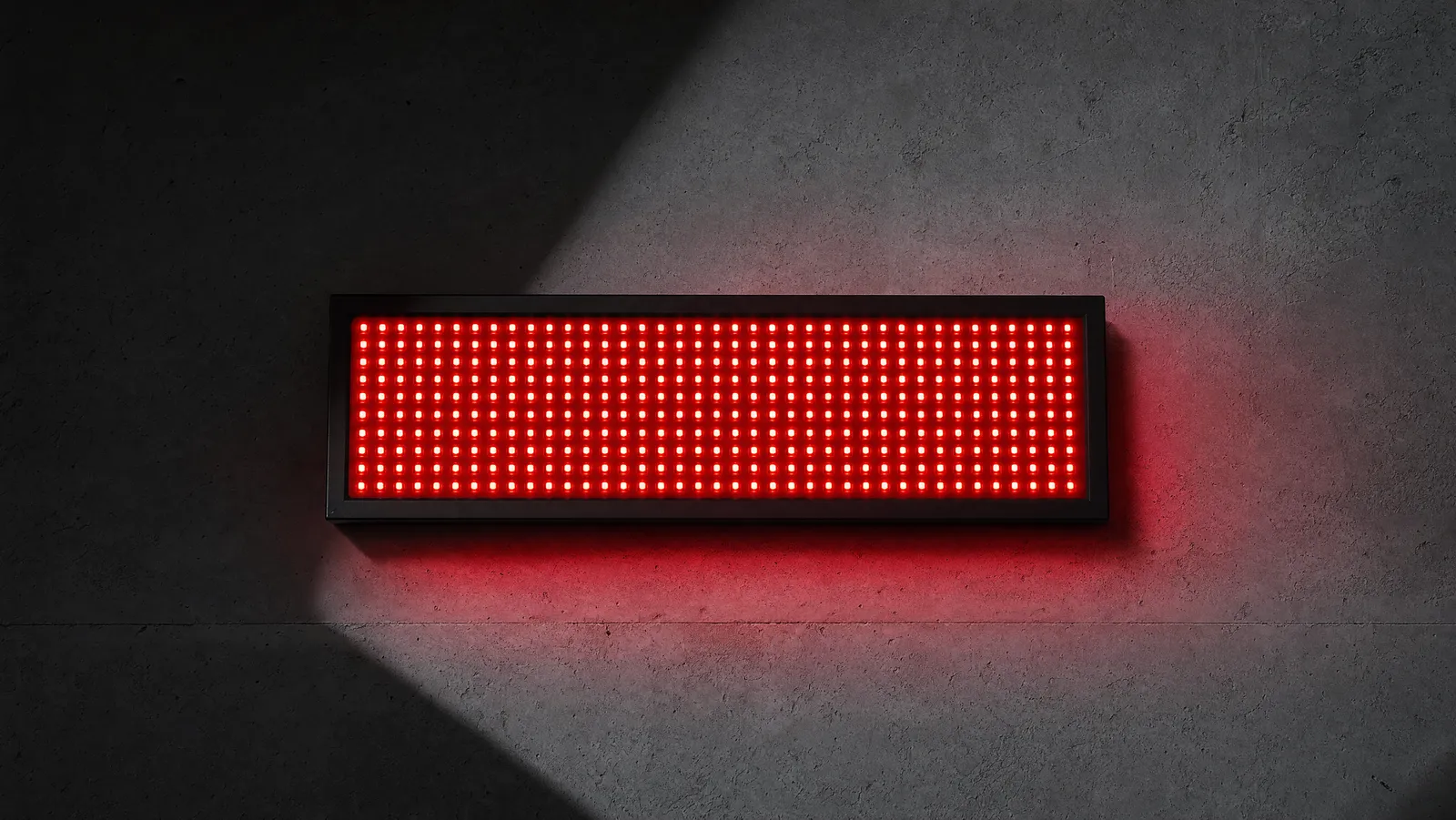
Devices occupy their own category. LED face masks are the home option I get asked about most, and the honest answer is that they are low risk and demand real consistency, so judge them over months rather than weeks. They are an addition to a routine, not a replacement for one.
And if the reason you cannot tolerate retinoids is a damaged barrier rather than a permanent contraindication, fix the barrier first. Weeks of soothing, cica-based basics have put more people back on a retinoid than any clever workaround I know.
Morning versus night: where each active goes
Most routine mistakes are scheduling mistakes, not shopping mistakes. Sorting out which actives go in your morning and night routine takes about 5 minutes and costs nothing.
The principle: mornings are for protection, nights are for repair. Antioxidants and sunscreen defend against the day you are about to have. Retinoids, which Cleveland Clinic advises using at bedtime and which increase your sensitivity to sunlight, work while nothing is attacking your skin.
Mornings run cleanse, antioxidant, moisturizer, sunscreen last. Nights run cleanse, hydrating layer, retinoid on the nights you use one, then a moisturizer richer than your daytime one. The numbered version of both, a table of where every common active belongs, and the three pairings people ask about most are in that guide.
Two rules handle most remaining questions. Apply thinnest to thickest, which is the backbone of the Korean skincare routine and works just as well for a four-step Western one. And do not stack strong actives in the same session: vitamin C in the morning and your retinoid at night keeps them out of each other's way without any of the pH debates the internet enjoys.
On retinoid nights, skip the exfoliating acids entirely. On nights your skin feels raw, skip everything but moisturizer. Then put on your sunscreen in the morning anyway, because that step is never the one to drop.
Pregnancy and breastfeeding
This section is short on purpose, because the advice is short.
Retinoids are generally avoided during pregnancy. Cleveland Clinic states that retinoids taken by mouth can cause birth defects and that healthcare providers discourage the use of retinoids if you are pregnant. That caution extends to the topical ones in standard clinical guidance, and it covers prescription retinoids and over-the-counter retinol alike.
If you are pregnant, trying to conceive, or breastfeeding, talk to your OB-GYN or dermatologist about your specific routine before you change anything. They know your history. I do not, and I am not going to offer you a workaround protocol for a medication class with a teratogenicity warning attached to it.
If you used a retinol product before you knew you were pregnant, tell your doctor rather than panicking at 2am. An updated review of topical tretinoin in the dermatology literature reports that several prospective studies, together with a retrospective one, found no association between tretinoin exposure during pregnancy and an increased risk of congenital malformations. That is reassurance after accidental exposure, not permission to keep going. Your clinician gets to make that call.
What does not change while you are pregnant: sunscreen, every single day. Melasma and pigment changes are common during pregnancy, and daily broad-spectrum protection in the amounts the AAD recommends is the single most useful thing in your cabinet. A gentle cleanser and a good moisturizer round out a routine that asks nothing of anybody. The structure for pregnancy-safe anti-aging skincare is exactly that: protect, hydrate, and leave the actives for later.
Anti-aging skincare for men
The biology does not care about the marketing. Stripped down, an anti-aging skincare routine for men is the same routine in this article, usually with fewer steps and one extra variable.
The extra variable is shaving. A razor is a daily, mechanical exfoliation of your face, which means a retinoid lands on skin that has already been scraped. If you shave, I would start a retinoid at the lowest frequency you can stand, apply it on nights you have not shaved, and keep the post-shave products bland: no alcohol-heavy aftershave, no fragrance, nothing with menthol while you are adjusting.
The minimum viable routine is three steps, and it genuinely is enough:
- Morning: gentle cleanser, moisturizer, broad-spectrum SPF 30 or higher.
- Night: gentle cleanser, moisturizer, and a retinoid two or three nights a week once your skin tolerates it.
The AAD survey I cited earlier found that only half of U.S. adults use sunscreen regularly and just 20 percent use it on cloudy days, and in my experience the men I talk to are solidly in the half that skips it. If you take one thing from this section, let it be the sunscreen. A lightweight fluid or a gel-textured formula from my guide to the best Asian sunscreens solves the two objections I hear most, white cast and greasiness, better than anything else I have tested.
Beard area, scalp part line, ears, and the back of the neck are the spots that get missed. They are also where the sun damage shows up first.
Frequently asked questions
How long before an anti-aging routine shows results?
Give it 12 weeks minimum and judge properly at 6 months. The published tretinoin studies covered in the dermatology literature typically ran 12 to 24 weeks, and Cleveland Clinic notes it takes several weeks before you see an improvement in the look and feel of your skin with retinol, which is less potent than tretinoin. Photograph yourself in the same light every month, because daily mirror checks are useless.
Can I use vitamin C and retinol together?
Yes, just not at the same moment. Vitamin C in the morning, retinoid at night is the simplest schedule that keeps both effective and your skin calm. If you want them both in the evening, give yourself alternating nights instead.
Do I need a separate eye cream?
Not necessarily. The skin around the eyes is thinner and more reactive, so a dedicated, gentler product is often more comfortable than extending a strong retinoid into that area. Comfort is the reason to buy one, not magic ingredients.
Is an expensive routine better?
No. The two steps with the strongest evidence, sunscreen and a retinoid, both exist in excellent inexpensive versions. Spend where texture determines whether you will actually use the product daily, and save everywhere else.
What if my skin is irritated right now?
Stop all actives. Cleanse gently, moisturize, and wear sunscreen, and do nothing else for one to two weeks. Reintroduce one product at a time. A compromised barrier makes every active in this guide feel worse than it is.
Explore the full series
- How to Start Retinol Without Wrecking Your Skin Barrier — Start low, go slow, buffer — the ramp that keeps your barrier intact.
- The Best Retinol Serums for Beginners and Beyond — Six retinol serums from beginner strengths to a retinal step-up, tested and compared.
- Retinol vs. Retinal vs. Tretinoin: Which Retinoid Should You Use? — One conversion step at a time: which retinoid is actually right for your skin.
- An Anti-Aging Skincare Routine for Your 40s — The decade the math flips — same actives, more cushioning around them.
- The Best Vitamin C Serums for Brightness and Antioxidant Protection — Six vitamin C serums judged on form, percentage, packaging and how fast you finish the bottle.
- An Anti-Aging Skincare Routine for Your 30s — Prevention is the highest-return thing you do — a routine short enough that you never skip it.
- An Anti-Aging Routine Without Retinol: Peptides, Bakuchiol, and More — Peptides, niacinamide and bakuchiol: what to use when retinoids are off the table.
- An Anti-Aging Skincare Routine for Your 50s and Beyond — Barrier, lipids and tolerance — how the routine changes after menopause.
- Pregnancy-Safe Anti-Aging Skincare: What to Use and What to Skip — What stays, what goes, and what to ask your doctor about first.
- Morning vs. Night: Which Skincare Actives Go Where — Which active goes where, and why the order matters more than the ingredient list.
About the Author
Kelly Hyde
Kelly Hyde is a certified skincare specialist and beauty trend forecaster, and the founder of Next Gen Beauty Reviews. She spends her time testing the latest K-beauty launches, at-home beauty devices, and skincare tools so you do not have to, and only recommends products she would put in her own routine.