FDA Cleared vs FDA Approved: How to Read a Beauty Device Label

FDA cleared vs FDA approved is not marketing nuance. They are two legal statuses with two different burdens of proof. Cleared means the agency agreed a device is enough like something already on the market. Approved means the agency reviewed evidence that a device is safe and effective. At-home beauty devices are cleared at most. Essentially none of them are approved.
I am Kelly Hyde, a certified skincare specialist, and I have read more clearance letters than is reasonable for someone who does not work in regulatory affairs. The definition is the easy half, and I cover it inside my guide to the best at-home beauty devices. The half nobody hands you: you can verify any brand's regulatory claim yourself, free, in about five minutes, in a public database. That procedure is this page.
One boundary first. A clearance is a regulatory status, not a product review, not a safety rating, and nothing here is legal or medical advice. The goal is narrower: read the box accurately.
The 60-second version
Clearance runs through the 510(k) pathway, where most Class II devices sit. According to the FDA's premarket notification overview, the test a 510(k) has to meet is substantial equivalence to a legally marketed predicate device, not independent proof of benefit. Approval is the other door, and the FDA's premarket approval page reserves it for Class III devices on a finding of sufficient valid scientific evidence of safety and effectiveness. The agency's own 510(k) program training transcript states the consequence plainly: "a 510(k) is not a premarket approval." I quote both standards at length in the at-home device guide linked above, so I will not re-run them here. What matters for this page is narrower: clearance leaves behind a public record, and that record has a ceiling on what it can tell you.
Now the part that earns your five minutes.
How to look up a device yourself
1. Go to the right database. You want the 510(k) Premarket Notification database. FDA's page on searching the releasable 510(k) database says you can search it "by Panel, 510(k) number, Product code or Device name." Note what is missing: brand names, retail listing titles, and the words on your box.
2. Search the company, not the brand. This is where most people fail first. FDA's guidance on how to find and effectively use predicate devices warns that the database "maintains the name of the original applicant and the original trade name provided in the 510(k)" and "is not updated to reflect the current owner or distributor of the product nor any changes in trade name." Find the legal entity on the box, in the manual, or in the warranty text. NuFACE clearances sit under Carol Cole Company.
3. Fill in one box, with one word. The same FDA guidance says "it is usually best to complete only one box in the online search form per search," that "the search engine searches for an exact match of text," and that "one descriptive word in the device name box is recommended." It also warns that "hyphens or spaces in names can make a difference."
4. If the name search dies, search by product code. FDA says "searching for predicate devices by product code is usually the most effective" approach, with the other boxes blank. Codes are three letters. In FDA's classification database, NFO is "Stimulator, Transcutaneous Electrical, Aesthetic Purposes," Class II under 21 CFR 882.5890, where at-home microcurrent lives. OHS is "Light Based Over The Counter Wrinkle Reduction," Class II under 21 CFR 878.4810, defined as the "use of light based treatment to reduce wrinkles on the body in general or specific anatomical locations." That is the LED mask shelf.
5. Find the K-number. The letter K followed by six digits, where in practice the first two digits track the year the submission arrived: K240564 came in during 2024, K182424 in 2018. If a brand cannot produce a K-number, it cannot produce a clearance.
6. Open the record, then open the summary. The record gives you the classification name, applicant, regulation number, product code, decision and decision date. It does not usually name the predicate. For that you need the 510(k) Summary PDF linked from the record, which is also where the Indications for Use form lives.
7. One clearance can cover a pile of products. Clearances are held by manufacturers, and a single submission often carries many retail models. A single Shenzhen Sungrow Led Technology clearance, K250830, is filed as an "LED Light Therapy Mask" covering thirteen model designations, including names like VISO and PRANA. If your box's brand never appears in the database, that is usually why, and it is not by itself a red flag.
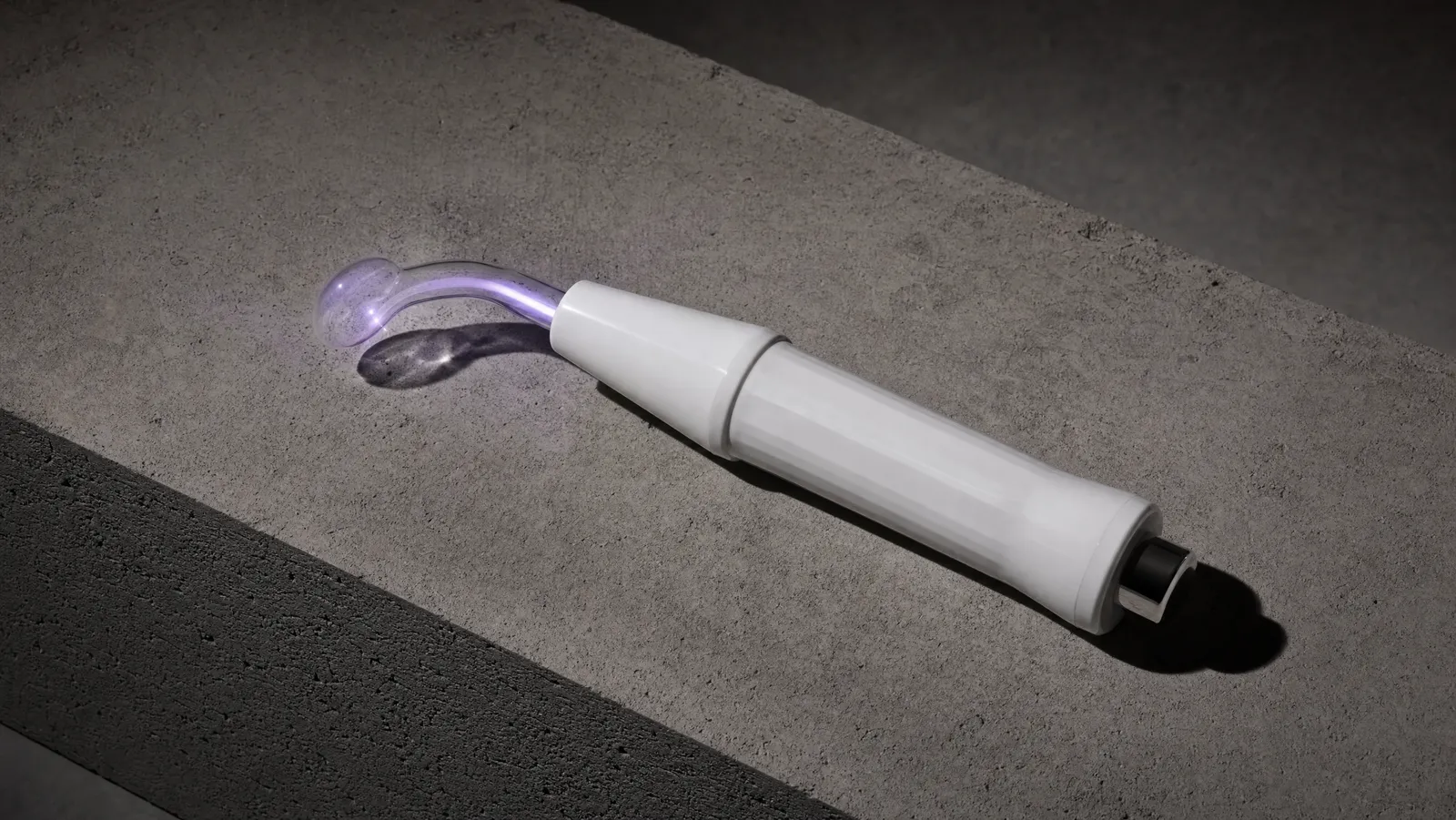
The procedure generalizes. Before I recommend anything I run the same lookup on the Korean handsets and their clearance status, and on high-frequency wands and their cleared indications, because the record changes what a review may promise.
Reading the record: Indications for Use is the whole game
Here is a real record, start to finish.
Search the database for applicant "Carol Cole" and you get clearances going back to 2007. Take the most recent, K240564. The record shows device name NuFACE FIX+, applicant Carol Cole Company dba NuFACE, product code NFO, regulation number 882.5890, Class II, and a decision of "Substantially Equivalent" dated 06/27/2024. One detail jumps out of the clearance letter and 510(k) summary: the regulation name attached to that product code is "Transcutaneous Electrical Nerve Stimulator For Pain Relief." The shelf a cosmetic microcurrent device sits on was built for pain-relief TENS units.
Now open the summary and find the Indications for Use form. The whole statement reads: "The NuFACE FIX+ Device is intended for facial stimulation and is indicated for over-the-counter cosmetic use."
That is it. Sixteen words. No wrinkles. No lifting. No collagen. No firmness, no contour, no jawline. The intended use line in the same document is shorter still: "The NuFACE FIX+ Device is intended for facial stimulation."
Read your box copy against that sentence and you will see the gap. The Indications for Use statement is the narrow thing a clearance covers; everything past it belongs to the marketing department, not the agency. The clearance letter makes the point itself: "we remind you, however, that device labeling must be truthful and not misleading." It then points the company at 21 CFR 807.97, titled "Misbranding by reference to premarket notification."
A narrow indication is not an accusation. Whether microcurrent does anything measurable for a face is a separate question with separate evidence, and I walk through the trials in what the microcurrent research actually shows. The clearance was never that evidence.
What the predicate chain does and does not tell you
The other half of the record is the predicate, the most misread line in the system.
Take K254079, a Shenzhen Desida Technology clearance for an "LED Light Therapy Mask (Models: T2, RLD10)" decided on March 16, 2026. Its Indications for Use statement is specific and, by the standards of mask marketing, modest: "Red+Infrared light: Treatment of full-face wrinkles. Blue light: Treatment of mild to moderate inflammatory acne. Mixed light (Red+Blue +Infrared): Treatment of mild to moderate inflammatory acne."
The summary then names a primary predicate, K241857, an LED light therapy device from Dongguan Boyuan Intelligent Technology, plus four reference devices. Its conclusion sentence is the tell: "Through the comparisons, we come to a conclusion that these devices have the same intended use, similar technological characteristics and principles of operation."
That is a similarity argument, written by the submitter. It is not a trial: the summary's own testing section lists only non-clinical work, against IEC electrical, electromagnetic and photobiological safety standards, and nobody in that document tested whether the T2 mask improves anyone's wrinkles, because the pathway did not require it here. The regulation says so out loud: under 21 CFR 807.97, a substantial equivalence determination "does not in any way denote official approval of the device," and any representation creating an impression of official approval on the basis of a premarket notification "is misleading and constitutes misbranding."
Scale makes it clearer. In the openFDA 510(k) dataset, refreshed October 26, 2026, product code OHS alone holds 165 clearances. A crowded predicate pool is easy to join, and joining it says nothing about how much light a mask puts out, which is why the number I chase is irradiance. I lay out how to compute a session dose in joules per square centimeter from any spec sheet, and I check the record for every mask in my LED face mask roundup.
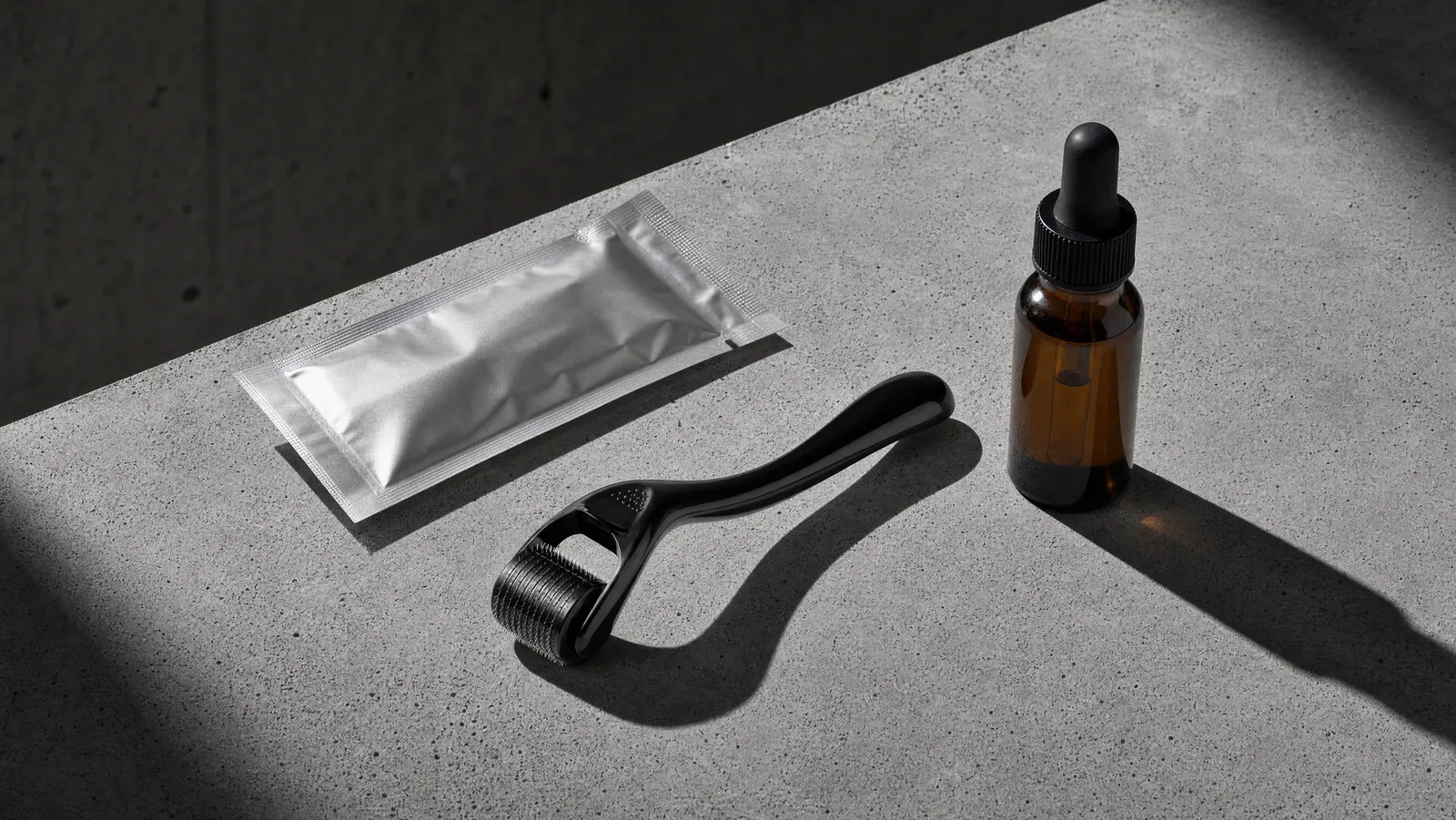
Two shelves where this matters most: at-home radiofrequency, where clearance status varies most between products sitting side by side, which is why I note it product by product in my RF skin tightening roundup, and microneedling, where needle depth and the cleared indication interact directly, in my guide to at-home microneedling safety.
Five label phrases and what each one is worth
| Phrase on the box | What it actually means | Worth to a consumer | |---|---|---| | FDA cleared | A 510(k) was submitted and FDA found the device substantially equivalent to a named predicate. There is a public record with a K-number and an Indications for Use statement. | Meaningful, but only as wide as that indication | | FDA approved | A premarket approval application was reviewed and granted, which FDA reserves for Class III devices. | On an at-home beauty device, essentially always wrong | | FDA registered | The establishment told FDA it exists. FDA's consumer page is blunt that a registration entry "does not denote approval, clearance, or authorization of that facility or its medical devices." | Near-noise | | FDA listed | The company told FDA which device types it makes. Same database, same disclaimer. | Near-noise | | Manufactured in an FDA-registered facility | A statement about a factory's paperwork, not about the product in your hand. | Noise |
The registration language deserves one extra beat: it is the phrase most often used to imply a clearance that does not exist. According to the FDA's consumer page asking whether there are "FDA registered" or "FDA certified" medical devices, the short answer is no, and "the FDA does not issue any type of device registration certificates to medical device facilities." That page adds that displaying a misleading registration certificate alongside a device offered for sale in the United States, in a way that suggests FDA review, can "misbrand the device in violation of the Federal Food, Drug, and Cosmetic Act."
If the product is a cosmetic rather than a device, "FDA approved" is wrong by a second route. According to FDA's page on its authority over cosmetics, cosmetic products and ingredients do not require FDA premarket approval, color additives excepted, and the agency's cosmetics labeling regulations page states that no cosmetic may be labeled or advertised with statements suggesting FDA has approved the product.
When you cannot find a record
Four situations, four meanings.
"FDA cleared" with no findable K-number. This does not prove the claim is false. The clearance may be filed under a contract manufacturer, an older trade name, or a device name that reads like a part number. So ask. Three questions, all free to answer: which legal entity holds the clearance, what is the K-number, and what is the exact Indications for Use statement. A brand with a real clearance sends all three in one email; a brand that answers "we are FDA registered" has answered a different question.
"FDA registered" and nothing else. Treat it as a sentence about paperwork, not a clearance.
"FDA approved" on an over-the-counter beauty device. The loudest signal on the label, and not in the brand's favor. Either the company does not understand its own regulatory status or it is counting on you not to, and 21 CFR 807.97 calls a claim of official approval built on a premarket notification misbranding.
A clearance that covers a different product in the line. A clearance covers the models named in the record. If the K-number belongs to a professional wand and your box is a consumer version under a new model code, the record is not about your device. Check the model designations in the summary, not just the company name.
One honest caveat. Whether a given gadget needed a 510(k) at all depends on its product code, its claims and the exemption limitations in its classification regulation, and from outside you often cannot settle that. Nobody has built a clean public map of which beauty tools fall where, so when I cannot settle it I say so.
Frequently asked questions
Is "FDA cleared" the same as "FDA approved"? No. FDA's 510(k) program training transcript says directly that "a 510(k) is not a premarket approval." The practical difference is the one this page is built on: a cleared device leaves a public record carrying a K-number and a single Indications for Use sentence, and that sentence is the only thing the agency signed off on.
Does a clearance mean the device works? Not as such. A substantial equivalence determination is a comparison to a predecessor, and 21 CFR 807.97 says it "does not in any way denote official approval of the device." The Indications for Use statement tells you what a device may be marketed for. Whether it may help your skin is a question for clinical evidence, not for the database.
My device has no clearance at all. Is it illegal? Probably not, and you cannot tell from outside. FDA's page on Class I and Class II device exemptions says most Class I devices and some Class II devices are exempt from 510(k) requirements, subject to limitations written into each classification regulation, and plenty of beauty tools are not regulated as medical devices at all. A silicone cleansing brush is not in the same conversation as a microneedling pen.
So which number should I shop on? The one the box is least eager to print. For light, irradiance and session dose. For microcurrent and radiofrequency, the protocol a company is willing to publish, including how many sessions a claimed result took. I compare the three main modalities on that score in microcurrent vs RF vs ultrasound.
The bottom line
Clearance is a comparison, approval is a judgment of evidence, and almost nothing on a beauty shelf has the second one. What the record gives you instead is a short sentence describing exactly what a device was cleared to do. Five minutes in the 510(k) database gets you that sentence, and it is almost always narrower than the packaging.
Make it a habit. Find the applicant, find the K-number, read the Indications for Use, check which models the record names, then hold that against what the brand promises. For the modality-by-modality version of that comparison, with the evidence and specs that actually separate these tools, see our full at-home device breakdown.
About the Author
Kelly Hyde
Kelly Hyde is a certified skincare specialist and beauty trend forecaster, and the founder of Next Gen Beauty Reviews. She spends her time testing the latest K-beauty launches, at-home beauty devices, and skincare tools so you do not have to, and only recommends products she would put in her own routine.