The Best Retinol Serums for Beginners and Beyond

The best retinol serum for most people is the CeraVe Retinol Serum with Niacinamide and Hyaluronic Acid, an encapsulated retinol buffered with three ceramides and built for beginners who want real results without a week of flaking. It runs $18.74 as of October 2026. Below it sit five more picks, from an $8 starter bottle to a retinal for people who have already graduated. Some links below are affiliate links — if you buy through them I may earn a small commission at no cost to you.
Almost every client who has told me that retinol does not work for them quit somewhere around week three, usually after a few nights of flaking that nobody warned them about. Retinoids are among the most studied anti-aging ingredients you can buy without a prescription, and they are also the easiest to use wrong. This guide covers how to pick a strength you will actually stay with, what retinoids are really doing under the surface, and which of my six picks fits your skin, your tolerance and your budget. It is the shopping half of my anti aging skincare routine guide, so if you want the full routine around it, start there.
How to choose a retinol serum
- Start lower than your ego wants. A beginner does not need a high number. A 0.1 to 0.2 percent retinol, used consistently for six months, is likely to do more for your skin than a strong bottle you abandon in February. In my experience the single biggest predictor of results is how many nights you actually apply it. Six months of nightly use is also more product than a small bottle holds, so it is worth checking how long a bottle actually lasts you before you commit to the size.
- Know which retinoid is in the bottle. Over-the-counter options are not interchangeable. According to a clinician's guide to topical retinoids published in the National Library of Medicine's PubMed Central archive, cosmetic retinoids move through a conversion chain from retinyl esters to retinol, then to retinaldehyde, and finally to retinoic acid, which is the form your skin actually uses. Retinaldehyde (often labeled retinal) is one step closer to the finish line than retinol, so it tends to be the more potent over-the-counter choice. The full breakdown of the difference between retinol, retinal, and tretinoin is a topic of its own.
- Prefer encapsulated or gradual-release formulas if you are nervous. Encapsulation drip-feeds the active instead of dumping it on your barrier at once, which is why the gentlest serums on this list are built that way.
- Buy the buffering, not just the active. Niacinamide, ceramides, squalane, aloe and centella can all make a retinoid easier to live with. If your barrier already runs irritated, a cica-based soothing routine alongside your retinol does more good than switching brands.
- Check the packaging before you check the price. Retinol is a fragile molecule. Research on stabilizing retinol in lipid vesicles notes plainly that retinol is highly sensitive to light and oxygen, and that UV exposure degrades it into a range of unwanted byproducts, which is why most retinoid products are sold as night treatments. Opaque tubes, airless pumps and foil-sealed droppers are doing real work. A clear glass bottle on a sunny windowsill is not.
- Go fragrance-free if your skin is reactive. Retinoid adjustment already costs you some barrier resilience. Adding fragrance on top is how a manageable tingle becomes three weeks of redness.
How retinoids actually work
Retinoids are vitamin A derivatives, and almost everything they do happens after your skin converts them. That same PubMed Central clinician's guide describes the cascade from retinyl esters to retinol to retinaldehyde to retinoic acid, and notes that retinoic acid in its final form can be hundreds of times more potent than the cosmetic retinol or retinaldehyde you started with. That conversion is also why an over-the-counter serum is gentler than a prescription: your skin is metering the dose.
Once retinoic acid reaches the cell, two things change. According to the American Academy of Dermatology, retinoids spur faster turnover of surface skin cells and boost collagen, which improves skin tone and reduces the look of fine lines and wrinkles. The AAD also notes that a product containing retinoids is a good option for someone with mild acne, mild pigmentation irregularities, or mild fine lines and wrinkles, which is a usefully modest framing. This is a maintenance ingredient, not a facelift.
The timeline is the part people get wrong. Cleveland Clinic states that retinol starts to work in your cells right away, but that it will take several weeks before you see an improvement in the look and feel of your skin, and that your skin may look worse at first as you adjust. For texture and fine lines, think in seasons. In one 12-week double-blinded randomized trial indexed by PubMed Central, a 0.5 percent retinol improved wrinkle severity by about 4 percent compared with baseline. That is a real, measurable change, and it is also a reminder that the honest promise here is gradual improvement rather than erasure.
Prescription retinoids are a different category. Tretinoin and tazarotene are available only with a prescription, per that same clinician's guide, and Cleveland Clinic notes that prescription retinoids contain a higher concentration of active ingredients. I am not going to give you a strength or a protocol for those, because that is a conversation for your dermatologist, not a blog post.
Our top picks at a glance
My overall winner is the CeraVe Retinol Serum with Niacinamide and Hyaluronic Acid, which pairs encapsulated, slow-release retinol with the three ceramides CeraVe is known for, so your barrier gets support on the same night it gets the active. If money is the obstacle, The Ordinary Retinol 0.2% in Squalane is an honest beginner strength at $8.10 as of October 2026. If your skin is genuinely reactive and you would rather pay once than experiment, the La Roche-Posay Retinol Face Serum is the splurge I keep coming back to. Full reviews, specs and current prices for all six are in the cards below.
The six serums, and who each one is for
CeraVe Retinol Serum — Top Pick, $18.74 as of October 2026. According to CeraVe, the formula uses encapsulated retinol with its MVE technology to release it slowly over time, then buffers it with niacinamide to help calm skin, hyaluronic acid for hydration, and ceramides 1, 3 and 6-II to help restore the barrier. It is fragrance-free, non-comedogenic and developed with dermatologists, and the label directs evening use, building up to daily. One ounce. This is the bottle I hand to nervous beginners, because it is the version of retinol least likely to make you quit.
The Ordinary Retinol 0.2% in Squalane — Best Budget, $8.10 as of October 2026. A mild 0.2 percent retinol aimed at fine lines, wrinkles and uneven tone, carried in squalane, which conditions skin to help offset the dryness that comes with retinol use. The brand positions it as a beginner-friendly strength to use before progressing higher, and its own directions are blunt about two things: do not use it alongside other retinoid products, and refrigerate it after opening. One fluid ounce. If you have been meaning to try retinol for two years, this removes the last excuse.
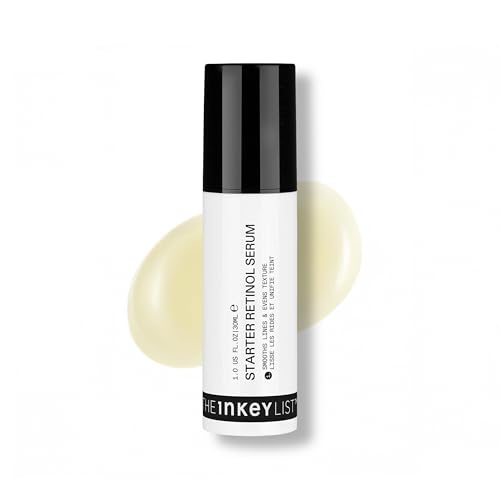
The INKEY List Starter Dual Retinol Serum — Best Starter, $10.50 as of October 2026, down from a $15.00 list price. INKEY markets this as a starter-strength dual retinol serum in a one fluid ounce bottle. I am deliberately not going to quote percentages for it, because the listing does not publish them. What I will say is that price matters more than people admit with retinoids: a bottle cheap enough that you are not rationing it is a bottle you will use every third night, which is exactly the cadence a beginner needs.
La Roche-Posay Retinol Face Serum — Best for Sensitive Skin, $35.24 as of October 2026, down from $44.99. This one combines pure retinol with a gradual-release retinol plus vitamin B3 (niacinamide) and hyaluronic acid, which is a smart hedge: you get an immediate fraction and a slow fraction instead of one blunt hit. La Roche-Posay positions it for sensitive skin and retinol beginners, targets the look of fine lines, wrinkles, dark spots and sun damage, and describes it as lightweight, fast-absorbing, free of pore-clogging oils, non-comedogenic and dermatologist-tested for safety. One ounce. It is the most expensive bottle here and the one I reach for when skin is behaving badly.
Cocokind Beginner Retinol Gel 0.1% — Gentlest Formula, $20.24 as of October 2026, down from $26.99. A 0.1 percent beginner strength from Cocokind's retinol gel line, buffered with aloe, cica and squalane to help prevent excessive dryness. Cocokind states the line is clinically tested for sensitive skin, directs every-other-night use to start while building to nightly as tolerated, and tells you plainly to wear SPF during the day. One fluid ounce. Note this is the beginner 0.1 percent gel, not the brand's stronger tri-retinoid version. If a previous retinol left you raw, this is the sensible place to restart, especially paired with a richer routine for dry, dehydrated skin.
The Ordinary Retinal 0.2% Emulsion — Best Step-Up, $13.41 as of October 2026. This is retinaldehyde, not retinol: a high-strength formula that, as The Ordinary puts it, sits one step closer to the bioactive form of vitamin A than retinol does. The brand positions it for experienced retinoid users and directs a pea-sized amount in the evening, starting weekly and increasing as tolerated. It is vegan, cruelty-free, alcohol-free, oil-free and silicone-free, in a half-ounce bottle. Buy this when a retinol has been boring you for six months, not on day one.
How to start retinol safely
Start infrequently and build. Two of the brands here say the same thing in their own directions: Cocokind calls for every other night to begin, building to nightly as tolerated, and The Ordinary's retinal says to start weekly and increase as you can take it. Apply at night, on dry skin, and give it a plain moisturizer on top if you need one. Cleveland Clinic lists dry, irritated skin, itching or burning, redness, peeling and flaky skin among retinol's common side effects, and notes that these are usually temporary and should gradually fade as your skin adjusts.
Two rules that prevent most of the misery. First, do not stack retinoids. The Ordinary's own label says not to use its retinol with other retinoid products, and that advice generalizes: one vitamin A product at a time. Second, do not introduce a retinoid in the same week as acids or a new exfoliating tool. If you want the full ramp-up schedule, including what to do on the nights it stings, I wrote a whole walkthrough on how to start retinol that pairs with this buying guide.
If things go sideways, pull back rather than push through. Drop to twice a week, keep moisturizing, and let the barrier recover. Cleveland Clinic also describes an early phase where your skin condition may look worse before it improves, sometimes called the retinol purge, so some roughness in the first weeks is normal. Weeping, burning or swelling is not, and that is a call to your dermatologist. The same gentle-recovery logic applies if you are layering other devices or actives: see the how to start retinol guide before you add anything else, including an LED face mask.
Sunscreen is not optional with a retinoid
Cleveland Clinic is direct about this: retinol makes your skin more sensitive to sunlight, so use sunscreen and avoid the sun, with SPF 30 plus sun-protective clothing and hats as the recommendation. Skipping daytime SPF while running a retinoid at night is the skincare equivalent of bailing water into the boat.
There is also genuinely new news here. In June 2026 the FDA finalized an administrative order adding bemotrizinol to its over-the-counter sunscreen monograph at concentrations up to 6 percent, the first new sunscreen active added to the US monograph since the late 1990s, with the order taking effect in August 2026. It is a broad-spectrum filter covering both UVA and UVB. For US shoppers that means the gap between American sunscreen formulas and the elegant Asian ones is finally starting to close, though for now my favorite textures are still the best Asian sunscreens I have tested. Pick whichever you will actually reapply.
Frequently asked questions
How long until I see results from a retinol serum? Cleveland Clinic says retinol starts working in your cells right away, but it takes several weeks before you notice a change in how your skin looks and feels, and skin can look worse at first. For fine lines and texture, give it three to six months of consistent use. In a 12-week double-blinded randomized trial indexed by PubMed Central, a 0.5 percent retinol improved wrinkle severity by roughly 4 percent versus baseline, which is the realistic scale of change over a season.
Can I use retinol while pregnant or breastfeeding? Retinoids are generally avoided in pregnancy. The American Academy of Dermatology advises skipping retinoids during pregnancy, and Cleveland Clinic notes that while topical products absorb poorly, healthcare providers discourage their use while pregnant. For breastfeeding, Cleveland Clinic says the risk to a nursing infant from topical use is believed to be low, but tells you to discuss any medication, including topicals, with your provider. Please take that up with your doctor or dermatologist rather than a product label, and do not try to improvise a workaround.
Is tretinoin just a stronger retinol? It is a different rung on the same ladder, and it is prescription-only. The PubMed Central clinician's guide on topical retinoids lists tretinoin and tazarotene as available by prescription only, while retinyl esters, retinol and retinaldehyde are sold over the counter. Cleveland Clinic adds that prescription retinoids contain a higher concentration of active ingredients. I will not give you a strength or a schedule for a prescription retinoid. Ask a clinician who can see your skin.
Can I use retinol with vitamin C, niacinamide or exfoliating acids? Niacinamide is the easy one, and several serums here already include it. Vitamin C is best kept to mornings while the retinoid runs at night, which also sidesteps the irritation question entirely; the best vitamin C serums are their own conversation. Exfoliating acids are the common trap. Alternate nights rather than layering, and if you are already using a strong toner with acids in it, give your retinoid the night off.
Which retinol serum should I buy first? If you have never used one, the CeraVe serum or the Cocokind 0.1 percent gel. If you want the cheapest honest start, The Ordinary's 0.2 percent retinol in squalane. If your skin flares at everything, the La Roche-Posay. Save the retinal for your second year.
Retinol is not a miracle, and anyone selling it as one is selling you something. It is a slow, well-evidenced ingredient that rewards consistency and punishes impatience, which is why the right bottle is the one matched to how reactive your skin is and how much you will actually use it. Start with the CeraVe Retinol Serum with Niacinamide and Hyaluronic Acid, wear sunscreen every single morning, and slot it into our full anti-aging skincare routine guide so the rest of your shelf is working with it instead of against it.
The Shortlist
Top 3
CeraVe Retinol Serum for Face with Niacinamide & Hyaluronic Acid
- Retinoid
- Encapsulated retinol
- Size
- 1 oz
- Fragrance
- Free

The INKEY List Starter Dual Retinol Serum
- Retinoid
- Dual retinol
- Size
- 1 fl oz
- Level
- Starter
The Reviews
01—06CeraVe Retinol Serum for Face with Niacinamide & Hyaluronic Acid
Encapsulated retinol released slowly over time, buffered with niacinamide, hyaluronic acid and three ceramides — the most barrier-friendly way to start, and the one I hand to nervous beginners.
- Retinoid
- Encapsulated retinol
- Size
- 1 oz
- Fragrance
- Free
- Barrier support
- 3 ceramides
Encapsulated retinol released slowly over time, buffered with niacinamide, hyaluronic acid and three ceramides — the most barrier-friendly way to start, and the one I hand to nervous beginners.
The Ordinary Retinol 0.2% in Squalane
The cheapest honest entry point into retinoids: a true 0.
- Retinoid
- Retinol 0.2%
- Base
- Squalane
- Size
- 1 fl oz
- Level
- Beginner
The cheapest honest entry point into retinoids: a true 0.2% retinol cut with squalane so it conditions as it works. Label says refrigerate after opening.
The INKEY List Starter Dual Retinol Serum
A starter-strength dual-retinol serum at a price that makes the every-third-night rule easy to stick to.
- Retinoid
- Dual retinol
- Size
- 1 fl oz
- Level
- Starter
A starter-strength dual-retinol serum at a price that makes the every-third-night rule easy to stick to.

La Roche-Posay Retinol Face Serum with Niacinamide & Hyaluronic Acid
Pairs pure retinol with a gradual-release form plus niacinamide and hyaluronic acid.
- Retinoid
- Pure + gradual-release retinol
- Added actives
- Niacinamide, HA
- Size
- 1 oz
- Skin type
- Sensitive
Pairs pure retinol with a gradual-release form plus niacinamide and hyaluronic acid. The splurge, and the one I reach for when skin is reactive.

Cocokind Beginner Retinol Gel 0.1%
A 0.
- Retinoid
- 0.1% beginner gel
- Buffers
- Aloe, cica, squalane
- Size
- 1 fl oz
- Level
- Gentlest
A 0.1% beginner gel buffered with aloe, cica and squalane — the gentlest step on this list, and a sensible first bottle if retinol has burned you before.

The Ordinary Retinal 0.2% Emulsion
Retinaldehyde sits one conversion step closer to active vitamin A than retinol does.
- Retinoid
- Retinal 0.2%
- Size
- 0.5 fl oz
- Level
- Experienced
- Formulation
- Vegan, oil-free
Retinaldehyde sits one conversion step closer to active vitamin A than retinol does. The graduation bottle — not a starting point.
About the Author
Kelly Hyde
Kelly Hyde is a certified skincare specialist and beauty trend forecaster, and the founder of Next Gen Beauty Reviews. She spends her time testing the latest K-beauty launches, at-home beauty devices, and skincare tools so you do not have to, and only recommends products she would put in her own routine.