Using Beauty Devices With Retinol, Vitamin C and Acids Without Wrecking Your Barrier

Yes. You can keep using skincare devices with retinol, and for microcurrent, LED and radiofrequency the usual approach is the same: run the device on clean skin, then apply the retinoid afterward, on a night you are not also exfoliating. Two pairings are different, and only two. Anything that needles, and anything you expect current to drive in.
I'm Kelly Hyde, a certified skincare specialist, and this is the question I get more than any other about beauty tech: am I cancelling my serums out, or am I about to burn my face? The risk is not "actives plus devices" in general. It is a specific interaction between a specific modality and a specific active, which is why "just be careful" helps nobody. Across the at-home beauty device categories I have tested, most pairings are fine, a few need a gap, and one is genuinely a bad idea.
Below: the three mechanisms, a grid you can check in ten seconds, and the week I actually run. If your skin is already stinging, start at the back-off section.
Three reasons the combination can go wrong
Name the mechanism and the rest of this stops being a list of superstitions.
1. Barrier disruption. Your stratum corneum, the dead outer sheet of skin, is what keeps a serum doing what it was formulated to do. The FDA treats that same line as a regulatory boundary: in its guidance Regulatory Considerations for Microneedling Products, a needling product that penetrates beyond the stratum corneum into living skin is generally a regulated medical device rather than a cosmetic, and the FDA's microneedling devices page states that such devices "are not approved for delivery of cosmetics, topical medications" or similar substances. Strong acids do a milder version of the same thing, which is why the American Academy of Dermatology warns in its guide to safely exfoliating at home that over-exfoliating can lead to skin that is red and irritated, and that products containing retinol or a prescription retinoid may cause your skin to be more sensitive or peel.
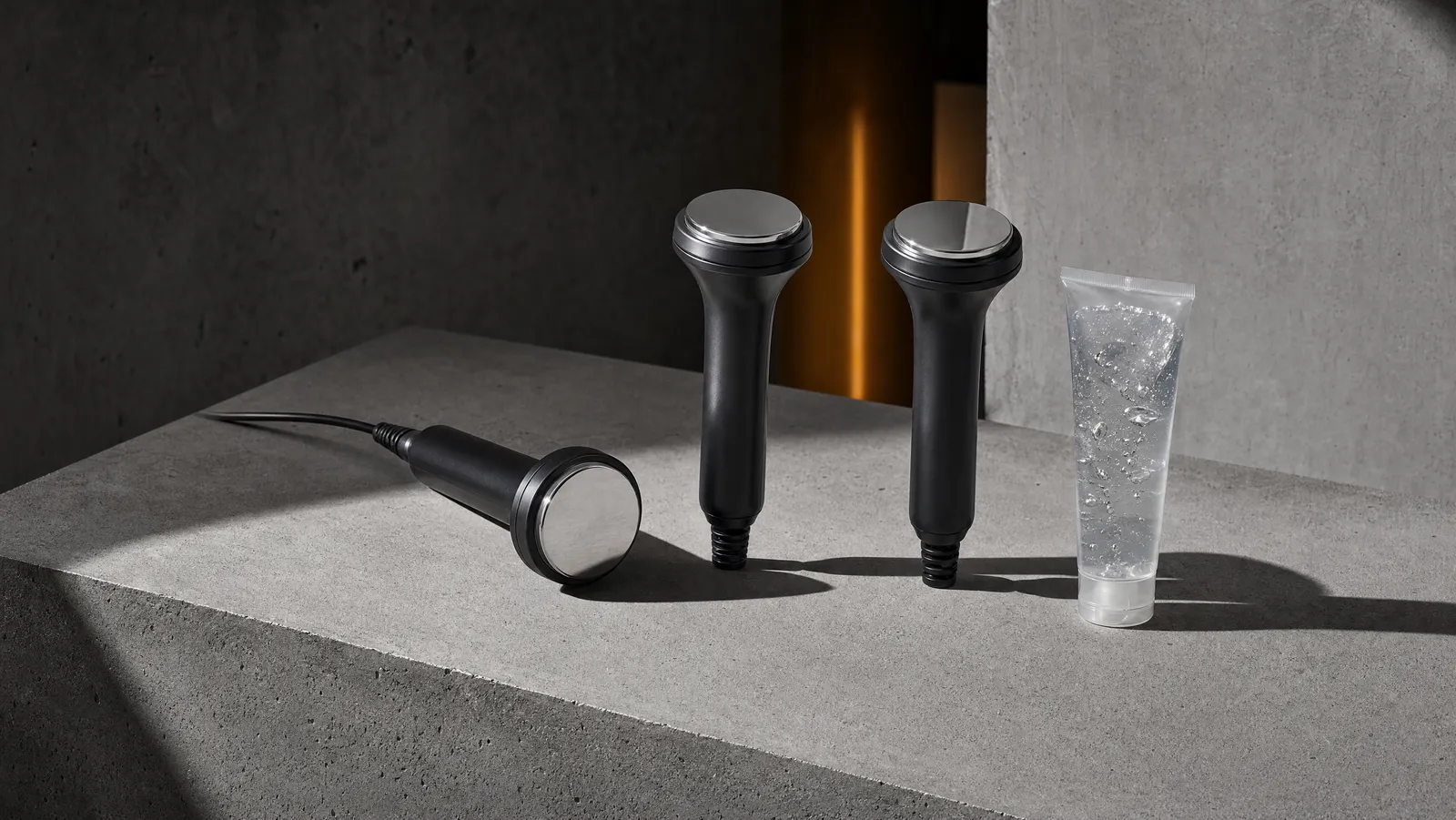
2. Conductivity and formulation. Microcurrent and galvanic devices need a continuous conductive path into the skin, and that path is water. The official NuFACE Trinity and Mini quick start guide says its gel primers "are specially formulated to activate your microcurrent treatment by increasing skin conductivity," and recommends using the device "on clean skin free of any makeup, oil-based products, or moisturizers to ensure your best experience and results." So the question is not whether your serum is good. It is whether it is a decent coupling layer, and an oil, a balm or a silicone-heavy formula is not.
3. Photosensitivity and heat. Retinoids increase sun sensitivity, and both major patient-facing sources say so. On the AAD's retinoid or retinol page, dermatologist Dr. Tina Alster advises using a retinoid only at night and always using sun protection during the day, because retinoids can make skin more sensitive to sun; Cleveland Clinic's retinol page states that retinol makes your skin more sensitive to sunlight. Read that carefully, because it is a claim about ultraviolet light. A red LED mask is not a UV source, and I could find no study testing whether retinoid-treated skin responds differently to a 630nm home device. Nobody has studied that properly. What is documented is that visible light is not inert: a 2020 review by Narla, Kohli, Hamzavi and Lim in Photochemical and Photobiological Sciences, Visible light in photodermatology, reports that visible light was long thought to have little photobiologic effect but can drive pigmentation, particularly in darker skin, and that currently available organic UV filters are not sufficient to protect against it. Heat is the other half of this mechanism, and it belongs mostly to radiofrequency.
The modality-by-active grid
"Same session" means one sitting. "Same day, separated" means device first on clean skin, active afterward in the same routine. "Space it out" means a different day, or longer.
| Device | Retinoids | Vitamin C | AHA or BHA | Hydrating and humectant layers | | --- | --- | --- | --- | --- | | Microcurrent | Same day, separated | Same day, separated; see rule two | Same day, separated; skip if reactive | Same session, if water-based | | LED | Same day, separated | Same day, separated | Same day, separated | Same session, after the light | | Radiofrequency | Same day, separated, once skin is cool | Space it out | Space it out | Same session, after | | Microneedling | Space it out | Space it out | Space it out | Space it out | | High-frequency | Same day, separated | Same day, separated | Space it out | Same session, after |
Most of that table says the same dull thing, which is the point: device on bare skin, actives after. Two rules sit underneath it. Rule one: nothing active goes onto freshly needled skin except what the device maker specifies. That is the one hard prohibition here, and it has case reports behind it rather than vibes. Rule two: vitamin C under a conductive device is a formulation question, not a free win, because ascorbic acid is pH-sensitive and conductive gels are water-and-electrolyte systems, which adds up to "check what you are putting under the probes" rather than "the current drives it in deeper."
Retinoids and devices: timing, buffering, and what to do if you are already sore
For most readers this is the whole question, and the fix is a sequence rather than a sacrifice.
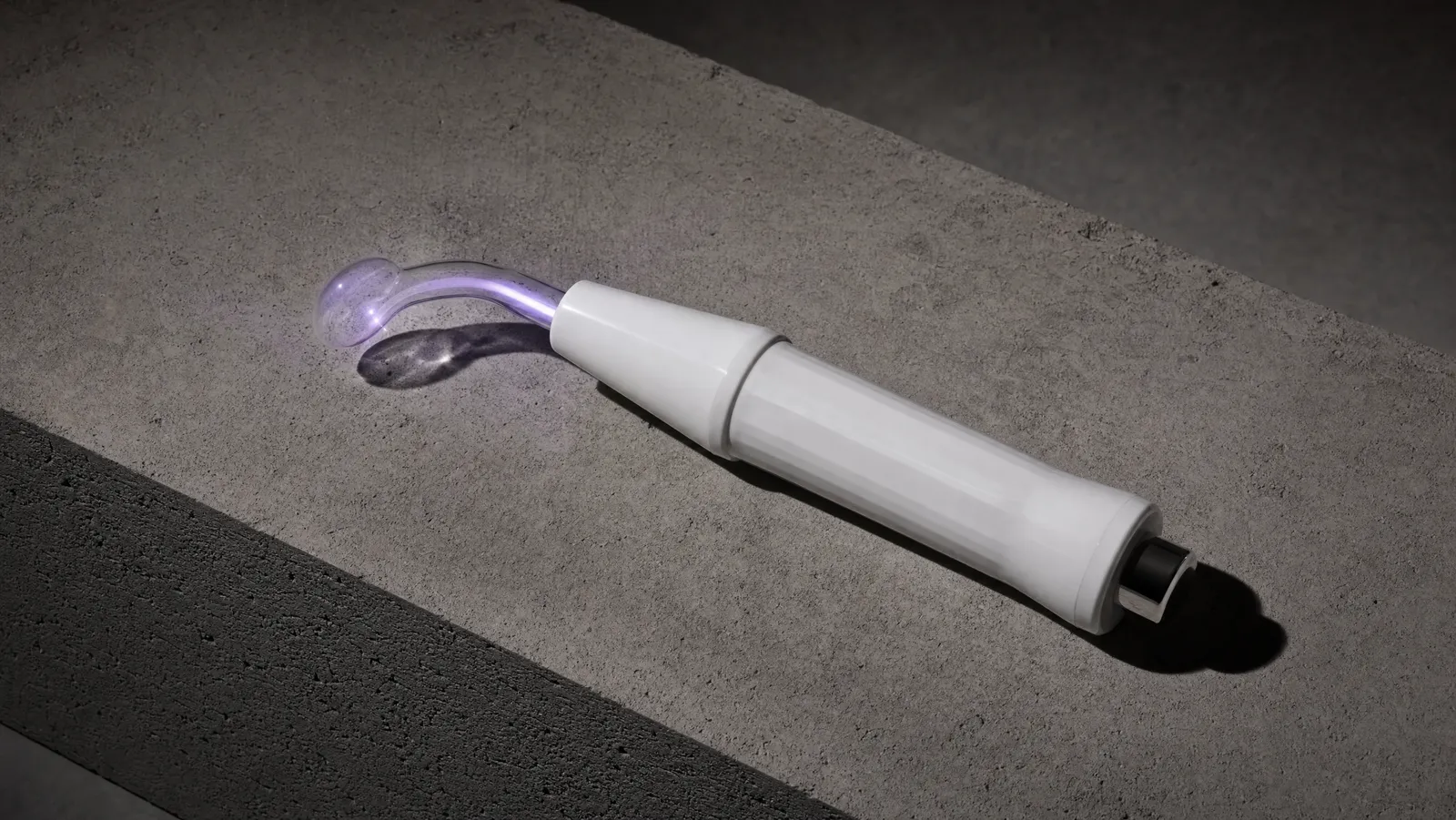
Run the device on cleansed skin. Remove any conductive gel. Then apply the retinoid as the first thing on dry skin, moisturizer over it. That order respects the conductivity problem and the AAD's own sequencing advice in its guide to applying skin care products in a certain order, where treatment goes on right after cleansing and moisturizer follows. On a night when I want a high-frequency session in the same routine as my retinoid, the device goes first on dry, bare skin and the retinoid goes on afterward.
If the combination stings, try buffering. On that AAD retinoid page, Dr. Sonia Badreshia-Bansal notes that starting slowly and using moisturizer will help mitigate the possibility of irritation, which in skin of color can trigger dark marks. Applying moisturizer first and the retinoid over the top is my habit rather than anyone's protocol; what the AAD supports is the narrower point that moisturizer helps. You trade a little potency for a lot of compliance.
Frequency matters more than any of this. Cleveland Clinic advises adding retinol at bedtime, using it only every other day for the first couple of weeks, and using only one retinol product at a time. If you are stacking a nightly device onto a retinoid you started three weeks ago, slow the retinoid ramp, not the device. That ramp is the subject of how to start retinol without wrecking your skin barrier, and if you are still choosing a molecule, retinol vs. retinal vs. tretinoin sorts out what the three words mean.
LED layers most freely of any modality, because nothing is abraded, needled or heated. Bare skin under the light, actives after. Why wavelength and dose matter more than whatever you apply afterward is covered in LED wavelengths explained.
Vitamin C and conductive devices: the formulation angle, hedged properly
Here is what is documented. According to the review of topical vitamin C by Al-Niaimi and Chiang in the Journal of Clinical and Aesthetic Dermatology, hosted on PubMed Central, reducing the pH of L-ascorbic acid below 3.5 is an effective way to improve stability and permeability, and a formulation needs a concentration above eight percent. A 2025 review by de Oliveira and colleagues in the Brazilian Journal of Pharmaceutical Sciences, New discoveries of the action of L-ascorbic acid, puts it chemically: an aqueous formulation "must have a pH (2.0-3.5) lower than the pKa (4.2)," pure ascorbic acid is "chemically active and unstable in an aqueous medium," and high pH or temperature increases the rate of degradation.
Now the part that is reasoning, and I am labeling it as such. A low-pH aqueous serum and a conductive gel are both water systems, so they mix, while an anhydrous or silicone-based vitamin C will not couple well at all. Whether sliding metal probes over an ascorbic acid serum degrades it faster, or pushes it somewhere useful, has not been tested in any study I could find. I am not going to invent one.
What has been studied is iontophoresis, which is a different thing from a toning wand. In a 2022 split-face clinical trial in the Journal of Cosmetic Dermatology, indexed on PubMed, a handheld iontophoresis device was used on one side of the face of 24 subjects with photoaged skin, twice weekly for eight weeks, with 17 completing; the authors concluded the device "is safe and can be used as an adjunctive home treatment" for transdermal vitamin C delivery. Note what that trial used: a device designed to deliver an ingredient, with a matched preparation. A microcurrent handset sold for facial toning has a different design intent, and its instructions tell you to use its own gel on clean skin. Do not let an iontophoresis result stand in for your sculpting device.
The practical version: keep vitamin C in the morning and devices at night, which is how morning vs. night actives splits the day anyway. If you want less of the guesswork, the Korean device ecosystems often sell a matched gel or ampoule alongside the device, though some makers list a conductive gel as optional rather than required, so your own manual is the place to check before you improvise a coupling layer. Bottles I would start with are in the best vitamin C serums.
Acids, and the one case that is genuinely a bad idea
Acids plus energy devices is a tolerance question. Acids plus needles is a safety question, and the literature is unusually clear.
In "Facial allergic granulomatous reaction and systemic hypersensitivity associated with microneedle therapy for skin rejuvenation", published in JAMA Dermatology in 2014, Soltani-Arabshahi and colleagues described three women who developed facial granulomas after microneedle treatment; two had a branded vitamin C serum microinjected during the procedure and patch-tested positive to it. Their conclusion: "Application of topical products prior to microneedling can introduce immunogenic particles into the dermis and potentiate local or systemic hypersensitivity reactions." The at-home version arrived in Cutis in 2025, where Huang and colleagues reported a destructive facial granuloma following self-treatment with vitamin E oil and an at-home microneedling device carrying 0.25-mm titanium needles. Those authors name the window: "topical products to avoid before, during, and 48 hours after undergoing MN include retinoids, vitamin C, vitamin E," plus exfoliants, acid-containing serums, fragranced serums and oil-based serums.
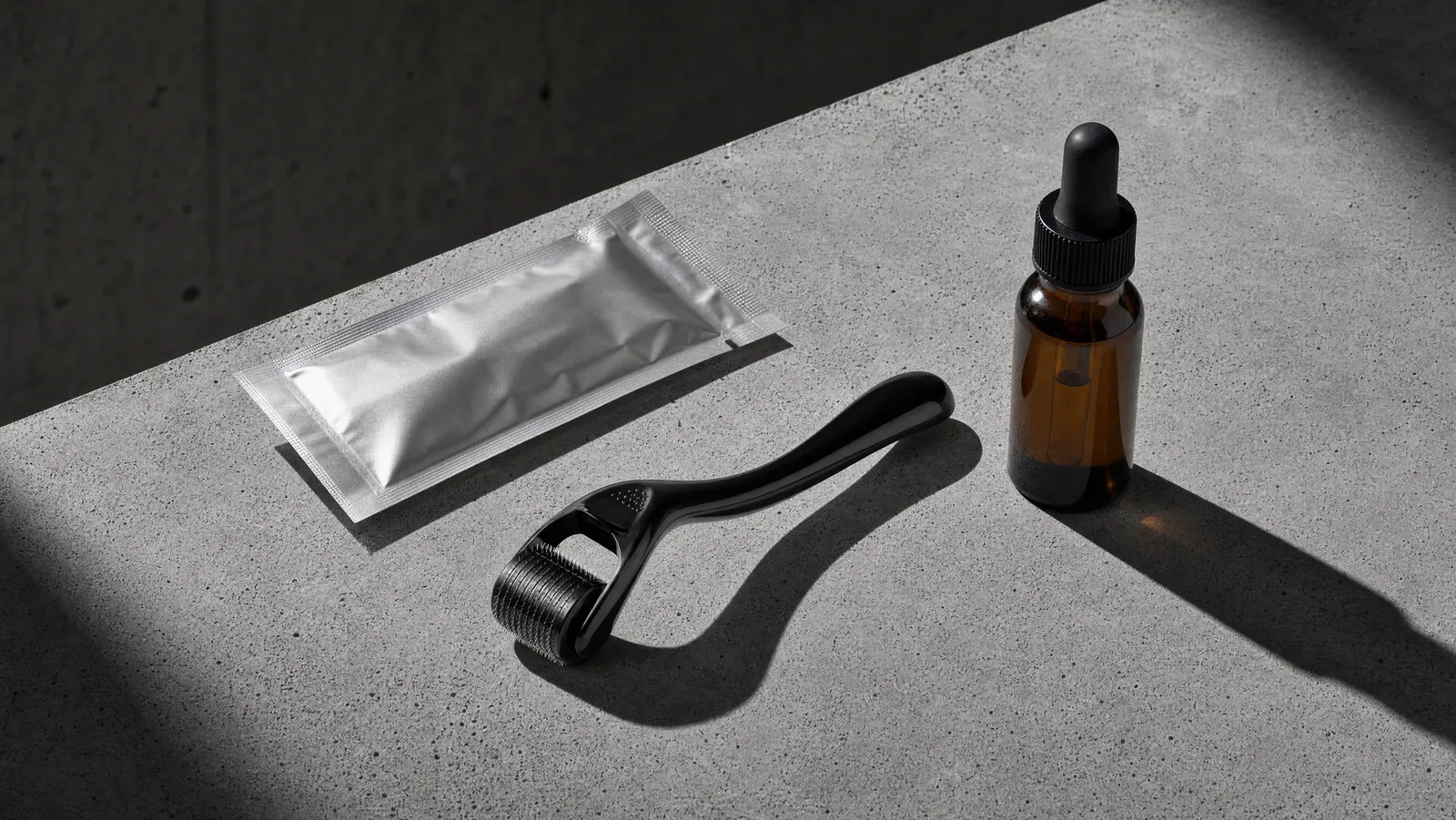
Depth is why at-home and professional microneedling are not the same conversation. In their review "Microneedling: Advances and widening horizons" in the Indian Dermatology Online Journal, Singh and Yadav describe home-care dermarollers as carrying needles "less than 0.15 mm," against 0.5 to 1.0 mm for wrinkles and 1.5 to 2 mm for scars in clinical use. Shallower is safer, but the case reports show it is not immune, and the full picture is in at-home microneedling safety.
Radiofrequency deserves its own caution. In a safety communication dated October 15, 2025, the FDA warned of potential risks with certain uses of radiofrequency microneedling devices, reporting complications including "burns, scarring, fat loss, disfigurement, and nerve damage," and stating that "RF microneedling is a medical procedure, not a cosmetic treatment, and these devices should not be used at home." That is RF microneedling specifically, not a non-needling home RF handset, but it is the clearest signal here about what energy plus a breached barrier can do.
For plain exfoliating acids with a non-needling device, treat it as dose. Cleveland Clinic's guide to ordering your skin care routine puts a glycolic acid exfoliant in the morning a couple of times a week and keeps retinols and retinoids for night, which already separates the two, and the same logic extends to a device night: one stressor at a time.
A weekly schedule that works
This is the week I run. It is a common approach, not a prescription, and the right version is the one your skin tolerates.
Every morning is identical: cleanse, vitamin C, moisturizer, sunscreen. Devices live at night.
| Night | Device | After the device | | --- | --- | --- | | Monday | LED, per the manufacturer's session length | Retinoid on dry skin, then moisturizer | | Tuesday | Microcurrent with its own conductive gel | Remove gel, moisturizer only | | Wednesday | None | Retinoid night, moisturizer | | Thursday | LED | Humectant serum, moisturizer | | Friday | None | Exfoliating acid, moisturizer. No retinoid | | Saturday | Radiofrequency, per the manufacturer's protocol | Moisturizer only, once skin is back to normal color and temperature | | Sunday | None | Cleanse, moisturizer, bed |
Three things make that week work rather than the specific days. One strong active per night. No acid on a retinoid night. And at least two nights where nothing stressful happens at all. The AAD's ordering page makes the point directly: using too many products, especially several anti-aging products, may irritate the skin and make signs of aging more noticeable.
Needling is deliberately absent. If you use a shallow roller at all, give it its own slot with nothing active for at least the 48 hours the Cutis authors describe. For how device nights fit a longer plan, the anti-aging skincare routine is the frame this schedule sits inside.
Signs you have overdone it, and how to back off
In my experience the tell is not redness. It is stinging on application of something that never used to sting. Watch also for tightness after cleansing, flaking where you treated hardest, and small new breakouts. The AAD warns that exfoliating while using a retinoid or retinol may worsen dry skin or even cause breakouts. Those signals look the same whether a device, an acid or a retinoid got you there, which is why you cannot diagnose it without simplifying.
My back-off rule of thumb, and it is a rule of thumb rather than a protocol: stop all devices and all actives, run cleanser, moisturizer and daily sunscreen only, and hold until the stinging is gone. Then add one thing back per week, actives before devices. Textures that make daily sunscreen bearable are in the best Asian sunscreens, and gentler retinoid options are in the best retinol serums. If skin is broken, blistered, swollen, weeping or simply not improving, that is not a scheduling problem. See a board-certified dermatologist.
Frequently asked questions
Can you use an LED mask with retinol? Generally yes, in the order device first and retinoid after, on clean dry skin. The documented photosensitivity concern with retinoids is about ultraviolet light: the AAD advises night-time use with daytime sun protection, and Cleveland Clinic says retinol makes skin more sensitive to sunlight. A red LED mask is not a UV source, and whether retinoid-treated skin reacts differently to visible red light has not been studied in a way I would quote. Follow your device manual and stop if it stings.
Should I put my vitamin C serum under a microcurrent device? Not as a delivery strategy. NuFACE's own guide tells you to run the device on clean skin free of oil-based products and moisturizers, using a gel that increases conductivity. No study I found tests what a consumer microcurrent handset does to a vitamin C serum. Keep the serum in your morning routine.
How long should I wait after a device session before applying actives? For non-needling devices, the manufacturer's instructions are the only interval with real authority, and most describe applying skincare after the session rather than imposing a wait. For microneedling, the Cutis case authors name 48 hours before, during and after. Anything beyond those is a guess, so I will not invent a number.
Does radiofrequency plus retinol cause burns? I found no evidence that a non-needling home RF device plus a retinoid causes burns. What the FDA has warned about is RF microneedling, and that communication says those devices should not be used at home. With home RF, follow the manufacturer's protocol, keep the retinoid for after skin has cooled, and do not run it on a night you have exfoliated. Humectant layers, by contrast, are the one column in the grid that can share a session.
The short version
The risk was never your serum collection. It is one of three mechanisms: a breached barrier, a bad coupling layer, or heat on skin that is already sensitized. Devices on clean skin, actives afterward, one strong active per night, nothing at all on freshly needled skin.
If you are still deciding which handset deserves a slot in that week, Next Gen Beauty's guide to at-home devices walks every modality by the numbers it publishes, so you can judge the device before you reorganize your routine around it.
About the Author
Kelly Hyde
Kelly Hyde is a certified skincare specialist and beauty trend forecaster, and the founder of Next Gen Beauty Reviews. She spends her time testing the latest K-beauty launches, at-home beauty devices, and skincare tools so you do not have to, and only recommends products she would put in her own routine.